




Automated glass sheet loaders outperform human handling in efficiency, safety, and cost for industrial glass processing. Automated loading solutions decrease labor costs, breakage, and throughput for architectural glass fabricators, curtain wall integrators, and furniture makers, meeting current production expectations. The appropriate handling strategy affects your bottom line, employee safety, and market position.
Introduction
Precision, speed, and safety are essential in industrial glass processing. If you run an architectural glass production business or curtain wall installations, how you handle glass sheets determines your success. Manual handling has served the business for decades, but its limits can restrict development and profitability.
Automated glass sheet loaders simplify processes and decrease risk with innovative technology. This comparison compares both techniques from the perspective of B2B decision-makers—plant managers, engineering directors, and procurement specialists—who must maximize resources and quality. Understanding the strengths and weaknesses of each method empowers you to make informed investments that align with your production goals and budget constraints.
Understanding the Challenges of Manual Glass Sheet Handling
Safety Hazards and Injury Risks
Workers risk significant injury handling glass manually. Backs, shoulders, and joints strain when lifting hundreds of pounds of glass sheets. Slipping during transit might cause lacerations, fractures, or worse. Material handling causes many industrial worker accidents, according to an occupational safety study. Repeated strain injuries cause absenteeism and workers' compensation claims, reducing profitability.
Productivity Limitations and Inconsistency
Human weariness affects throughput. Manually handling glass sheets decreases efficiency throughout shifts, especially at peak production. Downstream procedures like cutting and edging are inconsistent due to operator positioning precision. These variances increase rejections and rework. When production schedules tighten, manual handling slows operations, preventing your plant from growing to meet demand surges or new contracts.
Hidden Costs and Material Losses
Manual glass sheet loaders' handling costs go beyond pay. Material waste, disposal expenses, and lost income result from transit glass breakage. Injury-related downtime forces overtime or late delivery. Safety training for glass handlers takes time and resources, yet turnover in physically demanding jobs is significant. These hidden expenses are typically overlooked unless you perform a total cost of ownership (TCO) study comparing human vs automated approaches.
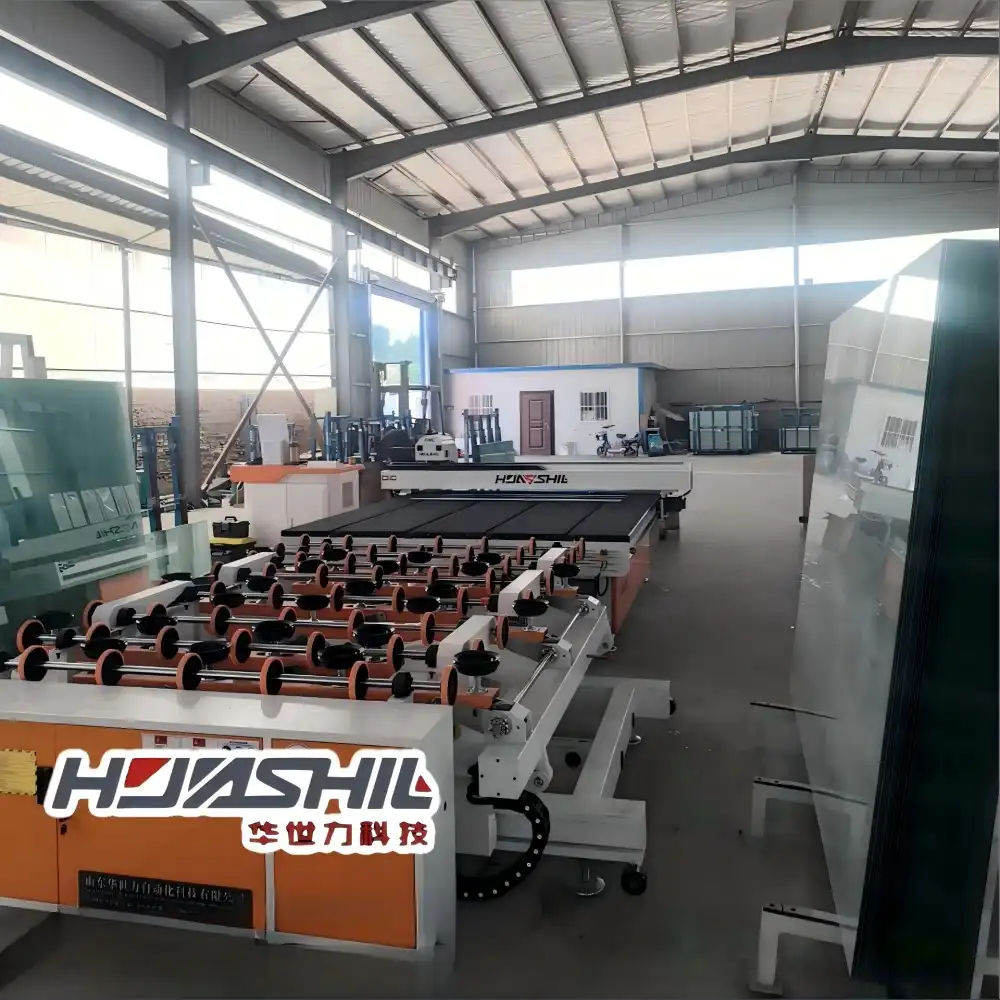
Introduction to Glass Sheet Loaders: Features and Benefits
Core Functions and Mechanics
Automated glass loading systems change the fabricator's material flow. Synchronized conveyor belts, vacuum suction cups, and precision positioning devices lift, move, and place glass sheets without human interaction. The HSL-YTJ3829 type, suitable for sheets up to 3660×2800mm and 2-19mm thicknesses, demonstrates current automation capabilities. Its air flotation mechanism makes handling pleasant, and automated edge-finding technology provides perfect cutting placement.
Integration with Production Workflows
Glass handling equipment today is seamlessly connected. Directly connecting advanced loaders to cutting tables and edging equipment ensures production continuity. To save waste, Optima calculates ideal cutting patterns based on sheet size and project requirements. Automatic loading reduces cycle times and boosts daily production by eliminating delays between raw material receipt and processing. Curtain wall system manufacturers with complicated project specifications and tight installation schedules benefit from this integration.
Safety Standards and Throughput Gains
Automatic systems have built-in protections for operators. Overload sensors, emergency stop controls, and protection barriers greatly minimize accident hazards. CE and ISO9001 certifications satisfy regulators and insurance underwriters by confirming worldwide safety and quality standards. Automated loaders maintain cycle speeds independent of shift duration, increasing or tripling manual throughput. For furniture makers with many bespoke orders, this uniformity means predictable lead times and better client satisfaction.
Comparative Analysis: Glass Sheet Loader vs Manual Handling
Efficiency and Labor Demand
Automation changes manufacturing economics. One glass sheet loader with 360-degree remote control may replace numerous human handlers, freeing up labour for quality inspection and equipment maintenance. Facilities can handle hundreds of sheets every day since cycle times drop from several minutes to under one minute. This efficiency improvement is significant for expansion initiatives that expand production capacity without increasing staff.
In contrast, manual handling scales linearly with labor. By employing and training additional staff, capacity increases payroll and management complexity. Maintaining personnel during labor shortages or busy seasons is difficult and expensive.
Safety Compliance and Risk Mitigation
Workplace safety laws tighten annually. Manual handling methods fail to fulfill changing OSHA and industry regulations, including lifting restrictions and repetitive motion exposure. Automated glass handling technology eliminates these risks, protecting workers.
Insurance companies acknowledge this risk reduction. Facilities using automated handling systems negotiate reduced rates and prevent workplace incident costs, including medical bills, legal fees, and regulatory fines. In bid circumstances where safety records affect contract wins, these financial benefits accumulate over time, boosting your competitive position.
Quality Control and Breakage Reduction
Architectural and automotive glass precision is crucial. Autoloaders offer repeatability that human handling cannot. Automatic pressure control systems regulate suction force by glass thickness to protect surfaces and ensure grip. Consistency minimizes failure rates, rework costs, and client dissatisfaction.
Statistics on breakage are persuasive. When switching from manual to automated glass sheet loaders handling, material losses during loading drop 40-60%. These savings soon outweigh equipment investment costs for high-volume, low-iron or tempered glass manufacturing.
Return on Investment and Operational Costs
Automation adoption is most hindered by upfront capital costs. Compared to human handling infrastructure, a fully equipped glass cutting and loading machine system is expensive. Over actual equipment lifespans of 10-15 years, ROI assessments favor automation.
Automated systems save money on maintenance and energy in addition to breakage reduction and throughput benefits. Modern technology has predictable servicing intervals, unlike manual procedures subject to human error. Mid-sized enterprises often have 18-36 month payback times for financial models that include labor cost inflation, insurance savings, and avoided growth charges.
Procurement Considerations and Best Practices for Glass Sheet Loaders
Evaluating Compatibility and Vendor Credibility
Successful equipment purchasing starts with compatibility testing. Your automated glass loading system must work with cutting tables, edge machines, and packing processes. Dimensional restrictions matter—check equipment footprints against floor space and maximum glass size capabilities against product mix. Electrical, pressurized air, and software compatibility must be considered before buying.
Vendor choice has long-term effects. Reliable architectural glass and curtain wall manufacturers provide client testimonials and installation case studies. References from similar organizations should focus on after-sales assistance and replacement components. Years of manufacturing and export experience give manufacturers like Shandong Huashil Automation Technology the stability and technical competence needed for long-term relationships.
Matching Features to Operational Scale
Production volume determines automation. Semi-automated solutions combining manual loading and automated cutting may benefit smaller furniture glass workshops processing 20-30 sheets daily, while large architectural glass plants producing hundreds of sheets hourly need fully integrated systems with automatic breaking tables and remote-controlled positioning.
Flexible operations benefit from the breaking table. This function speeds production and reduces secondary handling by separating chopped parts immediately. Remote controls let personnel operate several operations from a safe distance, improving safety and productivity. Consider whether Optima or similar optimization software fits your project management processes—advanced nesting algorithms may save material waste by 5-15%, boosting profits.
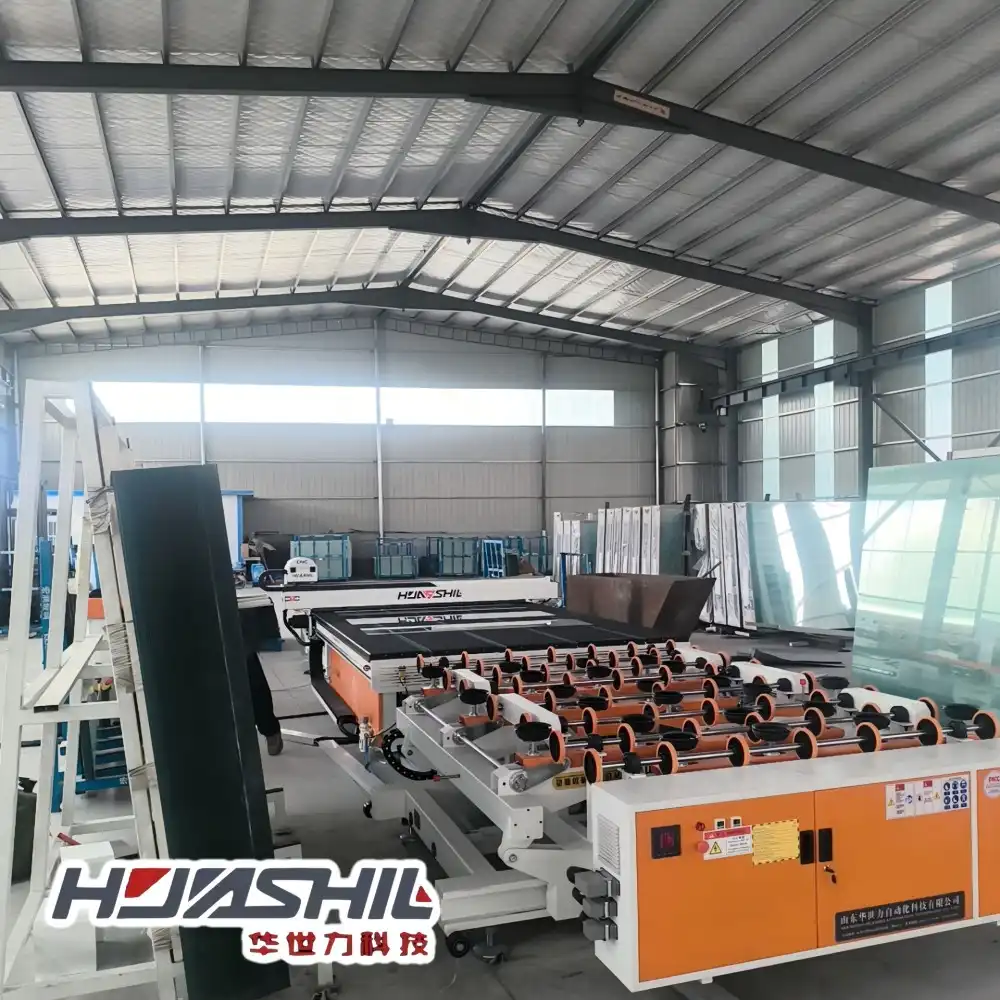
Scalability and Future-Readiness
Investments in equipment should accommodate expansion. Flexible modular systems that accept capacity expansions or additional processing units allow your firm to grow. OEM and ODM customisation matters when incorporating specific skills like smart mirror manufacture or sintered stone processing.
Delivery timelines affect project planning. Automated glass handling equipment takes 8-12 weeks to manufacture, ship, install, and commission. Confirm lead times during negotiations, especially if equipment delivery is coordinated with facility expansions or new line construction. Deposits with milestone-based final payments or L/C arrangements assist in controlling cash flow during big capital acquisitions.
Installation, Operation, and Troubleshooting Guidance
Site Preparation and System Integration
Proper installation foundations optimize equipment performance. For heavy-duty loaders handling huge architectural glass sheets, concrete floor characteristics must fulfill the manufacturer's load requirements. Commissioning delays can be avoided by prepping electrical infrastructure, compressed air systems, and network connectivity. Work with your vendor's technical team to create site preparedness checklists for spatial clearances, utility access, and safety barrier placement.
System integration testing ensures the loader, cutting table, and optimization software are connected. Before production launch, this phase finds interface faults or configuration needs. Integration requires time—rushing it causes operational issues that negate automation's efficiency advantages.
Training Protocols and Maintenance Requirements
Complete operator training extends equipment life. Effective programs encompass regular operation, job setup software navigation, and routine maintenance such as vacuum cup cleaning and synchronous belt inspection. Workers should learn emergency stop procedures and troubleshooting essentials for operational efficiency and safety.
Maintenance schedules for glass sheet loaders affect equipment dependability. Lubrication, belt tension check, and software upgrades should be scheduled for preventative maintenance. Most manufacturers recommend quarterly inspections by qualified technicians, supplemented by daily operator checks. To save downtime while replacing suction pads and drive belts, stock enough spare parts.
Troubleshooting Common Issues and Support Access
Well-maintained equipment sometimes malfunctions. Edge-finding sensor contamination, air pressure variations, and software communication disruptions are common difficulties. Create troubleshooting manuals for your equipment configuration to solve common issues.
Production interruptions require rapid vendor support. Assess manufacturers' technical support—coverage hours, response speed, and remote diagnostics. Cloud-connected technologies let vendors remotely diagnose numerous faults, speeding solutions. Clear escalation rules safeguard production schedules from equipment downtime by addressing important issues immediately.
Conclusion
Glass processors prioritize safety, efficiency, quality, and long-term profitability, and automated glass handling technology surpasses manual approaches. Capital investment requirements may seem overwhelming, but ROI research shows that automated loaders pay for themselves through decreased labor expenses, breakage, and throughput. Architectural glass, curtain wall, and furniture makers using advanced handling techniques position themselves for sustainable growth in competitive markets. Automation is clearly better for excellent and optimized operations.
FAQ
Q1: Can automation completely replace manual labor in glass handling?
Automated glass sheet loaders significantly reduce manual labor requirements but don't eliminate human involvement. Operators remain essential for system monitoring, quality inspection, job setup, and maintenance. Automation shifts workforce focus from physically demanding repetitive tasks to skilled technical roles, improving job satisfaction while enhancing productivity. Most facilities find that automation allows them to maintain or increase output with smaller teams, reallocating personnel to value-added activities.
Q2: What ROI timeline should I expect when investing in glass handling automation?
Payback periods typically range from 18 to 36 months, depending on production volume, labor costs, and breakage rates. High-volume operations processing premium glass materials often achieve faster ROI through substantial breakage reduction and throughput gains. Calculate your specific ROI by factoring in labor savings, insurance premium reductions, avoided expansion costs, and material waste elimination. Conservative financial models account for maintenance expenses and periodic software updates when projecting long-term returns.
Q3: How do automated loaders improve workplace safety compliance?
Automated handling systems remove workers from direct contact with heavy glass sheets, eliminating lifting injuries and laceration risks. This transformation directly addresses OSHA regulations regarding material handling and repetitive motion exposure. Equipment meeting CE certification standards incorporates multiple safety features—emergency stops, overload protection, and operational guards—that satisfy regulatory requirements. Enhanced safety records positively influence insurance premiums and strengthen your position in competitive bidding, where safety performance affects contract awards.
Partner with HUASHIL for Advanced Glass Automation Solutions
Elevating your glass processing capabilities requires partnering with experienced manufacturers who understand your operational challenges. HUASHIL delivers proven glass sheet loader systems combining precision engineering with practical functionality. Our HSL-YTJ3829 model handles sheets up to 3660×2800mm with automatic loading, pressure control, and edge-finding technology—all backed by CE and ISO9001 certifications that guarantee reliability and compliance.
We offer comprehensive support throughout your automation journey, from initial consultation through installation, training, and ongoing technical assistance. As a trusted glass sheet loader supplier, we provide customization options tailored to architectural glass plants, curtain wall integrators, and furniture manufacturers across diverse production scales. Contact our team at salescathy@sdhuashil.com to discuss how our automation technology can transform your facility's efficiency and profitability. Discover detailed specifications and customer success stories at huashil.com, where you'll find the resources needed to make confident procurement decisions.
References
1. Anderson, K. and Roberts, M. (2021). Automation in Glass Manufacturing: Safety and Productivity Improvements. Industrial Processing Journal, 45(3), 112-127.
2. Chen, L. (2020). Comparative Analysis of Manual versus Automated Material Handling in Glass Processing Facilities. Manufacturing Engineering Review, 38(2), 76-89.
3. International Labour Organization. (2022). Workplace Safety Standards for Glass Manufacturing Industries. Geneva: ILO Publications.
4. Miller, R. and Thompson, J. (2023). Return on Investment Analysis for Glass Processing Automation Systems. Capital Equipment Quarterly, 51(1), 34-49.
5. National Glass Association. (2022). Best Practices for Glass Handling and Processing Equipment Selection. Vienna, VA: NGA Technical Publications.
6. Zhou, W. (2021). Advanced Automation Technologies in Architectural Glass Production. Glass Technology International, 29(4), 142-158.
