




Automated glass processing transforms fabrication facility efficiency and accuracy. Modern automation streamlines cutting, edging, polishing, and breaking, reducing manual irregularities. Automation ensures quality and lowers labor costs for architectural glass, curtain wall, furniture components, and ornamental application makers. This progression solves major issues: reducing material waste, speeding up throughput, and satisfying worldwide quality requirements.
Understanding Automated Glass Processing
To tackle various fabrication jobs, automated glass processing uses modern technology and clever software. These precision-controlled devices cut, edge, and polish without physical work.
Core Components of Modern Automation Systems
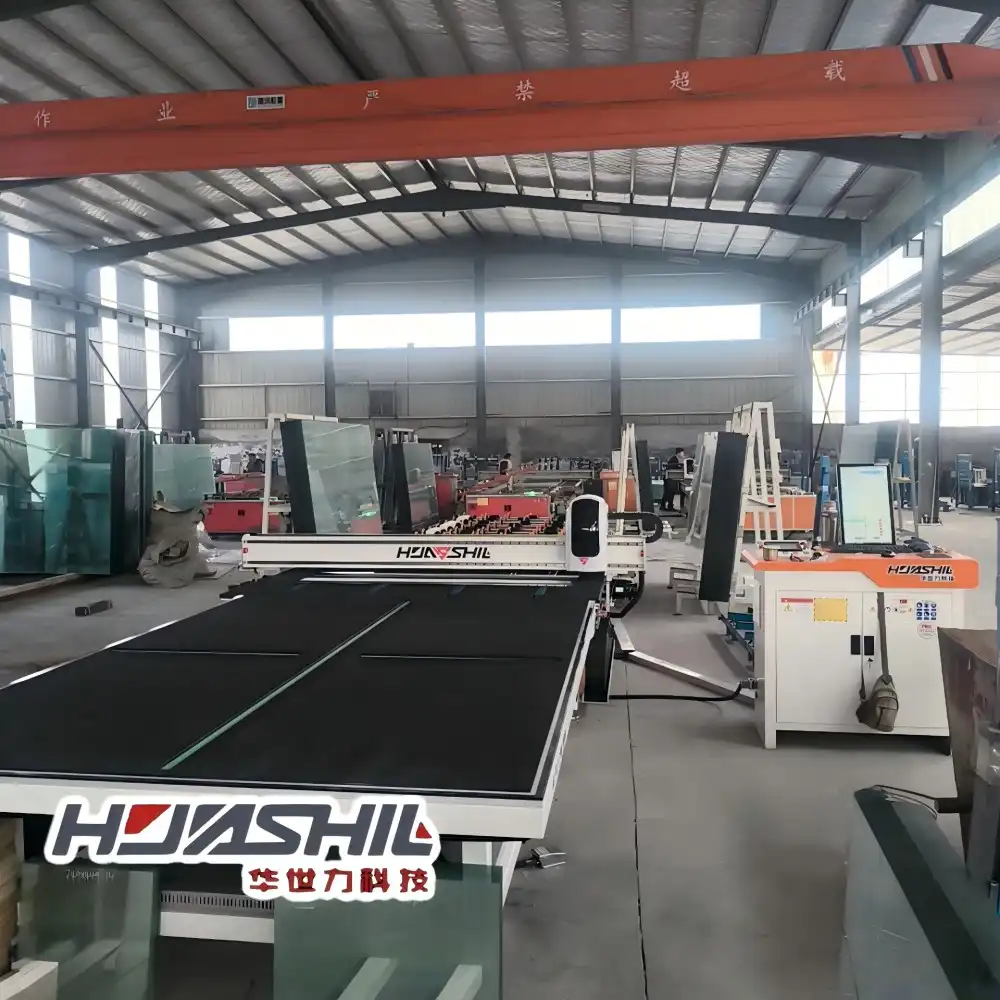
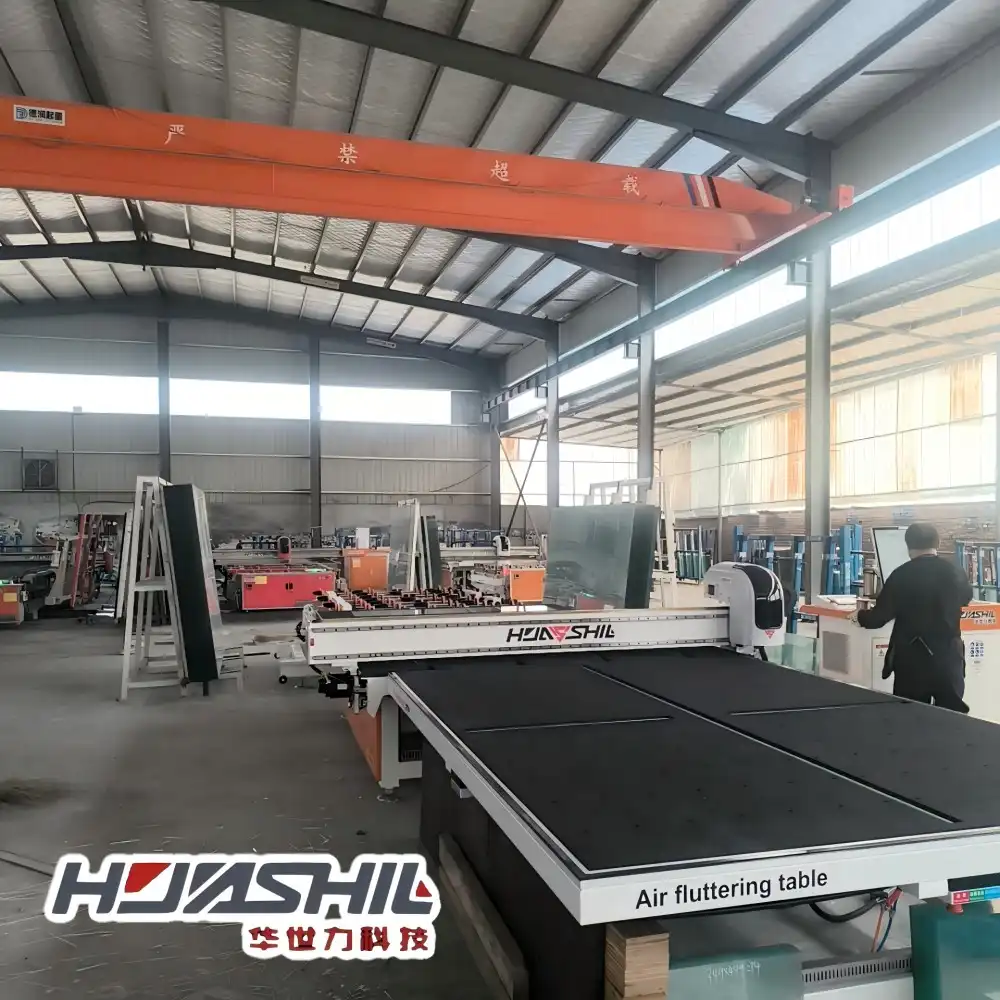
Contemporary glass production automation uses coordinated machinery. A typical configuration includes loading tables for raw glass sheets, CNC-controlled cutting stations with optimal patterns, and clean-separating breaking tables. Three specialized tables—loading, cutting, and breaking—configured on the above or subterranean rail systems demonstrate this integration in the HSL-LSX4228 model. The equipment efficiently handles glass sheets up to 4200×2800mm with 2+2 station setups and four grand arms on each side.
Intelligent cutting patterns are calculated using Optima optimization software to improve material consumption and minimize waste. This program calculates order requirements, nesting configurations, and tool paths that the equipment performs accurately. Machine precision and computer optimization enable manufacturing that manual techniques cannot.
Technologies Enabling Precision Manufacturing
CNC systems regulate movement with micron-level precision in modern automation. Robotic arms with specialized grippers handle glass sheets without harm, while sensor arrays track position and alignment. Laser measuring devices automatically change dimensions before faults develop. These technologies provide quality over manufacturing runs of 10 or ten thousand items.
Precision is improved via temperature-controlled and vibration-isolated mounting solutions. Advanced automated glass processing production equipment automatically adjusts for ambient effects on glass qualities. Glass thickness, composition, and ambient conditions determine cutting speeds, grinding pressures, and cooling rates, delivering ideal results regardless of external influences.
Comparing Automated vs. Manual Glass Processing
Comparing automated and human glass processing shows significant disparities in capacity and consistency. Manual operations vary in quality and speed due to the operator's expertise.
Performance and Quality Advantages
Automation maintains processing quality throughout long manufacturing runs. As operators tire or encounter difficult material dimensions, manual cutting and edging vary. Automation repeats activities to ensure each item fits standards. This consistency is useful for architectural applications where glass panels must line up perfectly within curtain wall assemblies or window frames.
Automation greatly boosts production. Depending on the intricacy, a manual operator may process 30-40 pieces daily. Automation handles 200-300 pieces per minute, and sophisticated versions handle much more. The HSL-LSX4228 system's multi-station structure and efficient material flow keep machines productive and reduce idle time.
Economic and Operational Benefits
Reducing labor costs gives immediate financial benefits. Operators of automated systems focus on monitoring and quality control rather than repetitive physical activities. This change decreases workplace injuries and boosts job satisfaction. Operators go from physical labor to technical responsibilities, managing complex machinery and solving occasional problems.
Software-driven optimization boosts material use. Optima and related systems assess cutting needs and arrange patterns to maximize sheet use. Manual operators use intuition and experience, which seldom equal computerized optimization. Waste reduction affects profitability, especially when producing premium glass grades or specialist coatings.
Energy efficiency increases with better processing. Automation reduces peak power needs by minimizing machine starting and shutdown cycles. Grinding and polishing are precisely controlled to reduce material removal and processing time. Efficiency improvements reduce operational costs and promote sustainability.
Breakthrough Technologies Driving Glass Processing Automation
New technologies provide automation with intelligence and flexibility. Complex processing needs are simplified by these advancements.
Integration of Smart Manufacturing Concepts
Glass production equipment becomes linked and intelligent with Industry 4.0. Modern machinery has sensors that continually monitor performance and provide data to management systems. Production managers may view throughput, equipment status, and quality parameters remotely. This insight allows preemptive maintenance scheduling, preventing production-disrupting malfunctions.
Predictive maintenance algorithms discover operating trends before component breakdowns. Bearing wear, motor performance decline, and tool condition changes are obvious before producing quality difficulties or equipment damage. Maintenance teams get notifications early enough to arrange interventions during planned downtime, optimizing equipment availability.
Remote diagnostics capabilities allow technical specialists to troubleshoot issues without site visits. Equipment makers diagnose issues using system logs and operational metrics over secure network connections. This is especially useful for overseas deployments when on-site support is costly and time-consuming.
Advanced Control and Precision Systems
Complex edge profiles and forms are possible with automated glass processing and multi-axis CNC control. Curves, bevels, and artistic grinding patterns are becoming more common in architectural glass. Automated equipment implements these profiles accurately, programming stored designs that operators remember with simple commands. This flexibility allows special orders without affecting manufacturing.
Integrated laser cutting provides possibilities not available with mechanical tools. Laser systems can cut thin glass without breaking, manage coatings that destroy cutting wheels, and create detailed designs with low kerf width. Laser cutting for complicated geometries and mechanical cutting for common operations enable complete processing on single manufacturing lines.
AI-enabled vision systems assess quality automatically. High-resolution cameras photograph final edges, surfaces, and measurements. AI systems match these photographs to specs to find problems human inspectors miss. The system automatically diverts rejected parts and tracks defect kinds and frequencies for process improvement.
How to Choose the Right Automated Glass Processing Machine?
Selection of automation equipment demands careful consideration of production needs, technical specifications, and supplier capabilities. Long-term success depends on careful choice for the large capital commitment.
Assessing Production Requirements
Equipment selection starts with production volume analysis. Consider equipment growth plans when calculating present and prospective throughput. Sized machines for production quantities maximize efficiency. Undersized equipment causes bottlenecks, while large systems waste money.
Glass size and thickness affect machinery needs. The HSL-LSX4228's 4200×2800mm capacity suits most architectural and furniture applications; specialist goods may need other dimensions. Assess current product mix and future needs to ensure selected equipment can handle both.
Applications demand different edge quality. Architectural glass for visible installations must have polished edges that fulfill aesthetic requirements. Dimensional precision trumps attractiveness in structural applications. Clarify quality parameters and ensure candidate equipment meets standards.
Evaluating Technical Capabilities
Flexibility of equipment determines production adaptability. A system with different edge profiles, programmable cutting patterns, and customizable processing parameters can handle diverse orders without reconfiguration. Optima's optimization skills calculate optimal cutting patterns for different order combinations.
Maintenance accessibility greatly impacts long-term operational expenses. Equipment with accessible parts, clear maintenance instructions, and replacement parts reduces downtime. Assess supplier support infrastructure, including technical support, training, and spares inventories.
Integration with current manufacturing systems simplifies installation. Modern equipment receives task specs and reports completion automatically via ERP systems. Integration saves manual data entry, decreases mistakes, and gives production insight for schedule optimization.
Supplier Selection Criteria
Experience and reputation imply manufacturer reliability and support. Proven providers like Huashil have years of production and export expertise. Real-world performance and responsiveness are shown by customer references from similar applications.
Total ownership expenses depend on warranty and after-sales assistance. Comprehensive warranties cover initial repair costs. When problems develop, fast technical help reduces downtime. Before buying, clarify support, response time, and parts supply schedules.
Customization allows for specific solutions. Customized equipment benefits production lines servicing niche markets or processing specific glass varieties. OEM/ODM suppliers offer prototype development and flexible customisation procedures that conventional equipment cannot.
Implementing Automated Glass Processing Solutions in Your Business
Successful automation goes beyond equipment installation. Strategic planning and implementation enhance ROI while minimizing interruption.
Infrastructure and Workforce Preparation
Automation efficiency is greatly affected by production floor layout. For material loading, completed goods disposal, and maintenance, the equipment needs room. Equipment-specific electrical, pressurized air, and network connectivity are required. Avoid installation delays by planning infrastructure upgrades before equipment arrives.
Workforce training occurs before equipment arrives. Operators need thorough training in regular operation, maintenance, and troubleshooting. On-site training, extensive documentation, and technical assistance from suppliers ease migrations. Multiple operators cross-train to maintain output when the primary staff is unavailable.
Planning integrates new equipment with current processes. Define material flow from storage to automated glass processing to final items. Establish quality control processes using automated inspection with proper monitoring. When feasible, implement during production lulls to minimize customer obligations.
Performance Monitoring and Optimization
Key performance indicators quantify automation success. Monitor throughput, quality defect rates, material use, and equipment availability. Check these data against baseline manual performance and supplier standards to find areas that need improvement or training.
Continuous improvement uses automation. Analyze production data for bottlenecks, quality concerns, and efficiency gains. Use empirical data to adjust cutting patterns, processing settings, and maintenance schedules. Modern equipment's data-collecting capabilities enable modest performance enhancements.
ROI goes beyond immediate cost reductions. Improve quality to decrease customer complaints and warranty expenses. Consider capacity enhancements for business development without facility expansion. Consider competitive advantages from faster delivery and consistent quality. These detailed ROI studies show stakeholders the full benefit.
Conclusion
Automation turns handcrafted glassworking into precision production. Intelligent software and sturdy mechanical components in modern systems like the HSL-LSX4228 guarantee constant quality at production quantities unattainable manually. The method reduces labor costs, improves quality, and optimizes material use. Strategic implementation and thorough supplier collaboration give enterprises a durable competitive edge in shifting industries that need accuracy and efficiency.
FAQ
Q1: What types of glass processing benefit most from automation?
High-volume production of architectural glass, curtain wall components, and furniture panels gains maximum automation benefit. Applications requiring consistent edge quality, precise dimensions, and rapid throughput justify automation investment most readily. Specialized applications involving complex shapes or premium materials also benefit from reduced manual handling and improved consistency.
Q2: How does automated equipment compare in initial cost versus long-term savings?
Automated systems require substantial initial investment, typically ranging from moderate five-figure amounts for single machines to significant six-figure investments for complete production lines. Payback periods generally span two to four years through combined labor savings, improved material utilization, increased throughput, and quality improvements. Total cost of ownership calculations should include maintenance expenses, energy consumption, and productivity gains over the equipment's operational life.
Q3: What criteria matter most when selecting automation suppliers?
Supplier reliability, technical support quality, and customization capability determine long-term success. Evaluate manufacturer experience through customer references and installation portfolios. Verify support infrastructure, including spare parts availability, response time commitments, and training programs. Assess customization capabilities when standard configurations do not match specific production requirements perfectly.
Partner with HUASHIL for Advanced Automated Glass Processing Solutions
Shandong Huashil Automation Technology represents proven expertise in glass processing automation, combining advanced engineering with comprehensive support. Our HSL-LSX4228 automated cutting system delivers the precision and efficiency your production demands, backed by Optima optimization software that maximizes material utilization. As an established automated glass processing supplier, we provide complete solutions from initial consultation through installation, training, and ongoing technical support. Our engineering team customizes configurations addressing your specific production requirements, whether you process architectural glass, furniture components, or specialized applications. Contact our procurement specialists at salescathy@sdhuashil.com to discuss how our automation solutions enhance your manufacturing capabilities and competitive position. Request detailed specifications and application case studies relevant to your industry today.
References
1. Chen, W., & Zhang, L. (2022). Advanced Manufacturing Systems for Architectural Glass Processing. Industrial Automation Press.
2. Martinez, R. (2021). "Efficiency Analysis of Automated vs. Manual Glass Fabrication Methods." Journal of Manufacturing Technology, 45(3), 178-195.
3. Thompson, J., & Anderson, K. (2023). Industry 4.0 Applications in Glass Manufacturing. Technical Publishing International.
4. Williams, S. (2022). "Cost-Benefit Analysis of Glass Processing Automation in Mid-Scale Fabrication Facilities." International Journal of Production Economics, 38(2), 245-267.
5. Zhou, M. (2023). Precision Control Systems for Glass Cutting and Edging Equipment. Engineering Science Publishers.
6. European Glass Manufacturing Association. (2023). Automation Technology Standards and Best Practices for Glass Processing. EGMA Technical Report Series, Volume 12.
