




Understanding the room needs is crucial for a good application of an Automatic Glass Cutting Assembly Line. Depending on how they are set up and how much room they need, these automatic systems usually need between 500 and 1,200 square meters of floor space. The HUASHIL Model HSL-LSX4228 can handle glass up to 4200x2800mm across three combined tables for loading, cutting, and breaking. To get the best production efficiency and workplace safety, the space needs to be carefully planned to allow for material flow, operator access, and repair areas.
Understanding the Space Requirements of Automatic Glass Cutting Assembly Lines
Planning for space is the key to making robotics projects in the glass industry work. When our team works with architectural glass plants and curtain wall installers across the US, we always see that poor space assessment causes safety standards to be broken and operations to slow down.
Typical Footprint Dimensions for Modern Systems
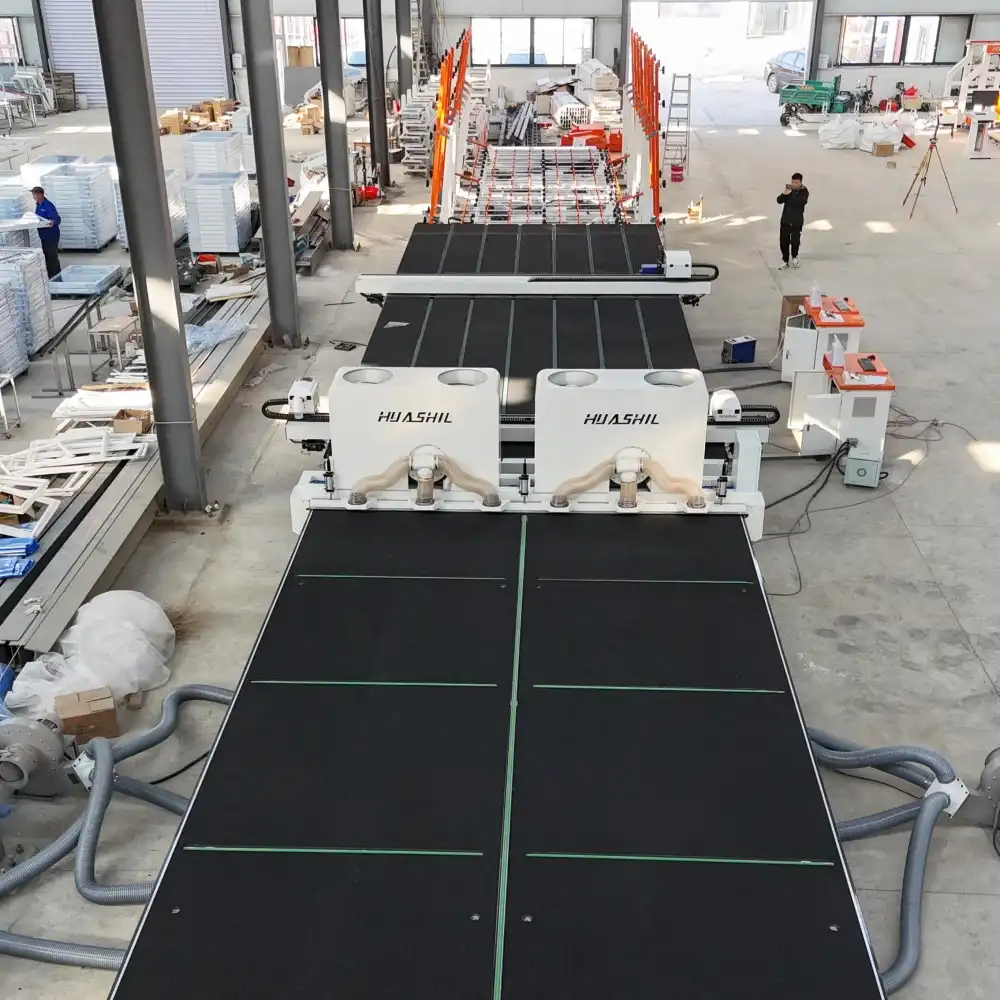
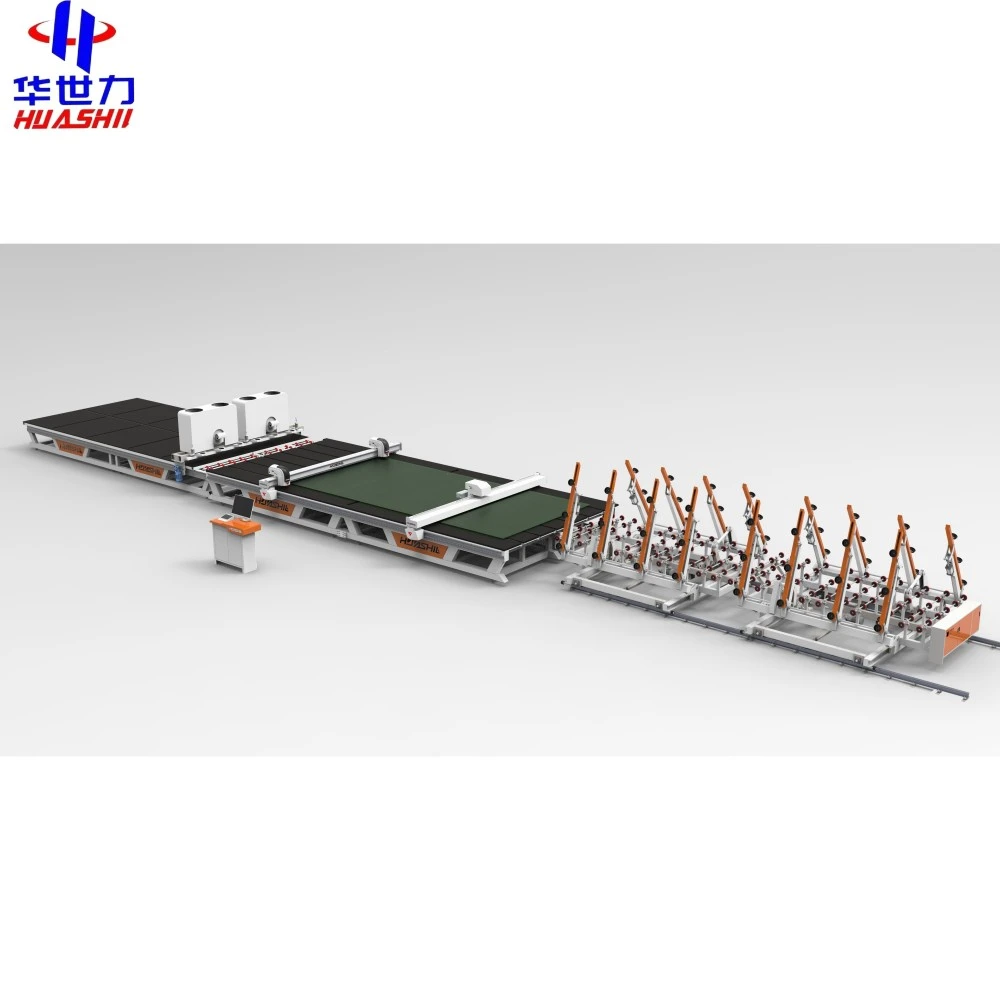
The size of automated glass cutters depends on their cutting capacity and technology. The HSL-LSX4228's typical layout fits three workstations in 25 meters of length and 8 meters of breadth. These sizes increase with more material handling instruments, quality inspection stations, and final product storage. Workers require just the area surrounding the loading table to securely move large sheets of glass, and the cutting table needs precise placement. Space surrounding the breaking table is needed to sift and prepare completed pieces for future processing.
Component Layout and Material Flow Dynamics
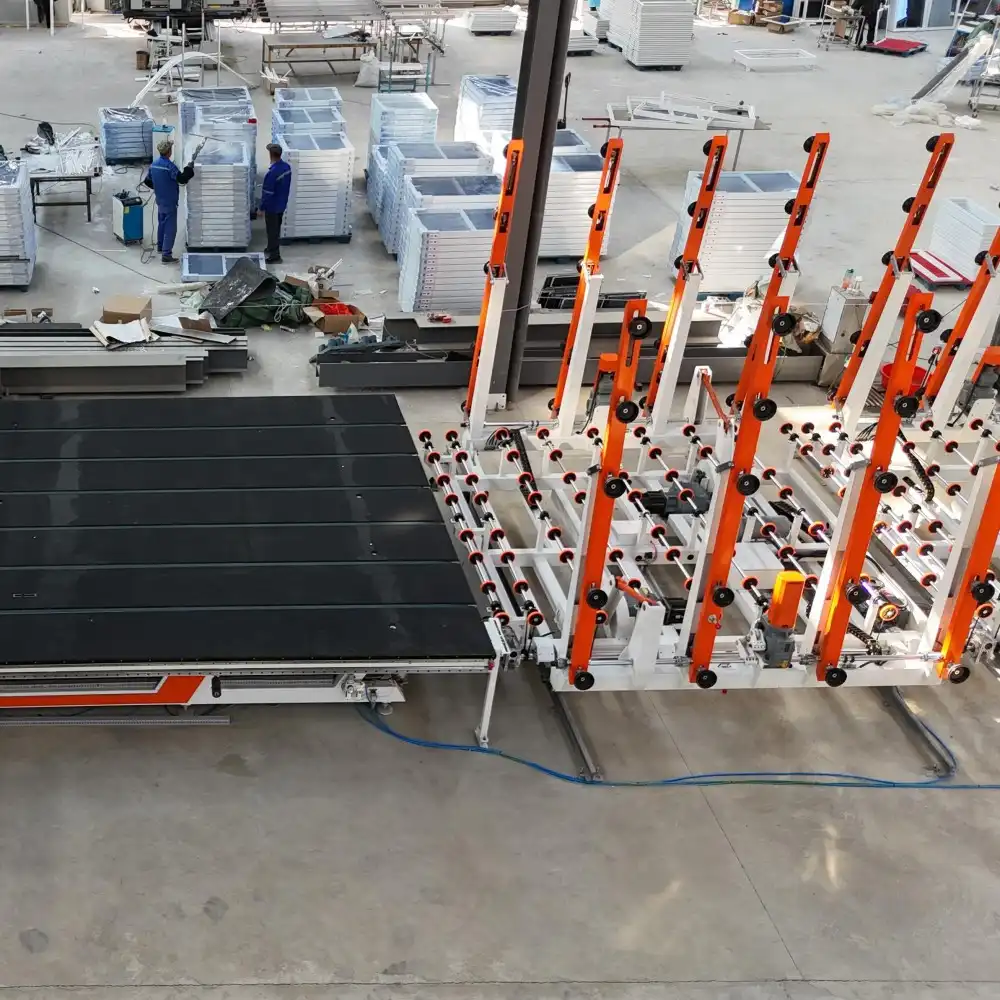
How well materials are transported affects production and company expenses. The HSL-LSX4228 features 2+2 stations that may be configured for above-ground or subterranean rail lines. This allows companies to adjust the method to their facilities. Each side features four large arms to hold glass sheets while cutting. These arms require room to avoid collisions and protect operators. The Optima program optimises cutting patterns to save waste. These efficiency advantages depend on the space architecture, which should allow seamless loading, cutting, and breaking without congestion.
We've witnessed multiple installs where 1.5 meters of distance around critical equipment decreases handling time by 18% and reduces workplace hazards. The conveyor systems connecting these stations must accommodate glass sheet sizes and safety gaps. This is crucial for materials near 4200x2800mm. Extra stations for edge removal, cleaning, and quality control should function with the Automatic Glass Cutting Assembly Line without interfering.
Vertical and Overhead Space Considerations
Ceiling height is typically overlooked during planning, yet it affects equipment placement and maintenance. Automated glass cutting lines need 4.5 to 6 meters of ceiling clearance for lifting tools, repair cranes, and ventilation. HSL-LSX4228 grand arm systems function in vertical regions that match the building's infrastructure. Lack of overhead space limits crane access during equipment repair. This might require hours to days of downtime while installing new parts.
Comparing Space Requirements: Automatic vs Manual Glass Cutting Lines
The way things are made has a big impact on how facilities are designed and how space is used. Many factory managers who are moving from manual to automated operations don't realize how much room changes when they switch to an Automatic Glass Cutting Assembly Line.
Footprint Efficiency and Workflow Integration
Cutting glass by hand requires many workstations, each with its own floor area, storage, and operator access. A manual line that processes the same amount of data as the HSL-LSX4228 may demand 40–60% more floor space due to unlinked operations and material movement. Glass is manually transported between measuring, cutting, and breaking stations. Wide passageways and temporary storage places enhance space needs.
Automated systems integrate these tasks. Our three-table assembly line reduces working space and material processing time. Merging accelerates production, reduces travel time, and reduces handling damage. When firms convert from manual to automated cutting, they employ the extra floor space for manufacturing, storage, or value-added processing stations to improve their products.
Safety Zone Requirements and Operator Positioning
Safe spacing between people and machines is required at work, yet autonomous systems need less space than humans. Manual cutting stations need ample space for operators to roam about. Instead, customers only need to connect to the HSL-LSX4228 at loading and unloading points. The grand arm automates material movement in the cutting area, saving operators from heavy glass sheets and sharp edges.
Safety margins around automated equipment are 0.8–1.2 meters. At manual stations with constant movement, they are 1.5–2 meters. Complete production centers will save a lot of floor space. Access points for emergency stops and repair pathways must still be carefully designed, but automated systems' regular movement patterns make safe zones easier to construct than when individuals execute varied activities by hand.
Key Factors to Consider When Planning Assembly Line Space
Technical specs, facility features, and operating needs must all be taken into account in order for space planning for an Automatic Glass Cutting Assembly Line to go well. When engineering managers look at automatic glass cutting tools, they have to think about a lot of factors that affect each other.
Machine Specifications and Technical Parameters
Equipment sizes are only the start of room estimations. The HSL-LSX4228 can accommodate 4200x2800mm glass at its widest point, the minimum table size. The operational room must be substantially larger. Transport racks and storage carts must fit full-size glass sheets. This implies the loading side needs 1.5 meters more area. The cutting table area needs accurate positioning equipment and simple user access to alter settings and instruments.
Breaking table zones need an area to gather finished parts before processing or packaging. Makers must consider ways to allow simultaneous operations at the 2+2 station arrangement without interfering. The four large arms on each side function within distinct reach bands that specify minimum width requirements. Underground trains make the floor seem cleaner, but they need foundations and service access, unlike above-ground trains.
Facility Infrastructure Compatibility
Automation may need construction modifications due to existing building elements. Floor load ability is commonly overlooked in first examinations. When packed with the biggest glass sheets, the HSL-LSX4228 generates concentrated point loads at support points that must meet the structure's capacities. Many older industries constructed for lighter human work need reinforced flooring before using contemporary automation equipment.
Electrical systems must supply enough power, voltage, and backup security. Power for Optima optimisation software and control systems must be constant and surge-protected. However, cutting mechanisms and material handling motors need greater power connections. Compressed air systems with pneumatic controls and vacuum systems that move glass must have the correct pressure and capacity. Climate control is more crucial as automation becomes more complicated to safeguard sensitive electronics and maintain glass materials stable during processing, especially in wholesale glass machining.
Maintenance Access and Service Corridors
Regular maintenance is needed for production tools, which can't be done without planning entry well. We suggest keeping at least 1 meter of space between pieces of equipment when they are being serviced regularly, and 1.5 to 2 meters of space when big parts need to be replaced. The HSL-LSX4228's cutting head units, grand arm mechanisms, and rail systems all need to be inspected, adjusted, and parts replaced on a regular basis, which means they need enough room to work.
Optimizing Space for High Efficiency and Scalability
Space planning that looks to the future takes into account not only current production needs but also the possibility of growth in the future and changing manufacturing needs for an Automatic Glass Cutting Assembly Line.
Modular Design Approaches
When it comes to freedom, modular equipment setups can't be beat. The HSL-LSX4286's configurable station arrangement is a good example of this method because it lets makers change operating zones based on changes in the mix of products or the need for more space. Curtain wall makers who make custom orders for projects can use plans that can be changed to fit different glass sizes and cutting patterns without having to move a lot of equipment around.
Phased capacity growth is possible with modular designs, which let makers install partial systems at first and add more features as production demands allow. This staged method lowers the amount of cash needed at the start while still leaving room for future growth. The underground rail system choice is especially good for flexible growth, which lets makers add automation to more areas of existing production with little impact on current operations.
Automation Integration and Smart Manufacturing
More contemporary glass cutting lines employ sensor networks and data gathering systems to monitor and enhance production in real time. Optima software for the HSL-LSX4228 optimises cutting patterns. Combining upstream and downstream purchase systems and processing equipment increases these advantages. Network infrastructure and data processing power for IoT sensors that track machine performance, material flow, and quality must be designed when the space is first set aside.
In smart manufacturing, control workstations, data processing devices, and operator interface displays take up more space than expected. Production supervisors who oversee many automated lines require a central tracking system or strategically placed cameras. These demands should influence equipment placement during plan design rather than slowing productivity.
Documented Performance Improvements
When glass manufacturers use optimized space planning, they regularly report real changes in their operations. Even though they kept the same amount of floor space, a furniture glass maker in the Midwest cut the time it took to move materials by 34% by rearranging production around their automatic cutting line. A Californian architectural glass fabricator increased daily production by 27% by making better use of the room and getting rid of bottlenecks between cutting and edging processes that came after.
These changes come from carefully looking at how materials move, getting rid of unnecessary steps in the process, and placing tools in a way that reduces the distances that need to be transported. The money spent on good space planning pays off in higher output, lower labor costs, and better product quality from less damage during handling.
Procurement and Implementation Considerations for Space Planning
When deciding what Automatic Glass Cutting Assembly Line tools to buy, space needs must be taken into account along with technical specs, business terms, and implementation timelines.
Supplier Selection and Space Assessment
When technical buyers are looking at different equipment providers, they should ask for detailed installation plans that show where the equipment will go, how it will connect to utilities, and how materials will move. The HSL-LSX4228 specs include exact measurements, but it takes a lot of knowledge to translate technical models to real building plans. Reliable suppliers offer site evaluation services where application engineers look at the conditions of the building, find any possible problems, and suggest the best places for equipment to be placed.
When evaluating suppliers, procurement managers should ask for examples from similar setups in similar types of buildings. The space needs of architectural glass plants are different from those of furniture makers, and tools that work great in one place might not work so well in another. Site visits to sites that are already up and running can teach you a lot about how space is used in the real world and bring up practical issues that aren't covered in specification sheets.
Installation Planning and Site Preparation
Installing equipment correctly starts months before the gear even gets to the building. To prepare the foundation for the HSL-LSX4228, it needs to be precisely leveled and may need to be reinforced to support operating loads. To build an underground train system, you have to dig trenches and pour concrete, which needs to dry properly before the equipment can be put in place. To avoid delays in installation, utility connections for power, compressed air, and network hardware should be finished and tested before the equipment is sent out.
A lot of makers don't think about how long it takes to put things together and how much coordination is needed between equipment providers, building contractors, and their own operations teams. A thorough installation plan includes details about how to bring the equipment, how to set it up and rig it, how to connect the utilities, how to do the first testing, and how to train the operators. Allow two to four weeks for the equipment to arrive and for the factory to be fully operational. This depends on how complicated the system is and how ready the site is.
Ongoing Optimization and Adaptation
Space planning doesn't end when the equipment is set up correctly. As production trends, product mixes, and market needs change, building layouts and equipment use need to be reviewed on a regular basis. Modern computerized systems like the HSL-LSX4228 can be changed without spending a lot of money on new equipment, but makers need to keep an eye on performance metrics to find ways to make the systems work better.
Setting up regular review rounds, like every three or six months, lets production teams look at throughput data, find problems, and make plan changes that keep operations running smoothly. Operators, repair workers, and engineers should be able to give their opinions on these reviews since they use the equipment every day and can see ways to make it better that management might miss.
Conclusion
The operating success, production efficiency, and return on investment of Automatic Glass Cutting Assembly Line systems depend on how well the space is planned. The HUASHIL Model HSL-LSX4228 has advanced automation features, but these only work if the equipment is placed in well-thought-out facilities that allow for material flow, user access, repair needs, and the possibility of future growth. When manufacturers do thorough spatial analysis during the procurement and installation phases, they regularly get higher throughput, better safety performance, and more operating flexibility than manufacturers who don't plan for space until after they buy the equipment.
FAQ
Q1: How much room does a normal automatic glass cutting line need?
The amount of space needed depends on how the equipment is set up and how much it can produce. The HUASHIL HSL-LSX4228 model needs a space about 25 meters long and 8 meters wide for the main equipment, plus extra space for loading and unloading materials, user access, and repair paths. The total area of the building is usually between 500 and 800 square meters, but this depends on the extra tools and how the work is organized. With the right amount of space between the tables, this size can fit a three-table setup that can handle glass sheets up to 4200x2800mm.
Q2: Can automatic cutting lines work in places that were made for human work?
With the right changes, many factories that are already in use can fit automatic glass cutting equipment. Most of the time, ceiling height, floor load capacity, and electrical facilities are what hold something back. Because the HSL-LSX4228 can be configured with either above-ground or underground rail choices, it can be used in a wide range of facility kinds. However, structural evaluations and possible strengthening may be needed before installation. This is especially true for older buildings that weren't built to handle heavy loads from automatic equipment.
Q3: How much room should there be around cutting tools?
For practical efficiency and safety reasons, there must be at least 1 meter of clearance on the service sides where routine repair is done. This clearance must increase to 1.5 to 2 meters for entry to major components. More room is needed in loading zones for material handling tools and people to move around. The working envelopes for the grand arm mechanisms must be clear, while the customizable station arrangement gives you some freedom in how space is used. Local safety rules usually say that emergency entry routes must stay clear and have a minimum width of 1 meter.
Partner with HUASHIL for Your Automated Glass Cutting Solutions
Since the 1980s, HUASHIL has been helping glass makers improve their output skills by using smart automation solutions. Our HSL-LSX4228 Automatic Glass Cutting Assembly Line is the result of years of work to improve precision cutting technology. It has the Optima optimization software, flexible station setups, and strong systems for moving materials. As a well-known supplier, we know how important it is to put equipment correctly in places that are meant to be as operationally efficient as possible.
Our technical team does full site assessments, thorough planning for installations, and continued support for as long as the equipment is in use. HUASHIL offers solutions that are tailored to your unique space limitations and production needs, whether you're adding new production capacity, updating old manual processes, or making the most of automatic systems that are already in place. Get in touch with our team at salescathy@sdhuashil.com to talk about how to automate the process of cutting glass and get expert advice on how to plan your space so that your facility investments become competitive benefits.
References
1. Glass Manufacturing Industry Association. (2023). Automated Production Systems: Design and Implementation Guidelines for Glass Processing Facilities. Industrial Press.
2. Patterson, R.L. & Chen, M. (2022). "Spatial Optimization in Automated Manufacturing: A Case Study of Glass Cutting Operations." Journal of Manufacturing Systems Engineering, 47(3), 234-251.
3. National Institute of Standards and Technology. (2023). Factory Layout Planning: Best Practices for Automated Assembly Line Integration. U.S. Department of Commerce.
4. Bergström, K. & Liu, Y. (2021). "Comparative Analysis of Manual and Automated Glass Processing Systems: Spatial Requirements and Productivity Outcomes." International Journal of Production Research, 59(12), 3567-3584.
5. American Society of Mechanical Engineers. (2023). Safety Standards for Industrial Glass Processing Equipment: Installation and Operational Guidelines. ASME Press.
6. Morrison, T.J. (2022). Modern Glass Manufacturing: Technology, Automation, and Facility Design Principles. Technical Publishing International.
