




What kinds of materials an automatic glass cutter can work with depend on the type of glass, its thickness, and how the surface has been treated. These days, automatic cutting systems can work with many kinds of glass, from 2 mm to 19 mm thick, such as float glass, layered glass, coated glass, and other specialty materials. Precision cutting wheels, automatic pressure control, and optimization software on these tools make sure that the results are the same in all architectural, automobile, and decorative uses. Knowing how materials work together helps plant managers and buying directors choose equipment that meets production needs and gives the best return on investment.
Understanding Automatic Glass Cutters and Their Capabilities
Automated glass handling equipment is a big improvement over the old way of marking glass by hand. These automatic glass cutter systems use both precise mechanics and smart control systems to turn raw glass sheets into exactly sized parts that are ready to be put together further down the line.
Core Components and Operating Principles
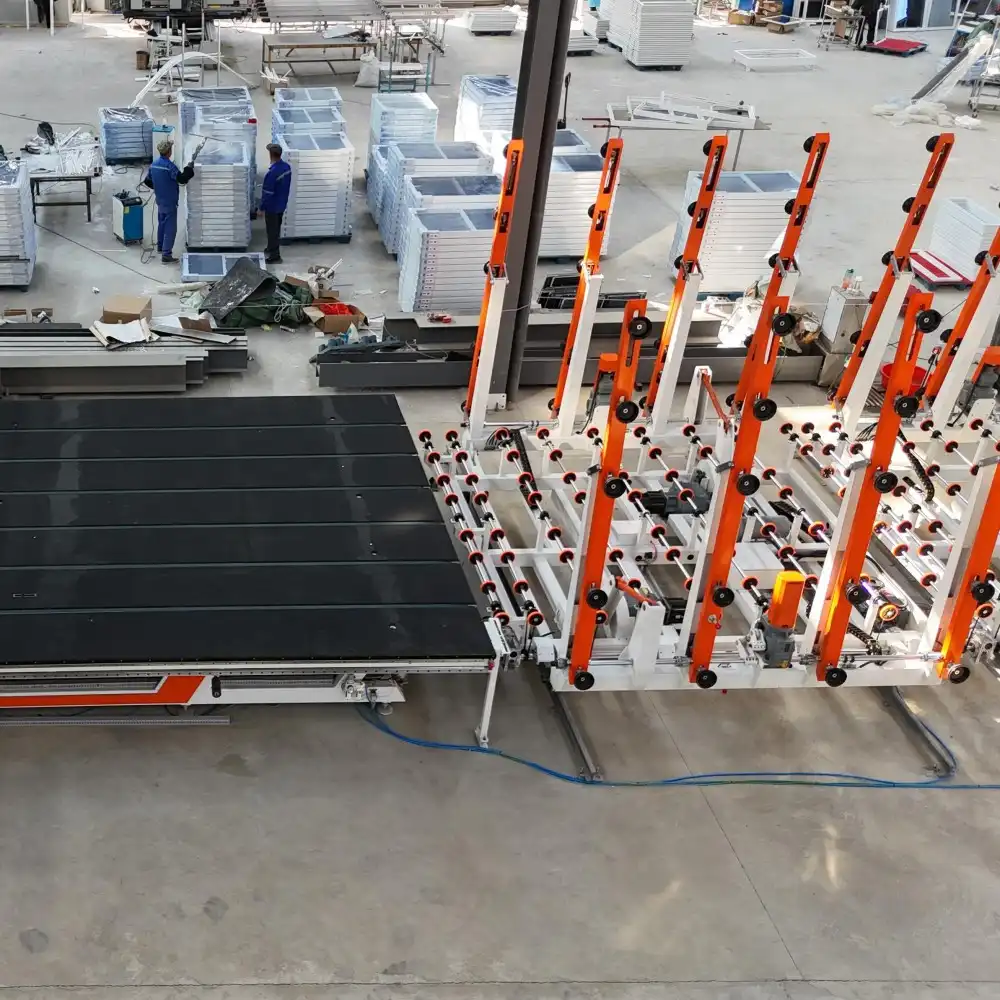
Every cutting system has a movable carbide or diamond cutting wheel on a bridge unit. The bridge glides over glass with controlled downward force. This creates a little fissure along the cut line. Servo motors in modern systems allow 0.1 mm setting accuracy. This maintains dimensions after thousands of cuts. Automatic pneumatic pressure control adjusts force depending on material thickness and hardness. This protects the surface and score lines. The HSL-YTJ3829 model includes automated pressure control that adjusts to glass thickness from 2 mm to 19 mm without user input.
Cutting Mechanism Variations
Electric control systems reduce vibrations that may harm the cut by smoothing acceleration and braking. Pneumatic systems respond fast, making them ideal for high-speed manufacturing when cycle time affects flow. Modern variants employ electric motors for accurate positioning and hydraulic cylinders for immediate pressure. Air float tables support glass, preventing it from hitting other surfaces and scratching covered materials.
Material Classification in Industrial Contexts
Manufacturing plants sort glass items into clear groupings. Basic material is float glass. Molten glass is rested on tin baths to smooth its thickness. Laminated structures use polymer layers between glass layers for safety. Blasting metal or oxide layers on coated versions provides sun control or low-emissivity. Curved glass undergoes heat forming after cutting, requiring special processing. Knowing these categories helps engineering teams design tool settings for their material combination.
Types of Glass Automatic Glass Cutters Can Process
Which projects a construction company can take on and how well its production lines work are both affected by how well the materials work together. Modern automatic glass cutter machinery can work with different kinds of glass because its settings can be changed, and its tools are set up in specific ways.
Float Glass Processing
Cutting transparent hot float glass is easy. Carbide wheels generate clear score lines with minimum force due to their homogenous construction. Changing cutting pressure and wheel speed lets you cut 2 mm picture frames to 19 mm construction panels with the same equipment. The Optima optimization algorithm optimizes cutting patterns for 3,660 x 2,800 mm jumbo sheets based on order demands. This reduces material waste by 8–12% over human arrangement.
Laminated and Safety Glass Considerations
Because polymer binders don't break like glass, laminated constructions require unique procedures. Automated methods score both outsides. To make PVB film, the layers are separated by hand or hot wire. Low-iron laminated glass used in architectural balustrades is created like conventional laminates, but it requires particular handling. Planning production requires considering the two-step process when determining how many printed orders can be filled at once.
Coated Glass Handling Requirements
Low-E coatings and bright metal layers complicate matters since surface damage degrades appearance. Air flotation devices are needed to retain covered glass while situating heads without contacting edges. Automatic edge-finding technology employs optical sensors to identify sheet edges without hand-measuring, which can harm sensitive surfaces. The coatings are unharmed by the cutting wheel touching the glass base. Synchronous belt conveyors transfer completed goods without dragging covered surfaces over support structures.
Why can tempered glass not Be Cut?
Heat contracts the surface and tensions the core of fully tempered and heat-strengthened glass. Any attempt to score the surface releases energy, shattering the panel. Fabricators must finish cutting, shaping, and drilling before hardening. To minimize bottlenecks, procurement teams should ensure that upstream processing capacity matches tempering oven output when buying cutting equipment for tempered items.
Curved Glass Adaptation
When the curve radius exceeds the tools, cylindrically bent glass may be cut. For curved parts, special clamps hold them as the cutting head travels to compensate for the uneven surface. Cutting is generally required before thermal forming complicated structures with several bends. Curved curtain wall unit manufacturers use special flat cutting lines and curved glass processing stations to perform well with each material.
Specialty and Decorative Variants
Because surface procedures don't modify glass's mechanical properties, standard factors are used to cut frosted, coloured, and patterned glass. Acid-etched artistic glass is easy to cut but must be treated carefully to maintain its brilliance. Mirror-backed glass coating, side up on air float tables, protects the silver backing. Cutting art glass with wire mesh requires additional cutting force and wheel changes because metal-on-metal contact accelerates wear.
Selecting Equipment Matched to Your Material Requirements
Buying choices depend on how well the automatic glass cutter powers match the current production needs and the expected growth in the future. Mismatches between equipment specs and practical needs can be avoided with a systematic review process.
Profiling Operational Demands
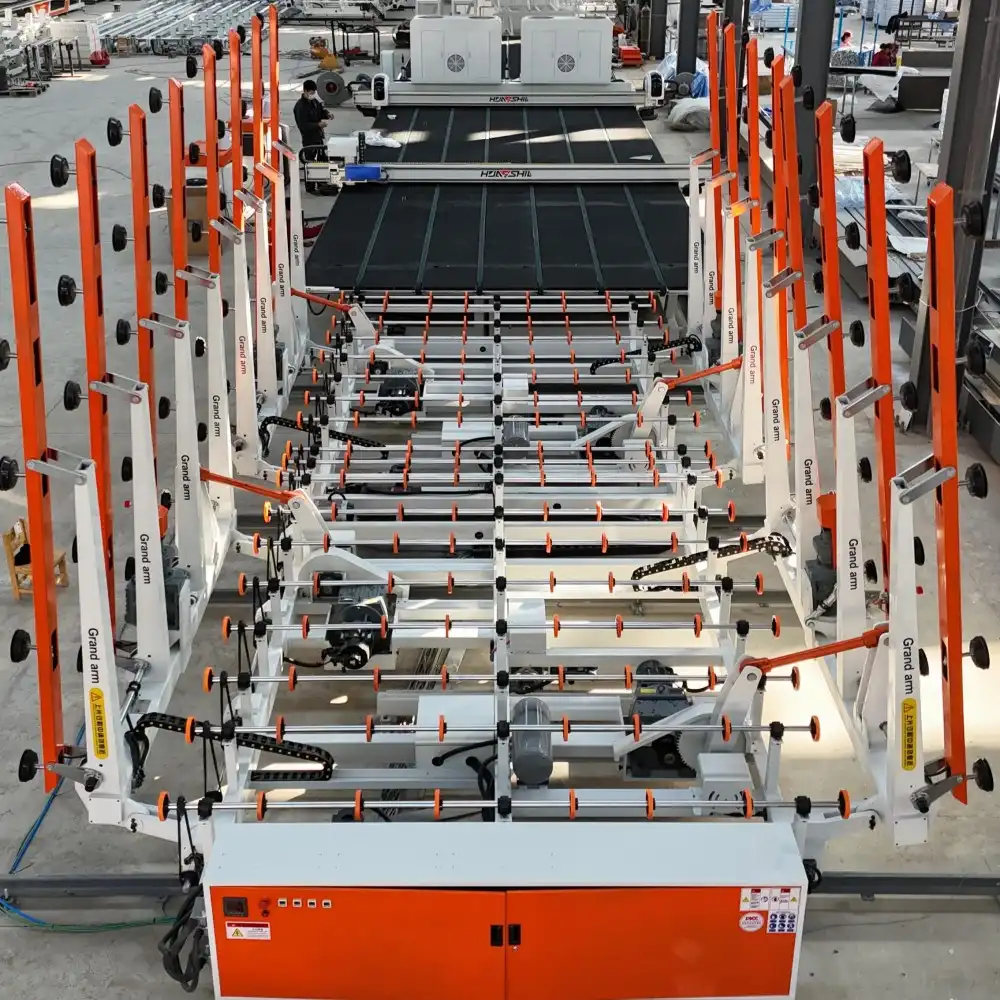
First, examine historical orders to determine which materials, thicknesses, and sheet sizes are manufactured each month. Architectural glass workers, who use 6mm and 8mm float glass, have distinct demands from furniture makers who cut 10mm hardened sections. Production determines whether a single-head or multi-head cutting bridge is cheaper. For factories that produce less than 500 square meters per month, manual loading may work, but automation loading systems save labour costs and cycle time for high-volume operations. The HSL-YTJ3829 automatically loads, making it ideal for locations moving over 800 square meters every shift.
Key Performance Specifications
Cutting precision indicates if completed parts fulfil assembly criteria without grinding. To eliminate fit-up issues in curtain wall installation, maintain ±0.3 mm precision in cutting equipment, such as a China glass cutting machine, over a 3660 mm length. Repeatability ensures that furniture producers creating comparable pieces maintain standards from production run to production run. Only certain-sized stocks may be processed by the facility. Standard building jumbos and smaller furniture blanks may be handled by 3,660 x 2,800 mm sheet equipment. Thickness from 2 mm to 19 mm is wide enough for most building and furniture usage without additional equipment.
Automation Level Considerations
Job shops with a variety of orders and trained operators benefit from entry-level machines that are loaded by hand and feature operator-controlled cutting operations. Automatic pressure management and edge detection make mid-range instruments easier to use and more consistent. Production of shower doors and cabinet glass is highest in factories with fully automatic lines with loading, cutting, breaking, and sorting systems. The remote control's 360-degree walking capability enables workers to monitor many machines at once, increasing labour productivity.
Return on Investment Analysis
Compare the cost of the tools to the money you'll save by hiring fewer workers and getting more done to find the return period. Replacing two $75,000 human stations with a $180,000 automated cutting line may appear pricey, but labour savings are $95,000 a year, and material return gains are $18,000. Most industrial glassmakers recover their investment in 24–30 months. Consider maintenance costs. Good gear may last 10–15 years if maintained, while inferior equipment may need to be replaced after 5–7 years, even if it costs less.
Operational Best Practices for Optimal Cutting Performance
The quality issue isn't just made up of equipment skills. Whether automatic glass cutter processes constantly meet production standards depends on how well the material is prepared, how the machine is set up, and how it is maintained.
Pre-Cutting Preparation Steps
Before filling, clean the glass surfaces very well because dust under the cutting wheel makes the score lines not line up correctly. Instead of wipes that might leave behind dirt, use compressed air or soft brushes. Check that the sheet's measurements meet the requirements for the cutting pattern. For example, trying to cut a 3500mm design on a 3400mm sheet will lead to program errors and wasted material. Keep the glass stored upright in racks at an 85° to 90° angle to keep it from warping, which can affect the accuracy of cutting. Let the cold glass that has been stored outside warm up to room temperature before it is processed, because differences in temperature can change how it cuts.
Thickness-Specific Parameter Adjustment
To keep the glass from breaking during scoring, thinner glass (less than 4 mm) needs less cutting power and a slower wheel speed. The automatic pressure control system changes the force based on the thickness that is entered, but workers should check that the settings make clean score lines without using too much force, which could cause the material to break on its own. Architectural glass that is more than 12 mm thick needs more pressure, and very hard pieces may benefit from being scored more than once. When the right material specs are programmed into the Optima software interface, the HSL-YTJ3829's pressure control system takes care of these changes instantly.
Safety Protocols and Operator Protection
Set clear rules for safety when dealing with broken glass and getting rid of cullet. Cut-resistant gloves must be worn when filling by hand, and eye protection must be worn at all times in the cutting area. Put up hurdles that make it impossible to get to the moving bridge parts while they are in use, and place emergency stop buttons around the machine's edge at regular intervals. Teach workers to spot dangerous situations, like cutting wheels with chips or bearing surfaces that are worn down and raise the risk of an accident. When breaking glass, laminated glass is especially dangerous because the polymer layers can hold sharp pieces in strange places.
Maintenance Scheduling and Troubleshooting
Check cutting wheels daily for chips or wear patterns that require replacement. Good carbide wheels last 8,000–12,000 linear meters. Diamond wheels, depending on glass hardness, may reach 15,000–20,000 meters. Weekly cleaning of guide rails and bearings removes glass dust that accelerates wear. Lubricate moving parts per the manufacturer's directions. Too little grease might break them down early, while too much can generate dust. See if glass sheets float without tugging to test the air flotation system. This indicates proper air pressure and clean orifices. CE and ISO9001-certified tools like the HSL-YTJ3829 have detailed maintenance schedules that extend part life.
Sourcing Strategies for Industrial Glass Cutting Equipment
There is a lot of pressure on procurement managers to choose an automatic glass cutter provider that not only has reasonable prices but also offers reliable after-sales support and technical knowledge that keeps production from stopping.
Identifying Qualified Manufacturers
Brand-name glass tool manufacturers commonly provide cutting, edging, cleaning, and sealing equipment. This assortment indicates that the organization has the technical competence and financial stability to keep things available. Companies with ISO9001 quality certification commit to consistent manufacturing. This facilitates equipment assembly. CE certification signifies a product fulfils European safety requirements. US firms need this because it shows they completed a risk assessment and created a protective system. Due to its years of expertise in creating and installing furniture, architectural glass, and curtain wall products, Shandong Huashil Automation Technology has a solid reputation.
Evaluating Technical Support Capabilities
When equipment breaks down, it affects work plans and customer obligations in a direct way. Find out how quickly a provider is by asking about normal response times for technical support calls and the time it takes to ship parts. When manufacturers keep parts in stock in the US, they can ship important parts within one to two business days instead of two to three weeks for shipping abroad. Technical workers who speak English well and are familiar with how businesses work in the US are better at fixing than translators. Ask for contact information from current customers who have used similar apps to check the quality of help through recommendations.
Total Cost of Ownership Calculation
The purchase price covers just 60–70% of ten-year equipment ownership expenditures. Installation includes foundation construction, electrical service and compressed air supply and costs $8,000 to $15,000, depending on building condition. Replacement wheels, bearings, and pneumatic parts cost 3–5% of the purchase price annually in maintenance. Single-bridge cutting systems consume 8–12 kW, depending on automation. Controls that are simple reduce training expenses. However, systems that need specialized programming abilities cost more than controllers that are easy to learn.
Customization and services that add value
Custom arrangements might meet unique demands, while standard setups work well for many purposes. Unique glass too large for building elements can be cut for longer bridges. Workers can match high-volume queue cutting speeds with additional broken tables. When upstream handling systems and downstream edging equipment cooperate, output flows smoothly. Manufacturers who provide installation instructions ensure equipment is set up and calibrated correctly the first time. This prevents base or electrical line levelling issues. Operator training sessions run two to three days and cover basic repair, routine operation, and preventative maintenance.
Conclusion
Selecting the best automatic glass cutter requires matching the material and thickness with the machine's requirements. Consider the proper level of automation for your workload. Modern technology can accurately and consistently cut 2–19 mm thick float, laminated, coated, and bespoke glass, which humans cannot. Procurement teams should compare vendors based on cut accuracy, sheet capacity, automation, and ownership cost. Good operating procedures, including material preparation, parameter adjustment, and preventative maintenance, will maintain cut quality for as long as the equipment is operated. Working with skilled manufacturers who provide technical assistance and customization sets up fabrication operations for dependable production that satisfies client quality requirements and delivery deadlines.
FAQ
Q1: Can automatic glass cutters process tempered glass?
After being heated, tempered glass can't be cut because scoring the surface releases internal forces that make the glass break right away. Before hardening, all cutting, drilling, and edge work must be done. For plants that make tempered goods, they need enough upstream cutting capacity to get the pieces ready for heating.
Q2: What maintenance schedule keeps cutting equipment operating reliably?
Cutting wheels need to be replaced every day when they wear out, which usually happens after 8,000 to 12,000 linear meters for carbide wheels. Glass dust can be removed by cleaning the guide rails and bearings once a week. Lubricating working parts once a month, according to the manufacturer's instructions, stops them from wearing out too quickly. The accuracy of placement is checked once a year to make sure it stays within the acceptable range. Sticking to structured repair plans cuts down on unexpected downtime and makes equipment last longer than ten years.
Q3: How does material thickness affect cutting parameters?
Less than 4 mm thick glass needs less pressure and slower cutting speeds so that it doesn't break when it's scored. Standard building glass from 5 to 10 mm is made at standard settings with pressure that is adjusted automatically. When cutting glass that is more than 12 mm thick, you need to use more cutting force, and the wheel shape may need to be adjusted. Modern machines like the HSL-YTJ3829 that have automatic pressure control change the settings based on the thickness input. This gets rid of the need to do calculations by hand and ensures uniform score quality.
Partner with HUASHIL for Your Automated Glass Cutting Solutions
HUASHIL is ready to help you with your glass production needs with cutting technology that has been tested and a lot of experience making things. Our HSL-YTJ3829 automated cutting system can handle a range of materials from 2 mm to 19 mm thick. It has features like automatic loading, pressure control, edge recognition, and air flotation to protect coated areas that are still soft. The built-in Optima optimization software increases the amount of material produced, and the 360-degree remote control makes it easy to run multiple machines at once. Our CE and ISO9001 certifications show that we are dedicated to safety and quality standards that protect your investment. We offer customization choices that are tailored to your unique production needs, whether you run an architectural glass plant that works with jumbo sheets or a furniture factory that cuts decorative panels. Email our team at salescathy@sdhuashil.com to talk about how we can help you process your materials and get specifics. As a company with a lot of experience making automatic glass cutters, we offer full help, from choosing the right tools to installation, training, and ongoing technical support to make sure your production line runs smoothly. Get in touch with us right away to find out how HUASHIL robotic technology can help you cut more accurately, get more done, and spend less on running your business.
References
1. Glass Processing Industry Report: Material Handling and Cutting Technologies for Architectural Applications, International Glass Review, 2023.
2. Automation Standards for Industrial Glass Fabrication Equipment, American National Standards Institute, 2022.
3. Comparative Analysis of Cutting Methods for Laminated and Coated Glass Products, Journal of Glass Science and Technology, Volume 45, 2023.
4. Total Cost of Ownership Models for Glass Processing Equipment Procurement, Industrial Equipment Buyers Guide, 2024.
5. Safety Protocols and Best Practices for Automated Glass Cutting Operations, Occupational Safety and Health Administration Technical Manual, 2023.
6. Optimization Algorithms for Glass Sheet Cutting Pattern Generation and Yield Maximization, Manufacturing Systems Engineering Quarterly, 2023.
