




The process of cutting glass is an important part of modern industrial manufacturing. It has a direct effect on the quality of products, the speed of operations, and the total cost-effectiveness of many areas. At its core, a glass cutting line is an automatic system designed for speed and accuracy, which completely changes how makers work with production processes. These advanced production systems make sure that the same amount of work is done over and over again while wasting as little material as possible. This is a huge edge in today's competitive market. This guide gives plant managers, engineering directors, and procurement professionals useful information on how to choose, run, and maintain these important production assets. This will help them support long-term growth and competitive positioning in areas like architectural glass, automotive, furniture manufacturing, and speciality glass.
Understanding Glass Cutting Lines: Types, Benefits, and Safety
What Defines a Modern Glass Cutting Assembly Line?
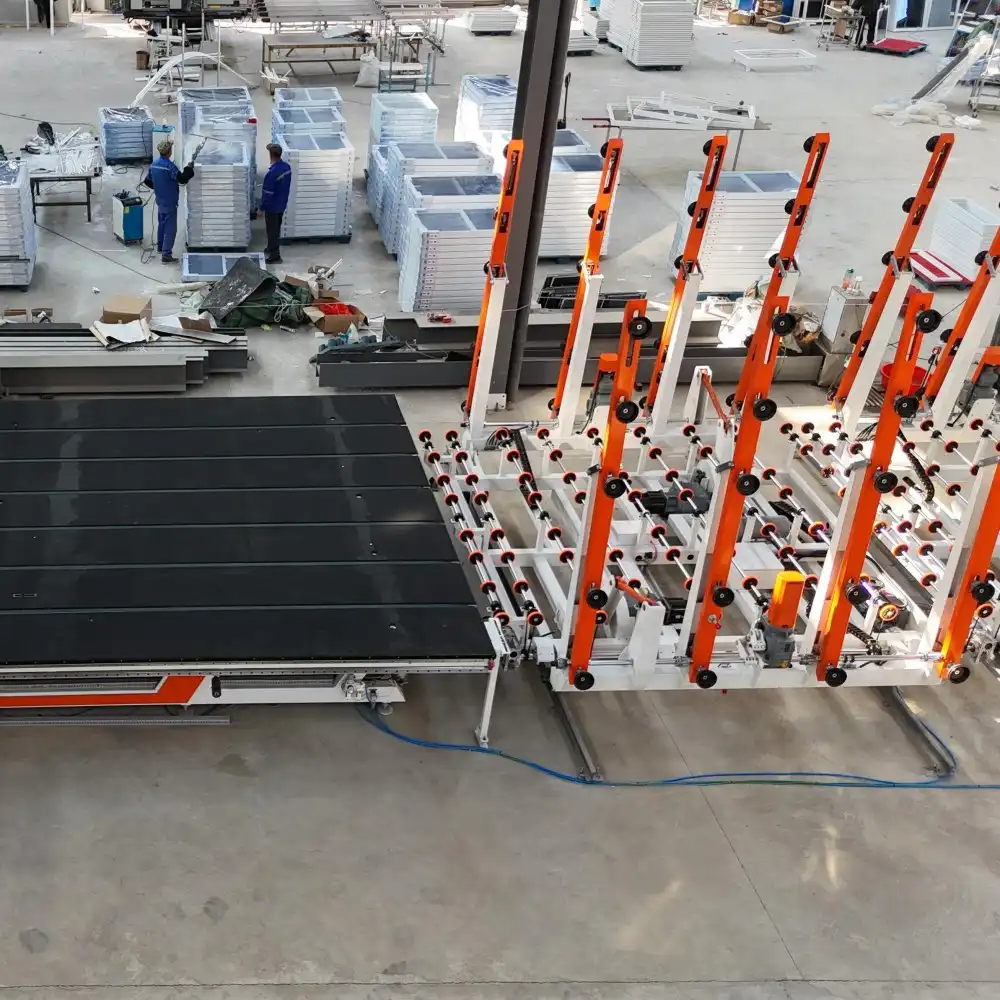
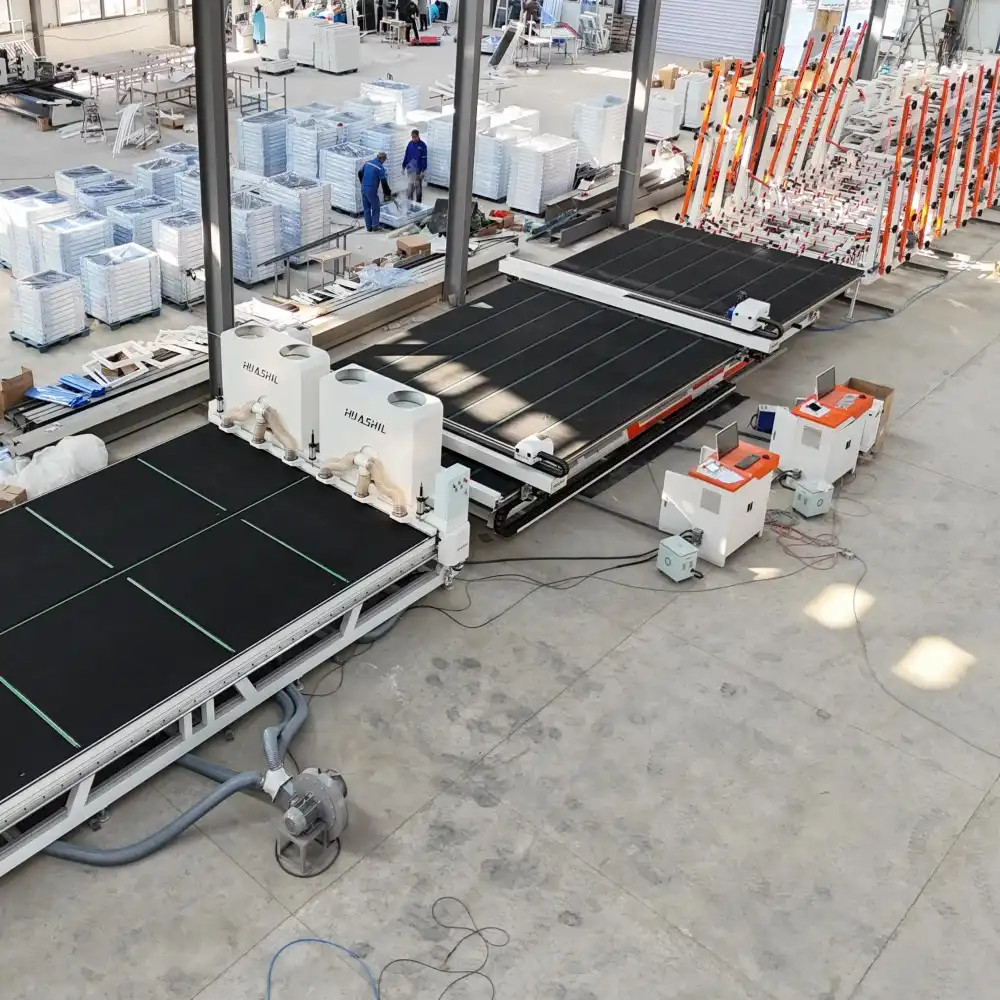
A glass cutting assembly line has several units that work together to cut big sheets of glass into exactly measured pieces that are ready to be processed further down the line. Most modern systems have automatic transfer systems, cutting stations with diamond or carbide wheel heads, breaking devices, and filling tables. This combination is shown by the HSL-LSX6133 model, which has three separate work tables (for loading, cutting, and breaking) that work together without any problems. This setup can handle glass sheets up to 6100x3300mm, so it can be used for curtain walls in buildings, car windscreens that are too big, and large-format decoration panels.
Exploring Different System Configurations
For measurement, scoring, and breaking, manual systems depend on the skill of the user. They are flexible for low-volume speciality work, but slow down production and make it harder to be consistent. In semi-automatic setups, mechanical scoring is added, but loading and unloading must be done by hand. This balances the costs of investment against the gains in output. Fully automatic lines use programmable logic controls, vacuum suction cups to place the glass automatically, and optimised cutting path algorithms like Optima software to get rid of most of the need for human involvement. Cutting at speeds of more than 100 metres per minute, these systems keep errors within ±0.3mm, which is very important for making laminated glass and insulated glazing units, where accurate measurements affect the integrity of the seal.
Industrial Applications Across Manufacturing Sectors
Architectural glass manufacturing plants work with thousands of square metres of glass every day for the outside of businesses, windows in homes, and internal wall systems. By reducing the number of off-cuts, automated cutting lines increase material yield rates while lowering the amount of work that needs to be done by hand by 60 to 70%. Auto glass makers need windscreens and side windows to fit around complicated three-dimensional shapes with a high level of accuracy. Medium-scale automation is being used more and more by furniture makers for shower walls, tabletops, and cabinet doors where uniform edge quality cuts down on cutting time further downstream. Smart mirror production is an example of a speciality application that needs advanced stacking algorithms to get the most material out of each raw glass sheet.
How to Use and Maintain Your Glass Cutting Line for Optimal Performance?
Step-by-Step Operational Procedures
System initialisation is the first step to running a glass-cutting line successfully. The operators turn on the control panel and make sure that all of the safety monitors are ready. They also make sure that the cutting table surface is clean and free of anything that could scratch the glass while it is being processed. At the loading station, vacuum suction lifts glass sheets from vertical racks and turns them horizontal before moving them to the cutting table. The HSL-LSX6133 has twelve lifting points, six on each side. These lifters spread the weight evenly across big sheets to avoid bending, which can lead to measurement mistakes.
To programme cutting patterns, you can either use the human-machine interface to enter the sizes or import CAD files straight into the Optima optimisation software. This advanced stacking algorithm places multiple pieces to reduce waste. Compared to human layout methods, this often leads to an 8–12% increase in material output. The software figures out the best way to cut glass so that the tool doesn't have to be moved around as much. It does this automatically, taking into account differences in glass thickness from 3mm to 19mm. Once the plan is approved, the automatic cycle starts. The cutting head moves along pre-programmed tracks at speeds that are right for the type of glass—slower for rough or coated surfaces and faster for regular float glass.
Breaking happens at specific sites where motorised blades use controlled pressure along scored lines to neatly separate pieces. The 2+2 station design lets multiple pieces be broken at the same time, which greatly increases productivity. Finished items are moved to packing stations by above- or underground train systems. This keeps the production flow going without having to handle the items by hand, which could cause edge chips or surface scratches.
Optimising Speed and Quality Parameters
To find the right balance between speed and quality of cut, you need to know how cutting wheel pressure, traverse speed, and score depth are connected. Too much pressure makes deep scores that might break on their own when handled, while not enough pressure makes weak scores that don't break neatly. Modern controls have preset recipes for common types of glass, like annealed, bent, and low-E treated glass, which operators can tweak based on what they see.
Monitoring systems keep an eye on important performance measures, such as the accuracy of the cuts, which is recorded at random, the rate of breaks, which shows if parameters need to be adjusted, and the cycle times compared to the expected capacity. Analysing the data shows trends like less accuracy after long periods of use, which means the cutting wheel is worn out and needs to be replaced. These measurements help production managers plan ahead for tool changes, which keeps expensive glass from having quality problems that mean it has to be thrown away.
Essential Maintenance Practices
Unplanned downtime that hurts delivery promises and raises costs can be avoided with routine repair plans. As part of daily tasks, the cutting table surface must be cleaned with approved glass cleaners, vacuum cups must be checked for cracks or dirt that weakens their holding power, and cutting oil tanks must be checked to make sure the score wheel has enough oil. As part of weekly routines, the linear guide rails must be checked for proper cleaning, the air pressure must stay within certain ranges, and all emergency stop functions must be tested.
Parts that need to be serviced more often are taken care of by monthly maintenance. Technicians change cutting wheels when the manufacturer tells them to or when edge chipping can be seen, which is usually after 15,000 to 25,000 square metres of work, but it depends on how hard the glass is. They check the drive belts for damage, fix the balance of the conveyor to keep the glass from moving around while it's being moved, and set the position sensors that make sure the pieces are put down correctly. Electrical connections are checked, software backups are made, and the whole system is tested under conditions that are similar to those in production every three months.
Systematic evaluation is needed to fix common problems. Cutting levels that don't stay the same are often caused by old cutting wheels, dirty cutting oil, or incorrect pressure measurements. Shifting glass while it's being cut means that the vacuum holding force isn't strong enough because the suction cups are stuck or there are air leaks in the gas lines. Problems with breaking can happen if the score isn't deep enough, the breaking blade pressure isn't right, or the person tries to break right after cutting without giving the stress time to relax. Keeping detailed repair logs helps find problems that keep happening and directs preventative action before small problems become major ones that stop production.
Choosing the Right Glass Cutting Line: Comparison, Evaluation, and Procurement Guidance
Manual Versus Automated System Considerations
Small manufacturing shops that make 20 to 50 pieces a day might find that hand-cutting tables are enough, especially if they make a lot of custom sizes that would require automatic systems to be reprogrammed often. These businesses put freedom first and try to avoid spending too much on capital, even if it means paying workers more and getting results that aren't always good. Medium-sized factories that make 200 to 500 pieces per day hit a tipping point where semi-automatic systems quickly pay for themselves by cutting down on labour costs and increasing material output. When you look at the total cost of ownership over five years, the switch to automation makes financial sense.
Large producers and those that work on project-based contracts need fully automatic glass cutting lines that can make sure that the quality of thousands of pieces is always the same. The HSL-LSX6133 automatic glass cutting line is for architectural glass makers who can't have production delays or quality differences that put building surface installations at risk. Its combination with Optima software makes it easy to switch quickly between different order specs. This supports just-in-time manufacturing strategies that lower the costs of keeping stockpiles.
Evaluating Technical Specifications and Capacity
Before you can figure out how much production capacity you have, you need to know how much daily production you need, which can be expressed in both piece count and square metres handled. A cutting line that can make 120 pieces per hour can only do that if the conditions are perfect, the pieces are all the same size, and the people working on it are experienced. When setup time, code checks, and regular production breaks are taken into account, real-world capacity is usually between 70 and 80% of the theoretical maximum.
Which building projects or product lines the tools can handle are based on their maximum glass size capability. The 6100x3300mm capacity can handle large architectural glass for modern high-rise curtain walls as well as large car windscreens for business vehicles and other unique uses. For smaller furniture companies, 3300x2440 mm systems might be better for their products because they don't need to spend as much money or have as much space as big-capacity systems.
Specifications for accuracy have a direct effect on activities that happen later. Precision cutting tools with servo-controlled placement and real-time measurement verification are needed for architectural glass that needs to be within ±0.5 mm limits for proper gasket fitting. For less important tasks, like internal walls, ±1.0mm margins may be fine, which means you can choose cheaper tools.
Procurement Strategies and Supplier Selection
To find suitable providers, you have to look at their production experience, the size of their installed base, and their system for providing help after the sale. Shandong Huashil Automation Technology is an example of a maker because it has spent decades on research and development (R&D) in automating glass processing, has a lot of experience exporting to other countries, and has case studies from a wide range of industries. When they go to big trade shows like Glasstech Asia, they can give live demos and have direct scientific conversations.
Asking for full bids should include details about the equipment, promises of production capacity, power and compressed air needs, the size of the facility's area, and an idea of how long it will take to install. Suppliers must make it clear what the guarantee covers (12 to 24 months for important parts) and what extra parts are available, and how long it will take to get them for things like cutting wheels, vacuum fans, and control system units that wear out quickly.
Aside from the initial purchase price, other costs that need to be thought about are freight and customs taxes for foreign purchases, installation and setup costs, operator training programmes, and ongoing maintenance costs. Facilities that want to set up new production lines should include these extra costs in their budgets by 15 to 20 per cent more than the cost of the tools. Usually, you put down a 30–40% fee when you confirm the order, another 50–60% before the goods are shipped, and the last 10% after the installation and acceptance testing go well.
Technical talks are the first step in building relationships with possible suppliers. This is where engineering teams figure out whether stock models meet requirements or if they need to be customised. When cutting lines need to be added to bigger production systems or when industry needs require different designs, OEM and ODM skills come in handy. Manufacturers that offer open customisation, such as station layouts that can be changed and software that can be integrated with existing ERP systems, offer long-term relationship value that goes beyond just selling equipment.
Future Trends and Innovations in Glass Cutting Lines
Artificial Intelligence and Smart Manufacturing Integration
Emerging AI algorithms analyse historical production data to predict optimal cutting parameters for new glass types without extensive trial-and-error adjustments. Machine learning models trained on thousands of cutting cycles recognise patterns correlating glass characteristics—thickness, coating type, and surface texture—with ideal scoring wheel pressure, traverse speed, and breaking force. These intelligent systems continuously refine recommendations as they accumulate operational data, progressively improving material yield and reducing setup time for new production runs.
Smart line integration connects cutting equipment with upstream raw material handling and downstream processing stations like edging, washing, and tempering furnaces. Coordinated production scheduling prevents bottlenecks where glass accumulates at transition points, reducing handling damage risks and optimising facility floor space utilisation. Real-time production monitoring dashboards display equipment status, current order progress, and predictive maintenance alerts, enabling plant managers to make informed decisions about resource allocation and delivery commitments.
Energy Efficiency and Environmental Sustainability
Regulatory pressures and rising energy costs drive the development of more efficient drive systems, optimised vacuum pump operation, and regenerative braking on linear motion axes. Modern glass cutting lines reduce power consumption by 20-30% compared to equipment manufactured a decade ago through variable frequency drives that match motor speed precisely to load requirements. Standby modes automatically reduce power draw during production pauses, accumulating significant energy savings across multiple shifts.
Glass waste reduction receives increased attention as landfill costs escalate and environmental regulations tighten. Advanced nesting software like Optima maximises usable pieces extracted from each sheet, reducing scrap percentages from a typical 12-15% down to 6-8% in optimised operations. Some facilities implement closed-loop systems that recycle cullet—crushed waste glass—back to raw material suppliers for remelting, creating circular economy benefits while reducing disposal costs.
Conclusion
Mastering the glass cutting process requires understanding the interplay between equipment capabilities, operational practices, and evolving industry demands. Modern automated cutting lines like the HSL-LSX6133 deliver the precision, efficiency, and reliability that architectural glass fabricators, automotive suppliers, and furniture manufacturers need to remain competitive. Strategic equipment selection grounded in thorough capacity analysis, supplier evaluation, and total cost of ownership calculations positions companies for sustainable growth. Ongoing attention to operational excellence through systematic maintenance, continuous improvement, and emerging technology adoption maximises return on capital investments while meeting increasingly stringent quality expectations in global glass markets.
FAQ
1. How Do I Select the Right Glass Cutting Line for My Manufacturing Requirements?
Selection begins with quantifying your production volume, typical glass sizes, and accuracy requirements. Facilities processing primarily standard architectural sizes benefit from dedicated equipment optimised for that range, while those handling diverse product mixes need flexible systems with rapid changeover capabilities. Evaluate whether your quality standards demand fully automatic precision or if semi-automatic systems meet tolerance requirements. Consider future growth projections—investing in capacity that accommodates 30-40% expansion avoids premature equipment obsolescence.
2. What Routine Maintenance Practices Minimise Downtime?
Daily cleaning of cutting tables and vacuum systems prevents contamination that causes quality defects. Weekly lubrication of linear guides and inspection of pneumatic components catch developing issues early. Monthly cutting wheel replacements and sensor calibration maintain accuracy standards. Establishing detailed maintenance logs tracks component service life, enabling data-driven replacement decisions rather than reactive repairs after failures disrupt production.
3. How Do Semi-Automatic and Fully Automatic Systems Compare in Efficiency?
Semi-automatic systems require operators to load glass manually, initiate cutting cycles, and remove finished pieces, typically achieving 40-60 pieces per hour depending on complexity. Fully automatic lines with integrated loading, cutting, breaking, and unloading stations process 80-120 pieces hourly with minimal operator intervention. The productivity difference justifies automation investment for facilities exceeding 200 daily pieces, where labour cost savings and improved consistency generate returns within 18-24 months.
4. What Safety Measures Are Necessary During Glass Cutting Operations?
Comprehensive machine guarding prevents contact with moving components during operation. Emergency stop buttons positioned at multiple locations enable immediate shutdown when hazards arise. Operators require cut-resistant gloves, safety glasses, and steel-toed footwear as personal protective equipment. Regular safety training covering lockout/tagout procedures, proper lifting techniques, and hazard recognition reduces workplace injuries while ensuring regulatory compliance with occupational safety standards.
Partner with HUASHIL for Advanced Glass Cutting Solutions
Elevating your production capabilities starts with selecting the right glass-cutting line manufacturer who understands the unique demands of architectural glass fabrication, automotive applications, and speciality processing. HUASHIL brings decades of automation expertise, advanced manufacturing technology, and a proven track record serving glass processors worldwide. Our HSL-LSX6133 automatic cutting line delivers exceptional precision for sheets up to 6100×3300 mm, featuring Optima optimisation software that maximises material yield while minimising waste. The three-table configuration—loading, cutting, and breaking—with flexible 2+2 station arrangements and twelve grand arms ensures gentle handling of delicate coated glass and heavy architectural panels alike.
Beyond equipment excellence, HUASHIL provides comprehensive support, including installation supervision, operator training programs, and responsive technical assistance backed by readily available spare parts inventory. Whether you're expanding existing capacity or establishing new production facilities, our engineering team collaborates on customised solutions that integrate seamlessly with your workflow requirements. Contact our glass cutting line supplier team at salescathy@sdhuashil.com to discuss your specific processing needs, request detailed technical specifications, or schedule a factory demonstration that showcases how our automation technology transforms production efficiency and product quality.
References
1. Glass Manufacturing Industry Council. (2023). Precision Cutting Technologies in Architectural Glass Production. Industry Technical Report Series, Volume 18.
2. Johnson, M. & Chen, L. (2022). Automation Strategies for Modern Glass Fabrication: Efficiency and Safety Considerations. Journal of Industrial Manufacturing Technology, 45(3), 127-149.
3. International Glass Processing Association. (2024). Best Practices for Glass Cutting Line Operation and Maintenance. Professional Development Manual, Third Edition.
4. Williams, R. (2023). Optimizing Material Yield in Flat Glass Cutting Operations. Glass Technology International, 29(2), 88-103.
5. National Safety Council. (2023). Occupational Safety Guidelines for Glass Manufacturing and Processing Facilities. Industrial Safety Standards Publication 442-G.
6. Thompson, K. & Martinez, A. (2024). Industry 4.0 Integration in Glass Processing: Predictive Maintenance and Smart Manufacturing. Advanced Manufacturing Systems Review, 12(1), 56-74.
