




When you make glass parts with automated glass processing, you use integrated production systems that combine technologies for cutting, edging, drilling, and moving to make the parts with little to no human input. CNC machines, optimization software, and precise conveyors are used in these systems to quickly turn raw glass sheets into finished goods. Modern automation cuts down on the need for workers, improves output accuracy, and allows for scalable production in building, automobile, furniture, and artistic glass uses. These are all reasons why modern automation is essential for competitive manufacturing operations today.
Understanding Automated Glass Processing Systems
The Core Components of Modern Glass Automation
Automated glass processing systems are made up of several steps that are all linked to each other and work together without any problems. The main idea behind these systems is that they combine mechanical parts, control software, and ways to move things around. Usually, production lines have places to add materials, work on them, check for quality, and package them. Programmable logic controllers (PLCs) connect and talk to each part, keeping processes in sync and output steady.
Modern machines like the HSL-LSX4228 model show how this can be done. It has three separate tables for loading, cutting, and breaking glass, which makes the whole process easier, from putting in the raw materials to separating the finished glass. These setups can handle glass sheets that are up to 4200mm x 2800mm, which is big enough for architectural curtain walls, big shower screens, and furniture.
How Automation Transforms Production Economics?
In traditional glassmaking, several people have to work together to move heavy materials, measure sizes, and make cuts with varying levels of accuracy. By cutting failure rates from 8–12% to 2–3%, automated systems get rid of these wastes. They also cut worker costs by about 60% and speed up production by 300–400%.
The economic benefit is especially clear in high-volume businesses where regularity has a direct effect on making money. When engineering managers look at new tools, they find that payback times are usually between 18 and 36 months, but this depends on how much the company makes and how much work costs in their area. Optimization of software improves these numbers even more by increasing material return and reducing scrap production.
Key Step 1 – Automated Glass Cutting Process
CNC Cutting Technology and Pattern Optimization
The cutting stage is the most important part of automated glass processing. On CNC cutting tables, score wheels with diamond tips move along precise rails, following designs made by the computer. The HSL-LSX4228 has 2+2 stations and rail setups that can be above or below ground. This gives you a choice of layouts based on how much room you have in your building.
Accuracy in cutting has a direct effect on the quality of the end product and the processes that come after. Modern methods can get margins of within ±0.3 mm across big sheets of glass, which is important for building uses where panel orientation is important. The thickness of the glass (from 3 mm to 25 mm) affects how fast, how hard, and how deeply the cuts are made.
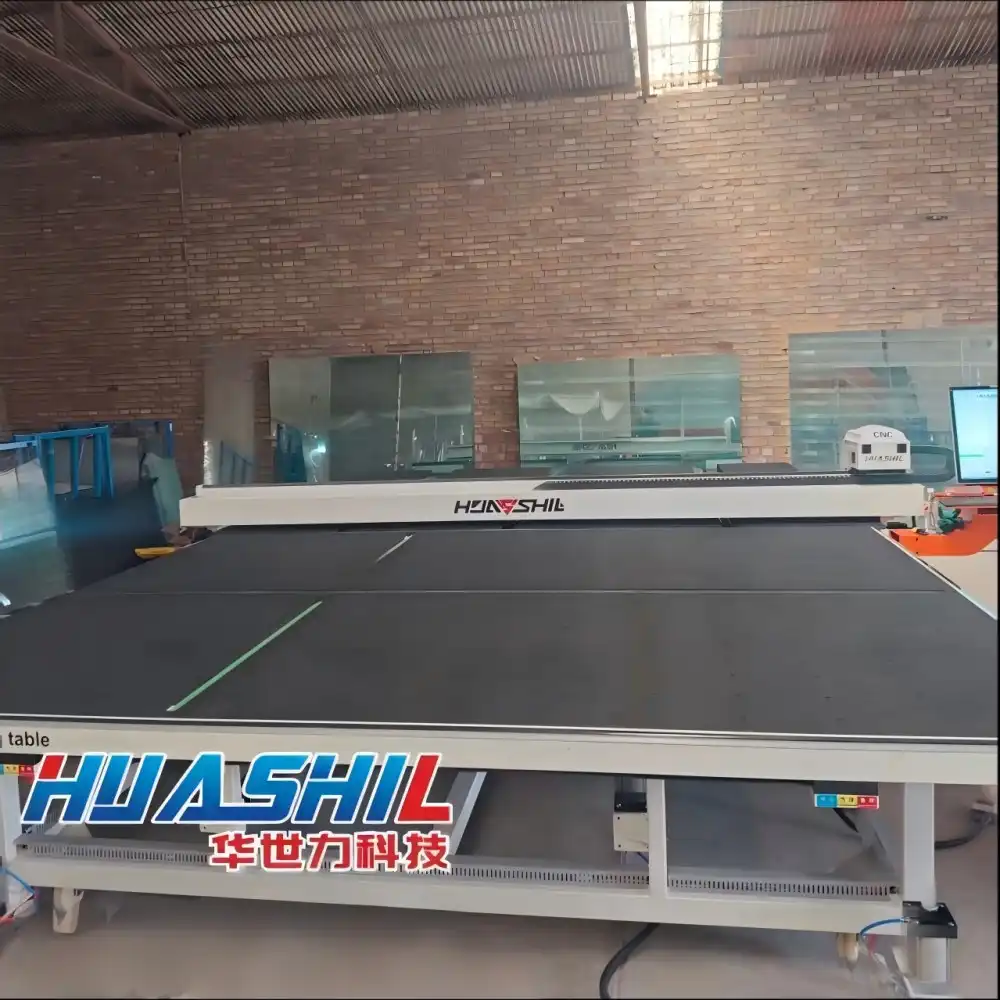
Software-Driven Waste Reduction
Optimization tools like Optima are a big part of getting the most out of the materials you use. This software looks at the details of the order, figures out the best way to cut it, and places the forms so that there is as little waste as possible. Optimization software can cut material waste by 5–7% in architectural glass plants that handle 50–100 tons of glass every month. This saves a lot of money.
The program talks to the CNC processor directly, sending cutting positions and settings for automated glass processing without having to enter them by hand. This combination gets rid of typing mistakes and cuts down on the time needed to set up for each production run. Plant managers like that batch processing lets them mix different customer orders on the same glass sheet, which increases the amount of material produced and speeds up delivery times.
Addressing Operational Challenges
As always, breaking is the most delicate part of cutting. Once the lines are made, the glass sheets are moved to the breaking table, where air arms put controlled pressure on the lines of the score. The HSL-LSX4228 has four great arms on each side. These arms evenly distribute force and stop cracks from spreading past the planned break lines.
Changes in temperature can make glass more or less brittle and more or less likely to break. Facilities with climate control keep conditions at their best, but tools must also be able to adapt to changes in the seasons. Sensors in more advanced braking systems check the temperature of the glass and change the braking force accordingly, so the results are always the same, year after year.
Key Step 2 – Automated Glass Edging and Beveling
Precision Edge Finishing Technologies
The safety and good looks of finished glass items depend on the quality of their edges. Automated cutting tools grind, smooth, and shine the edges of the glass in a continuous process using spinning diamond wheels. With different wheel setups, you can make edges that are flat and finished, pencil edges, bevels, or artistic profiles.
CNC shaping systems work directly with cutting lines and get measurement data from them, so no one has to measure by hand. Edge features stay the same from one production run to the next, which is very important for companies that make shower doors and furniture where panels need to fit perfectly into frame systems. Depending on the width and complexity of the edges, processing speeds can hit 3 to 6 meters per minute.
Selecting Equipment Based on Production Requirements
Technical managers look at edge options based on a number of different factors. Single-armed edgers work well for small businesses that make a variety of products and change over often. Multi-arm systems can handle more work, but they take longer to set up when moving between edge patterns.
Different types of tools use very different amounts of energy. In eight-hour shifts, modern cutting machines use 15 to 25 kWh, but older models may use 40 to 50 kWh. When buying managers figure out the total cost of ownership, they should include the cost of electricity over the equipment's 10- to 15-year useful life.
Integration and Process Flow
Having smooth material flow between the cutting and edging steps lowers the risk of damage during handling and raises the output. Automatic conveyor systems move pieces of cut glass to the right places at the edge of the machine input points. Optical sensors measure the size and direction of the glass and start the right cutting programs without any help from the user.
Different sizes of glass can be accommodated in production runs by adjusting parameters that are managed by software. As different pieces of 6mm, 8mm, and 10mm glass enter the cutting zone during design orders, the system instantly changes the grinding pressure and wheel speed. This makes it possible to keep production going without stopping and keep the quality of the edges the same across different batches.
Key Step 3 – Automated Glass Drilling and Hole Processing
Multi-Spindle Drilling Equipment
Drilling stations make holes for installation, hinge cuts, and metal fasteners in glass parts. When compared to separate single-spindle processes, multi-spindle tools drill many holes at once, which greatly shortens cycle times. With an accuracy of ±0.2 mm, CNC placement systems find drill points, which is important for aligning hardware in shower doors and glass rails.
During cutting, coolant systems flush out glass particles, stopping chips from building up and causing edge chipping. Diamond-coated drill bits keep their sharp cutting edges for thousands of holes, but they need to be replaced on a regular basis to make sure the quality of each hole is the same. Automated glass processing and automated tool changes switch between bits of different sizes based on set parameters. This lets different hole diameters be used in the same production run.
Workflow Automation and Interface Design
Coordinate data for modern drilling tools comes straight from design files, so they don't need to be programmed by hand. CAD models show where the holes should go, and the system automatically creates drilling routines that use the least amount of tool movement. When handling complex patterns, this combination cuts the time it takes to design from hours to minutes.
Adding upstream and downstream processes together makes sure that the output runs smoothly. After being edged, the glass pieces are instantly moved to places for drilling by transport systems. Using vacuum cups, carefully place and lift the glass under the drill spindles, keep the pieces in place while they are being drilled, and then release the final parts to the packing lines. With this fully automatic material handling, heavy glass sheets don't have to be lifted by hand.
Maintenance Protocols for Sustained Performance
Routines for calibration keep drills accurate over time. Every month, testing methods compare the position of the needle to reference standards to find any movement in the mechanical parts. To avoid sudden downtime, lubricating the bearings, adjusting the tightness on the belt, and cleaning the cooling system should all be done at the times stated by the maker.
When production leaders keep an eye on how well equipment is working, they find that preventative maintenance cuts down on unnecessary stops by 70–80%. Technicians can repair equipment without stopping production during scheduled maintenance times that happen during shift changes or on the weekends. The availability of spare parts has a big effect on how well maintenance works, so the ability of suppliers to support purchases is an important thing to think about when buying.
Supporting Technologies and Software in Automated Glass Processing
CAD/CAM Integration and Production Control
Software systems make it possible for customers' needs to be met by the industry. CAD tools let artists make plans for glass that include measurements, edge treatments, holes, and cuts. CAM modules take these plans and turn them into directions that machines can understand. They do this by making toolpaths for equipment that cuts, edges, and drills.
Dashboards for real-time tracking show output data like flow rates, machine usage, quality figures, and repair alerts. Plant managers can access this data from afar using web tools. This lets them make smart choices about how to prioritize production and use resources. Looking at old data shows patterns that help with efforts to keep getting better.
Optimization Algorithms and Yield Improvement
The smart part of automated glass processing equipment is the Optima software. Advanced nested algorithms organize multiple customer orders within raw glass sheets, taking into account the width of the cutting kerf, the minimum offcut dimensions, and the direction of the grain. These calculations take seconds to run and look at thousands of possible layouts to find the best ones.
Materially higher yields directly lead to higher profits. By cutting trash by 5–7%, a plant that processes $2 million worth of glass every year can save $100,000 to $140,000. Aside from saving money on materials, efficient cutting also lowers the amount of scrap that needs to be thrown away, which is better for the environment and saves money on trash management costs.
Calibration and Troubleshooting Essentials
Normal wear and tear make equipment less accurate over time. Setting up plans for testing keeps accuracy within the limits of the specifications. Every month, the rails on cutting tables need to be aligned; every three months, the wheels on edging machines need to be dressed; and every six months, the placement of drilling spindles needs to be checked.
Some common problems are uneven breaking along score lines, differences in edge quality, and drilling position shift. Systematic fixing procedures help workers quickly find the causes of problems. Sensors that check the cutting pressure, the state of the grinding wheel, and the wear on the drill bit let you know about problems before they become quality problems.
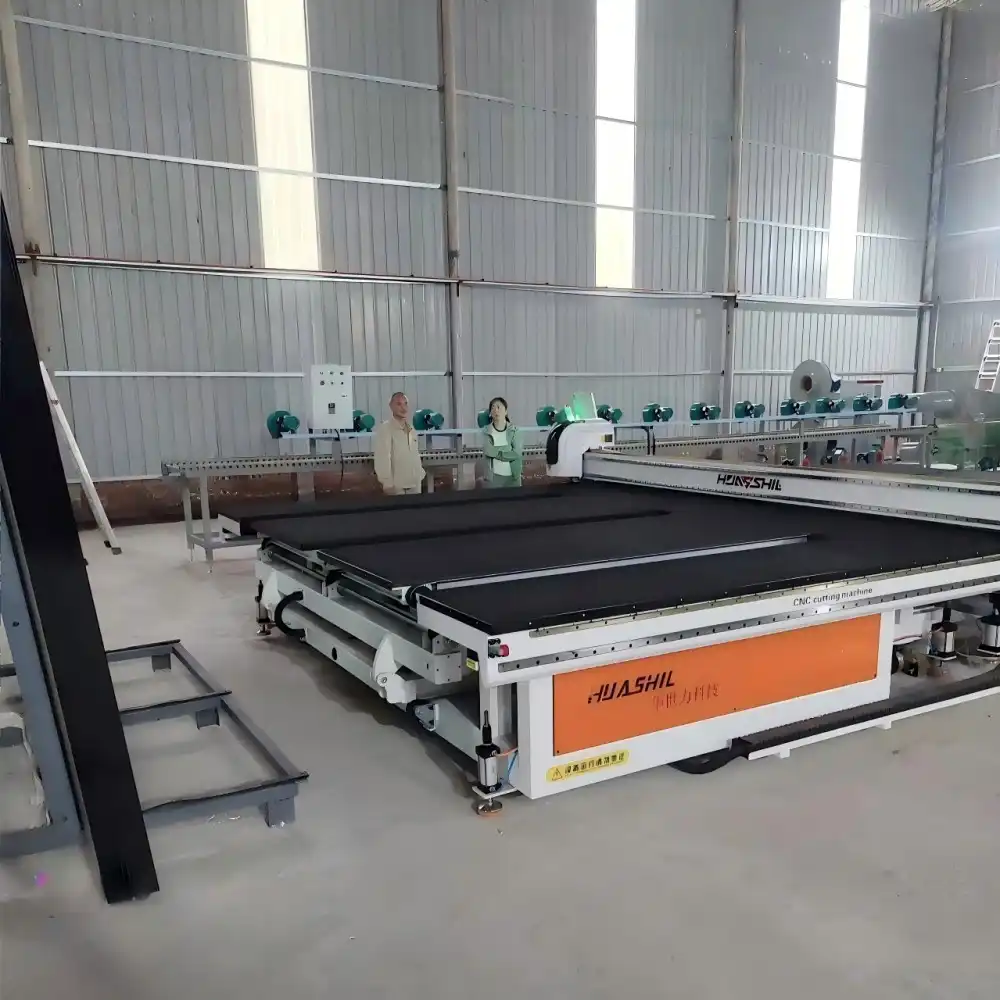
Conclusion
Automated glass processing systems are long-term assets that change the economy of manufacturing and how companies place themselves in the market. The combined process of cutting, edging, and drilling ensures accuracy, speed, and scaling that would not be possible with human work. Software optimization, precise machinery, and process integration all help cut down on waste, lower labor costs, and improve the quality of products used in construction, cars, furniture, and home art.
To buy tools successfully, you need to carefully consider your business needs, your budget, and the skills of the seller. Demands for making are always changing, and automation gives glassmakers the tools they need to meet rising quality standards and stay profitable in tough markets.
FAQ
1. How does automated glass processing reduce errors compared to manual methods?
Automation gets rid of the errors that come from measuring and doing things by hand, so dimensions are accurate to within ±0.3 mm instead of the usual ±2–3 mm in manual processes. Software-controlled processes make sure that the same settings are used for thousands of pieces, which cuts the number of defects from 8–12% to 2–3%. This accuracy is especially helpful for building glass uses where panel fit and placement are very important to the success of the installation.
2. What maintenance practices extend the cutting machinery's lifespan?
Regular upkeep includes checking the balance of the rails every month, replacing the cutting wheels every three months, and lubricating the bearings every six months. Abrasive buildup that speeds up wear can be avoided by keeping cutting surfaces clean. When you follow the maintenance plans given by the maker, tools will usually last 15-20 years instead of 10–12 years when you do automated glass processing maintenance, which gives you a much better return on your investment.
3. Can automated systems handle different glass types and sizes?
Modern tools can work with glass widths ranging from 3 mm to 25 mm, and they can automatically change the parameters. The HSL-LSX4228 can handle sheets up to 4200x2800mm, which is large enough for most furniture and building projects. With quick-change tools and preset settings, clear float glass, low-iron glass, laminated glass, and coated glass can all be processed in the same production shift. This gives custom fabrication businesses the operating freedom they need to succeed.
Partner with HUASHIL for Advanced Glass Processing Solutions
To make great products, you need to work with trusted tool partners. HUASHIL builds automated glass processing systems that have been used successfully in the past for architectural glass plants, curtain wall makers, furniture manufacturers, and artistic glass companies all over the world. With its loading, cutting, and breaking tables and Optima software optimization, our HSL-LSX4228 cutting machine can handle glass sheets up to 4200x2800mm with great accuracy.
As a well-known company that makes equipment for this industry, we offer full technical support, the ability to make changes, and reasonable pricing that will help your business run more smoothly. Our engineering team works closely with plant managers and technical leaders to come up with solutions that meet your facility's needs and output needs.
Connect with our specialists at salescathy@sdhuashil.com to discuss your automation needs, arrange equipment demonstrations, and explore how HUASHIL technology can transform your manufacturing capabilities. We deliver the expertise and equipment driving your competitive advantage.
References
1. Glass Processing Industry Standards Committee. Precision Tolerances in Automated Glass Manufacturing. International Glass Review, 2022.
2. Martinez, R. and Chen, L. Economic Analysis of Glass Processing Automation in Architectural Applications. Journal of Manufacturing Systems Technology, 2023.
3. European Glass Technology Association. Best Practices for CNC Glass Cutting and Optimization. EGTA Technical Publication Series, 2021.
4. Thompson, D. Maintenance Strategies for Glass Processing Equipment Longevity. Industrial Equipment Management Quarterly, 2023.
5. Advanced Manufacturing Research Institute. Software Integration in Modern Glass Fabrication Systems. AMRI Industry Report, 2022.
6. Williams, K. and Nakamura, T. Comparative Analysis of Glass Processing Technologies and Production Economics. Manufacturing Engineering International, 2023.
