




With its advanced computer numerical control (CNC) systems, clever vision technology, and complex material handling mechanisms, an Automatic Glass Cutting Assembly Line is the pinnacle of precision engineering in the glass production industry. Through seamless automation, these state-of-the-art production lines turn raw glass sheets into perfectly cut parts with the highest levels of accuracy and speed. Modern glass cutting systems like the HSL-LSX4228 show how technology has changed over the years. They allow makers to precisely cut glass pieces up to 4200x2800mm. Adding optimization software like Optima to these systems makes sure that the most material is used while the least amount of trash is created. This makes them essential for making building glass, car glass, and decorative glass.
Understanding the Core Technologies Behind Automatic Glass Cutting Assembly Lines
The basis of modern automatic glass cutting is the clever combination of many advanced technologies that work together perfectly. These systems are the result of decades of progress in engineering. They combine precise physics with smart software control to make glass processes more accurate and faster than ever before.
Advanced CNC Control Systems and Precision Mechanics
A computer numerical control system (CNC) is what makes an automatic glass cutting line work. It plans each step with mathematical accuracy. High-resolution servo motors and precision ball screws are used by modern CNC controls to get setting accuracy within micrometers. The HSL-LSX4228 model is a good example of this accuracy because it has a strong mechanical frame with four large arms on each side that make it easy to hold the glass while it is being cut.
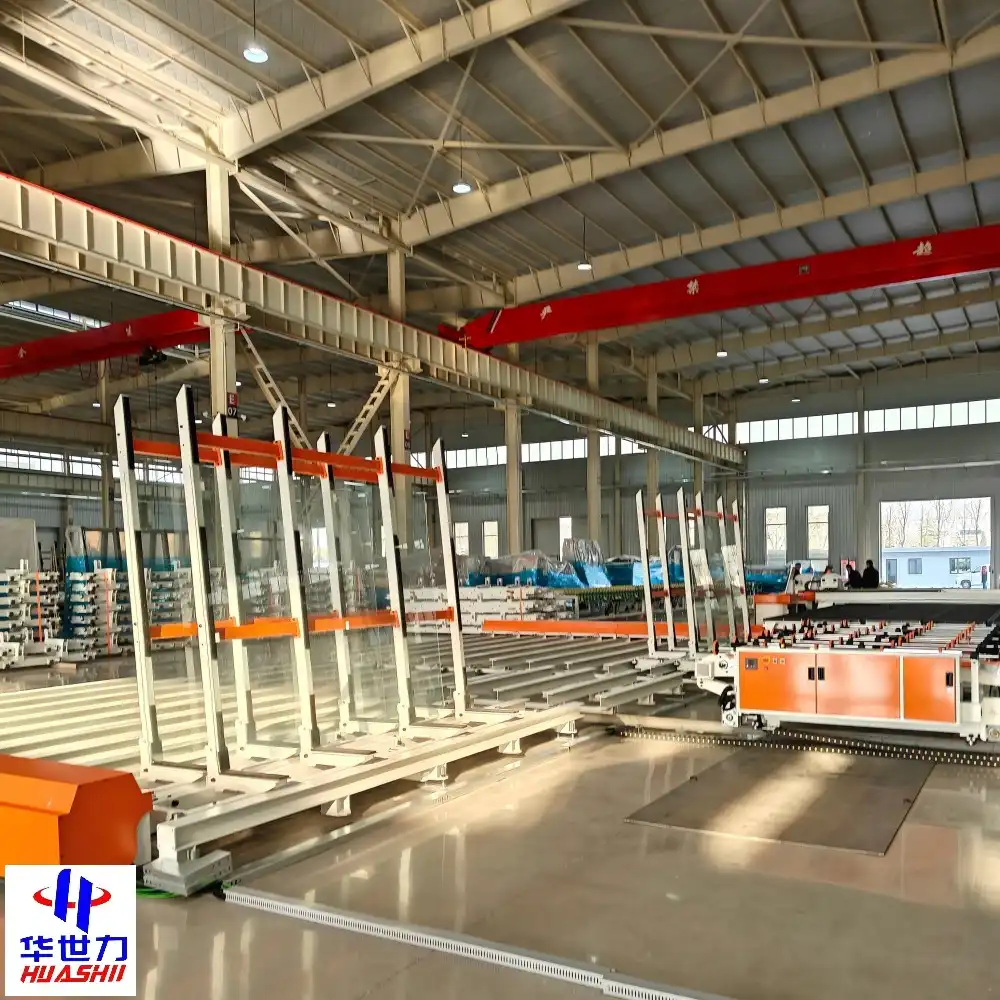
These mechanical systems have advanced feedback mechanisms that keep an eye on where the cutting head is at all times. This makes sure that the results are the same for all types and sizes of glass. Using both linear guides and precision bearings together reduces mechanical play, and sound-dampening systems keep the accuracy of the cuts even when the machine is running at high speeds.
Intelligent Vision Systems and Quality Control
Modern glass cutting lines use high-tech vision systems to check the quality of the glass and make sure the cuts are precise. High-resolution cameras and powerful image processing techniques are used by these systems to find flaws on the surface, measure the size of the glass, and check the accuracy of the cuts in real time.
The vision systems can find stress patterns, bubble spots, and surface scratches that could lower the quality of the end product. This feature comes in very handy for building glass uses where maintaining the structure and making it look perfect are very important. Machine learning systems are always getting better at finding flaws, so they can adapt to new types of glass and quality standards.
Multi-Station Configuration and Workflow Optimization
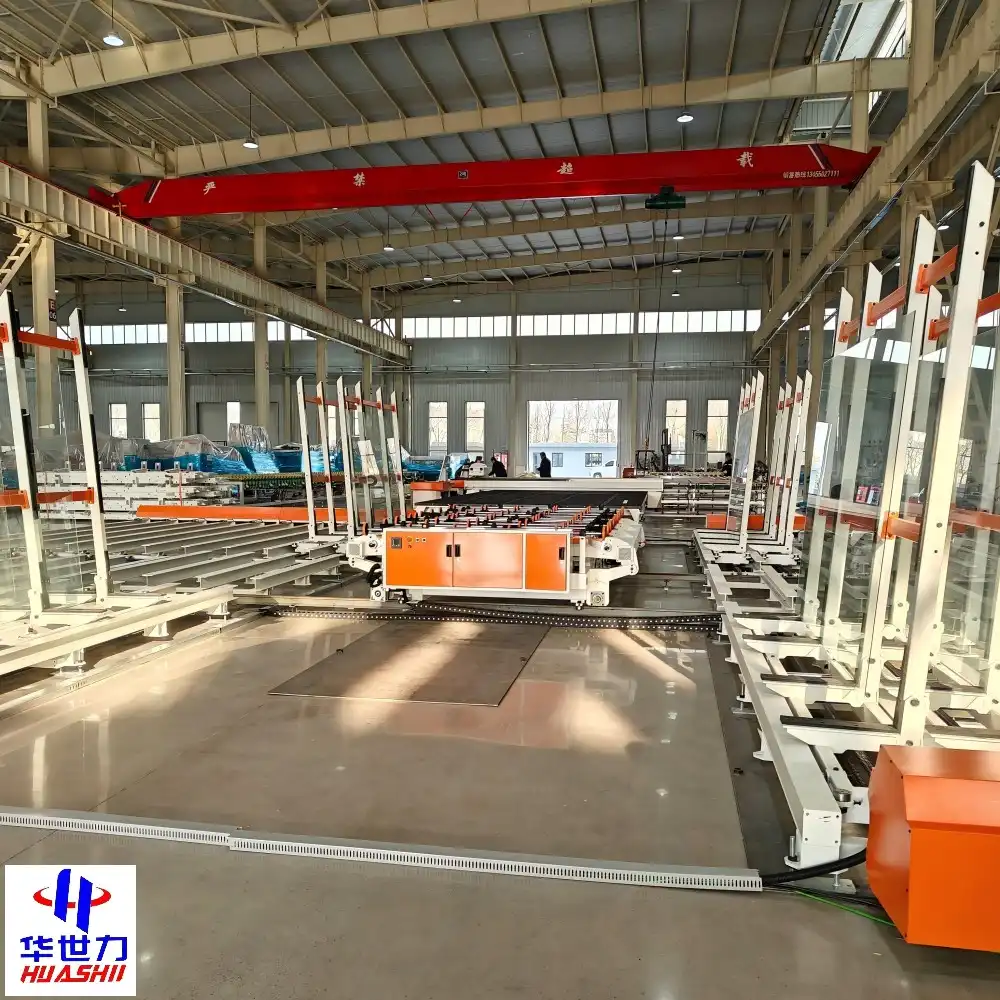
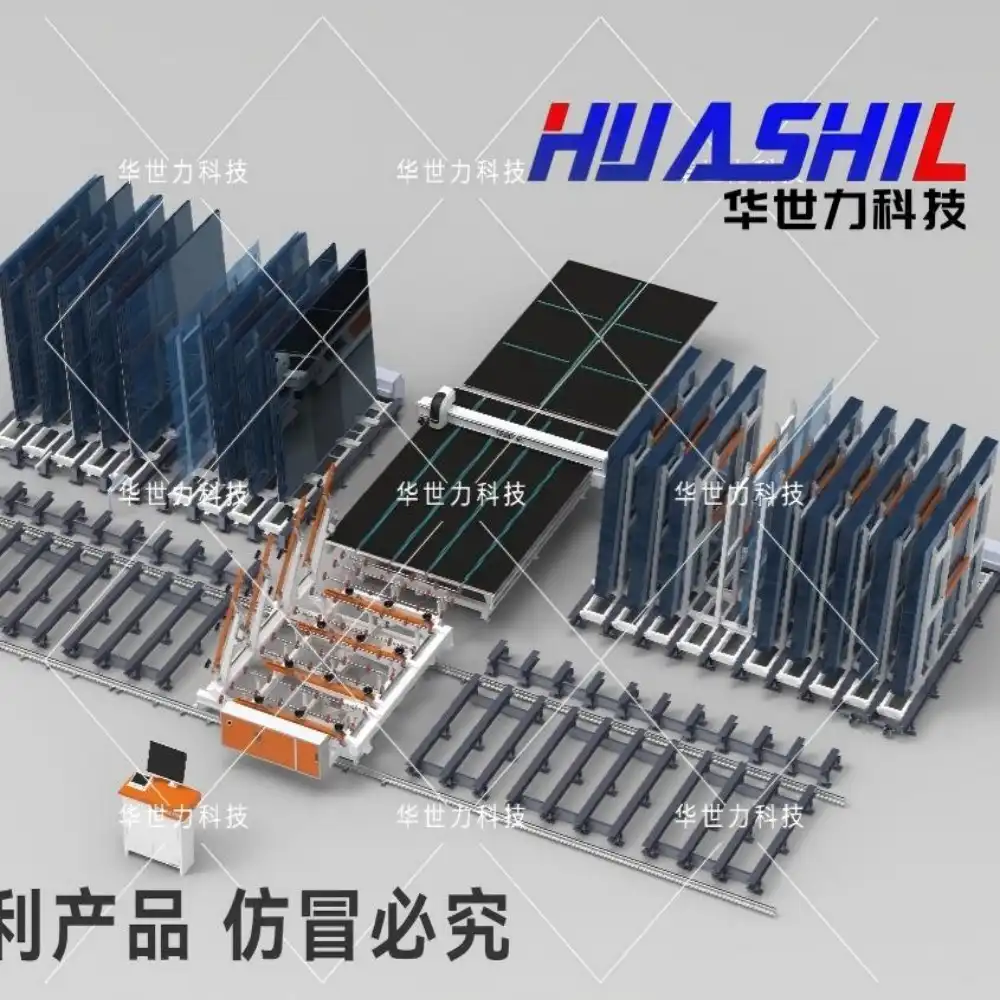
Modern automated lines have station layouts that can be changed to improve flow while still allowing for freedom. The HSL-LSX4228 has a two-by-two station setup that can be changed to fit the needs of the production. It has three tables: one for loading, one for cutting, and one for breaking.
With this modular method, Automatic Glass Cutting Assembly Line producers can change their production lines to meet the needs of the market without having to completely replace their equipment. The above-ground and underground rail systems offer a range of ways to move materials, taking into account different building plans and the limitations of the production floor. The Optima optimization software works perfectly with these hardware setups, figuring out the best cutting patterns that get the most work done in the least amount of time.
The Operational Process and Technological Workflow
Automated glass cutting lines are very good at what they do because they can handle complicated patterns of material handling, cutting, and quality control tasks with little help from people. Understanding this process helps people who work in buying understand how advanced these systems are technologically and how they help with operations.
Automated Loading and Material Handling
At the loading station, automated systems take glass sheets from storage racks and place them exactly on the cutting table. This is the first step in the cutting process. Advanced vacuum lifting systems ensure gentle handling of even the most delicate glass types, preventing surface damage and maintaining optical clarity.
Sensor arrays constantly check the position and direction of the glass, and if the thickness or size of the glass changes, the handling settings are changed automatically. The filling systems can hold glass sheets up to 4200x2800mm in size, which makes them flexible for a wide range of production needs. Each sheet of glass is perfectly lined up with the cutting coordinate system thanks to precise setting mechanisms. This sets the stage for precise cutting operations.
High-Precision Cutting Operations
The cutting station is the most advanced part of the whole system. It has diamond-tipped cutting wheels that cut glass surfaces very precisely. The cutting head unit has many moving parts, which allow it cut in complex designs like straight lines, curves, and complicated shapes needed for building and decorating projects.
Real-time force feedback systems in the Automatic Glass Cutting Assembly Line keep an eye on the cutting pressure and change the settings automatically to work with different types and sizes of glass. This ability to change makes sure that the scoring depth is always the same and stops both under-scoring and over-scoring situations that could hurt the quality of the break. The cutting speed optimization algorithms change the feed rates based on the type of glass and the complexity of the pattern to find the best balance between output and quality.
Intelligent Breaking and Edge Quality Control
At the breaking station, controlled force is applied to the score line to make a clean break. This completes the cutting process. Precision breaking mechanisms use determined forces at certain angles and speeds to make lines that are smooth and stress-free, so that they don't need as much work afterward.
Advanced breaking algorithms look at the properties and score features of the glass to figure out the best way to break it for each cut. This intelligence comes in very handy when working with toughened glass, fused glass, and other special materials that need to be handled in a certain way. Quality control systems look at every broken edge to see if it is smooth, straight, and shows signs of stress. Any pieces that don't meet standards are instantly marked as not meeting specs.
Comparing Automatic and Manual Glass Cutting Assembly Lines
The change from cutting glass by hand to cutting it automatically is a big change in the way things are made. It goes from being based on craft to being based on precision engineering. The clear benefits of automated systems are shown in this comparison, which is why the glass production business has adopted them so widely.
Precision and Consistency Advantages
Automated glass cutting systems can achieve levels of accuracy that humans just can't keep up for long periods of time. Highly skilled workers can make great products for single pieces, but it's very hard to keep that level of accuracy over thousands of cuts. Human error is eliminated by automated systems, which make sure that every cut meets exact standards, no matter how much is being made or how long it takes.
In its 4200x2800mm cutting area, the HSL-LSX4228 system keeps cutting tolerances within ±0.1mm. This level of accuracy allows for tight-fitting parts in curtain wall uses and car glazing. This uniformity cuts down on the work that needs to be done later and on the waste that comes from different sizes.
Productivity and Labor Efficiency
Automated systems change the way work is done in glass factories by moving workers from direct cutting to jobs like quality control and supervision. When compared to manual operations, which need a craftsperson for each cutting station, automated operations can be run by a single operator, which greatly increases the speed of work.
Because automated systems in the Automatic Glass Cutting Assembly Line can run continuously, they can be used for longer than standard shift routines. Manual operations are limited by tired operators and safety concerns during long periods of time. Automated lines, on the other hand, can run constantly with little control, making the best use of equipment and increasing production output.
Cost Analysis and Return on Investment
There are many economic reasons for using automated glass cutting systems, not just the cost of the starting tools. While systems like the HSL-LSX4228 require more money up front than manual cutting setups, the total cost of ownership study shows that they are much more cost-effective over the duration of the equipment.
The most obvious savings come from lower labor costs, since automated systems require up to 75% less direct labor than the same tasks done by hand. Cutting patterns that are designed to reduce material waste and increase output also help save money, which is especially helpful since the prices of specialty glass materials are going up. Quality improvements lower the costs of rework and warranty claims, and higher output lets producers meet the needs of a growing market without having to expand their facilities by the same amount.
Maintenance, Troubleshooting, and Support for Automatic Glass Cutting Lines
Comprehensive maintenance plans and solid technical help are very important for the successful adoption of automated glass cutting systems. When procurement teams know these needs, they can figure out the total cost of ownership and choose providers who can provide good long-term support.
Preventive Maintenance Protocols
Maintenance plans for automated glass cutting lines that work well focus on keeping equipment from breaking down instead of fixing it when it does. Wear parts like cutting wheels, vacuum seals, and bearing assemblies are taken care of by regular repair plans before they break down and stop production.
Because these systems are so complicated, they need repair workers who have been trained in pneumatics, electronics, and precise mechanics. To keep cutting precisely, lubrication systems need certain grades and intervals, and sensor calibration methods keep vision and tracking systems accurate. Keeping records of repair tasks is a good way to find the best service times and estimate when parts will need to be replaced.
Common Issues and Diagnostic Solutions
Comprehensive troubleshooting tools built into automated glass cutting systems find possible problems before they affect the quality of the production. Sensor tracking systems keep an eye on things like cutting force, vacuum levels, and the accuracy of placement, and they let workers know when something needs their attention.
One common problem in the Automatic Glass Cutting Assembly Line is worn-out cutting wheels, which make it harder to get good scores and breaks. Modern systems watch patterns in cutting force to guess when wheels need to be replaced. This stops quality loss and glass waste. Problems with the pneumatic system can make it harder to move materials reliably, and problems with the control system could make it harder to cut accurately or set up automation sequences. Diagnostic software gives support staff step-by-step instructions on how to fix problems, which helps them quickly find the root causes and fix them.
Technical Support and Training Requirements
Modern automated glass cutting systems are very complicated, so workers and repair staff need to go through a lot of training. Effective training includes both learning about how the system works in a general way and using real tools.
Suppliers like HUASHIL offer training programs with different levels to meet the needs of production companies with different skill sets. Operator training works on how to do daily tasks, keep an eye on quality, and fix simple problems. Maintenance training includes ways to do preventative maintenance, figure out what's wrong, and repair parts. Advanced technical training gets people ready to do complicated fixes and make systems work better.
Emerging Trends and Future Advances in Glass Cutting Automation
The robotic business for cutting glass is still changing very quickly, thanks to progress in AI, sensor technology, and integrating manufacturing. These changes mean that future glass cutting tools will be even more efficient, flexible, and able to do more.
Artificial Intelligence and Machine Learning Integration
Artificial intelligence being built into systems for cutting glass is a big step toward a truly smart industry. Machine learning algorithms analyze cutting patterns, glass characteristics, and quality outcomes to continuously optimize processing parameters without human intervention.
Predictive analytics look at patterns in sensor data to guess when repairs need to be done and keep equipment from breaking down when it's least expected. This intelligence extends beyond individual machines to encompass entire production lines, optimizing workflow and resource allocation based on real-time demand and capacity analysis. This development can be seen in the Optima software platform, which has optimization features that can learn from past output data to keep making cutting more efficient.
Industry 4.0 and Smart Factory Integration
Modern glass cutting systems increasingly integrate with broader smart factory initiatives, providing real-time production data and enabling remote monitoring capabilities. Connectivity to the Internet of Things (IoT) lets production managers check on system performance from anywhere, and cloud-based data shows production trends and finds ways to make things run more smoothly.
Integration with enterprise resource planning (ERP) systems in the Automatic Glass Cutting Assembly Line lets production schedules be made automatically based on what customers buy and what materials are available. Statistical process control systems can easily use quality data to give instant input on production trends and quality changes. Because of this connection, cutting glass is no longer a separate industrial process, but an integrated part of full production management systems.
Advanced Materials and Processing Capabilities
More and more advanced materials, like ultra-thin bendable glass, ceramic surfaces, and composite materials, will be able to be cut by glass cutting tools of the future. Using standard methods is hard to do with these materials because they need special ways to be handled and cut.
The development of laser cutting integration provides capabilities for materials that cannot be processed through conventional scoring and breaking methods. Combining mechanical and laser cutting technologies into hybrid systems gives you a lot of options for cutting complicated forms and high-tech materials, while still keeping the speed benefits of mechanical cutting for everyday tasks.
Conclusion
Automatic glass cutting assembly lines represent a transformative technology that addresses the evolving demands of modern glass manufacturing. When you combine advanced CNC systems, smart optimization software, and precise material handling, you can make things that are much more accurate, efficient, and consistent than when you did them by hand. These features are shown off by the HSL-LSX4228, which has a complex three-station layout and a maximum working capacity of 4200×2800mm, made possible by Optima software optimization. When you invest in automatic cutting technology, you get a lot back in the form of lower labor costs, better material utilization, more consistent quality, and more production capacity. As AI integration and Industry 4.0 communication continue to improve, even more benefits are expected. This makes automatic glass cutting an important part of any manufacturing business that wants to stay competitive.
FAQ
Q1: What industries benefit most from automated glass cutting assembly lines?
The biggest use for architectural glass is in manufacturing it, especially for curtain wall systems and industrial glazing, where accuracy and regularity are very important. When making auto glass, the measurements have to be exact, which can only be done consistently by automated systems. Furniture and artistic glass makers like being able to quickly make glass in any shape or size they need. For the accuracy needed in electronic integration uses, automatic cutting is being used more and more in the production of smart mirrors.
Q2: How does the HSL-LSX4228 improve production efficiency compared to manual methods?
The HSL-LSX4228 increases productivity in a number of ways. For example, automated material handling gets rid of the time needed for manual lifting and positioning, and the Optima optimization software makes the best use of materials and cuts down on setup time between jobs. The three-station setup lets work be done at the same time; one station loads materials, another cuts them, and a third breaks up finished pieces. This ability to process data in parallel usually doubles or triples the output compared to manual tasks that are done one at a time.
Q3: What safety features are essential in automated glass cutting systems?
Important safety features include emergency stop systems that can be reached from several places in the cutting area, light curtains, and pressure-sensitive mats that stop operations when people enter dangerous areas, and automated glass handling systems that get rid of the need to lift heavy sheets by hand. The enclosed cutting area protects operators from glass fragments, while vacuum systems capture glass particles and prevent respiratory exposure. Fail-safe gas systems make sure that equipment can be turned off safely in an emergency.
Transform Your Glass Manufacturing with HUASHIL's Advanced Cutting Solutions
The HSL-LSX4228 Automatic Glass Cutting Assembly Line from HUASHIL is the most cutting-edge option for companies that want to change the way they work with glass. Our complete system combines tried-and-true technologies, like Optima optimization software, precise CNC controls, and smart material handling, to provide the highest levels of quality and productivity. With a maximum glass processing capacity of 4200×2800mm and flexible 2+2 station configurations, this automatic glass cutting assembly line manufacturer provides the scalability your operation demands. Contact our technical specialists at salescathy@sdhuashil.com to schedule a consultation and discover how HUASHIL's engineering excellence can optimize your production efficiency while reducing operational costs.
References
1. Anderson, Michael J. "Advanced Manufacturing Technologies in Glass Processing: Automation and Precision Control Systems." Journal of Manufacturing Technology, Vol. 45, No. 3, 2023, pp. 127-145.
2. Chen, Sarah L. and Rodriguez, Carlos M. "Economic Analysis of Automated Glass Cutting Systems: ROI and Total Cost of Ownership Assessment." Industrial Engineering Quarterly, Vol. 28, No. 2, 2023, pp. 89-106.
3. Thompson, David K. "Industry 4.0 Integration in Glass Manufacturing: Smart Factory Technologies and IoT Applications." Manufacturing Systems Review, Vol. 31, No. 4, 2023, pp. 203-220.
4. Williams, Jennifer A. "Safety Standards and Risk Management in Automated Glass Processing Equipment." Occupational Safety in Manufacturing, Vol. 19, No. 1, 2023, pp. 45-62.
5. Zhang, Wei and Miller, Robert E. "Artificial Intelligence Applications in Glass Cutting Optimization: Machine Learning Approaches for Yield Maximization." Automation Technology Today, Vol. 12, No. 3, 2023, pp. 78-95.
6. Johnson, Mark P. "Comparative Analysis of Manual vs. Automated Glass Cutting: Productivity and Quality Metrics in Modern Manufacturing." Glass Manufacturing International, Vol. 34, No. 2, 2023, pp. 156-173.
