




Understanding that industrial glass manufacturing requires precision, speed, and material efficiency is the first step to optimizing a glass cutting machine. Modern glass cutting lines use automated loading, clever optimization software, and accurate breaking mechanisms to save waste and increase output. Selecting equipment with sophisticated calibration, executing regular maintenance methods, and training operators to use automation features are the foundations of optimization. Addressing these fundamental areas enables manufacturers to achieve ±0.5mm cutting accuracy, 15% material waste reduction, and increased production capacity without compromising quality requirements.
Understanding the Glass Cutting Process and Its Challenges
Modern glass cutting techniques have developed from human scoring to precise automated devices that handle large-format sheets. In essence, the process comprises loading, cutting, and breaking. Each step brings new problems that affect manufacturing efficiency and material output.
Core Components of Modern Glass Cutting Systems
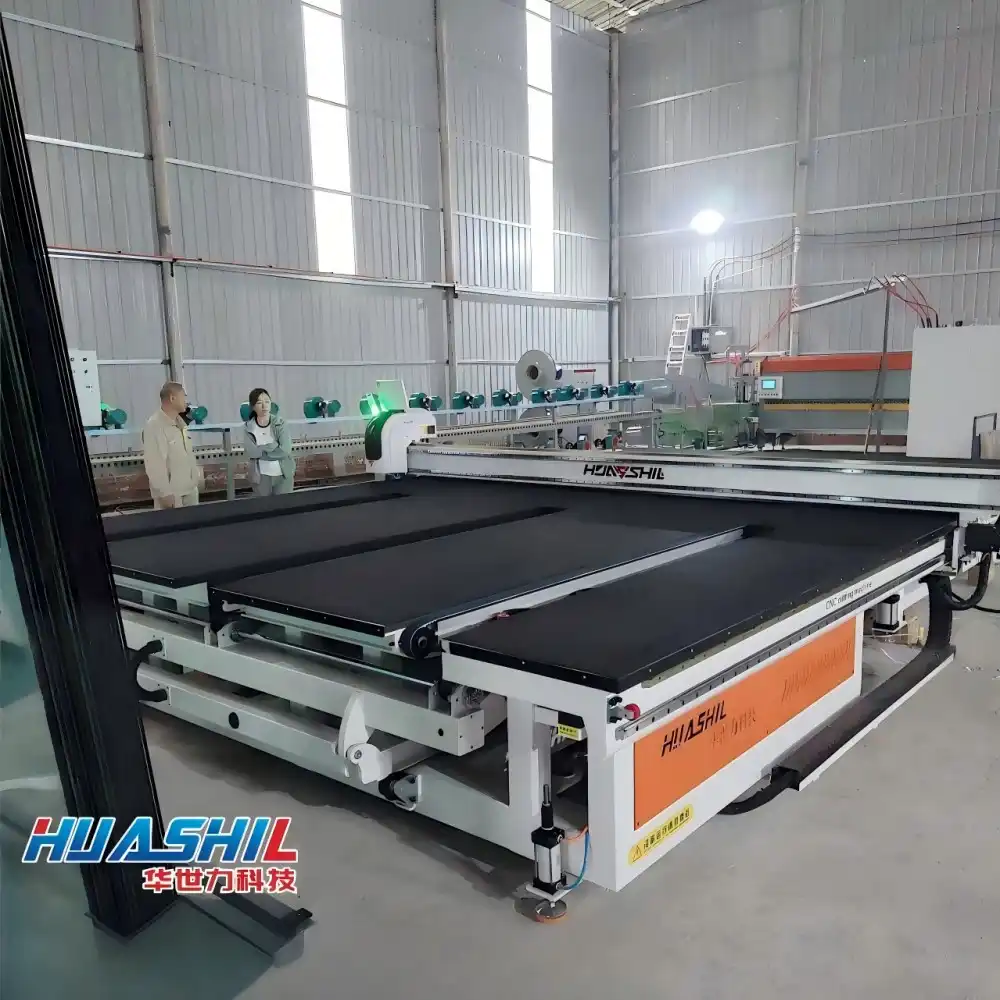
Industrial glass cutting equipment has numerous interconnected workstations to simplify manufacturing. Raw glass sheets are carefully loaded onto the loading table for processing. The cutting table has precision cutting heads with diamond wheels or carbide tools that score glass along specified routes. The breaking table cleanly separates glass along scored lines with regulated pressure. Advanced systems like the HSL-LSX6133 integrate these three tables into a smooth operation, allowing glass sizes up to 6100x3300mm and including six gripper arms on each side for reliable material handling.
The mechanical architecture incorporates above- or below-ground rail lines, depending on facility configuration. Manufacturers may improve floor space use and operating efficiency with this flexibility. For varying production quantities, the 2+2 station design lets producers balance throughput with accuracy based on project needs.
Common Operational Challenges
Despite technical developments, glass manufacturing plants face ongoing issues that reduce production and profitability. Poor calibration or old cutting wheels that don't score uniformly cause precision variations. Inconsistent breakage, edge chipping, and greater rejection rates affect material prices.
Another issue is unexpected downtime, often caused by poor preventative maintenance or delayed component replacement. Failures of glass cutting lines' cutting heads, gripper mechanisms, or conveyor systems during production delay delivery deadlines and strain client relationships. Material waste occurs when optimization software is not used, or operators are not trained to optimize cutting patterns for glass properties and order requirements.
Facilities with inadequate equipment guarding or operators who skip safety rules to speed up production can pose safety risks. Glass pieces, moving gear, and automated systems at high speeds require adequate training and equipment design to safeguard workers and sustain efficiency.
Identifying Key Bottlenecks in Glass Cutting Performance
Production bottlenecks often lurk in efficient systems, diminishing profitability over time. These limits must be identified by systematically analyzing the cutting workflow from material receipt to product packing.
Machine Setup and Calibration Issues
One of the most ignored obstacles in glass cutting is calibration problems. Scoring depth varies throughout the glass surface when cutting heads are misaligned or when pressure settings are off. Inconsistency causes microcracking, edge flaws, and dimensional errors that need rework or rejection.
Production managers always struggle with cutting speed and quality. Maximum speed decreases cycle time but may lower score quality, especially when processing tempered glass or low-iron variations with distinct characteristics. Extremely slow speeds assure quality but restrict throughput, limiting capacity and preventing delivery obligations.
Maintenance and Tooling Considerations
Deteriorating cutting wheels and gripper pads steadily impair process capabilities without failure. To penetrate diamond wheels, scoring pressure must be raised, which increases component wear and causes precision-affecting vibration. Lost elasticity in gripper pads can cause glass sheets to slide during cutting, compounding positioning mistakes throughout multi-cut patterns.
Selecting cutting line layouts for various glass kinds greatly impacts operating efficiency. Architectural glass with minimum edge treatment requires different equipment than automotive glass with sophisticated curvature. Facilities that process varied glass kinds on narrow-application equipment always have quality difficulties and low throughput.
Human Factors in Process Efficiency
Operator skill directly affects automated equipment performance. Even fully automated systems need skilled operators who can comprehend software optimization advice, modify glass type settings, and spot mechanical faults. Reduced operator training leads to greater scrap rates, longer setup times, and equipment damage from inappropriate operation.
Best Practices and Techniques to Optimize Glass Cutting
Structured techniques that address mechanical, procedural, and human cutting process factors are needed for sustained optimization. These approaches have proven demonstrable gains in varied glass production contexts.
Machine Calibration and Setup Protocols
Cutting equipment performs best throughout its life with strict calibration regimens. Cutting head alignment, scoring pressure, and breaking force parameters are checked daily to avoid quality loss. Weekly complete calibration should involve precision measuring tool verification of positioning accuracy and servo motor parameter modification to maintain tolerances.
Optima and other modern optimization tools help maximize resource use and minimize waste. This program analyzes orders, assesses glass sheet measurements, and develops cutting patterns that nest pieces effectively with minimum edge lengths and break line spacing. Material yield increases by 8–12% when operators follow software-generated patterns instead of intuition, lowering raw material costs.
Advanced Cutting Techniques and Automation Benefits
Automation and precision control have improved the score-and-snap method of industrial glass cutting. Manual pressure differences are eliminated by automated cutting heads' uniform scoring depth over the cut length. Diamond cutting wheels with customized profiles improve score geometry for varied glass thicknesses, lowering breaking force and edge tension that might shatter.
Glass cutting line automation incorporates all material handling steps beyond cutting. Six gripper arms on each side of the cutting table stabilize the glass location during cutting, preventing dimensional inaccuracies from micro-movements. The automatic transfer between loading, cutting, and breaking tables reduces breakage risk and speeds cycle times. The integrated automation features allow single-operator monitoring of whole cutting lines, changing labor economics, and enhancing safety.
Safety Compliance and Maintenance Frameworks
Comprehensive safety standards safeguard workers and prevent production disruptions during workplace mishaps. Interlocked guarding systems prohibit access to moving gear during operation, and emergency stop devices along the cutting line allow speedy shutdown when risks are recognized. Regular safety assessments ensure that protective equipment works and operators follow procedures.
Structured maintenance using predictive and preventative measures reduces unplanned downtime. Vibration monitoring systems identify bearing wear before catastrophic failure, allowing scheduled replacement during maintenance periods. Manufacturer-specified lubrication regimens avoid premature component wear. Maintaining an orderly inventory of important spare parts, including cutting wheels, gripper pads, and electronic control components, prevents production delays from maintenance.
Choosing the Right Glass Cutting Line for Your Business Needs
One of the most important decisions plant managers and procurement directors make is choosing equipment that meets production, quality, and budgetary needs. Multiple factors must be considered beyond the buying price.
Manual Versus Automatic Cutting Lines
In low-volume or highly tailored applications, manual cutting systems are still useful. These systems demand less capital and are easier to maintain and repair. However, they severely restrict throughput, precise consistency, and labor efficiency. Manual methods may be cost-effective for facilities processing less than 500 square meters per day, especially for architectural glass with simple cut patterns.
Automatic cutting lines increase productivity and precision during long manufacturing runs. Complex cutting patterns may be processed without manual arrangement, saving time and eliminating dimensional variances. Although initial investment is greater, autonomous lines often pay back within 18–36 months due to lower labor costs, higher material yield, and increased production capacity that boosts income.
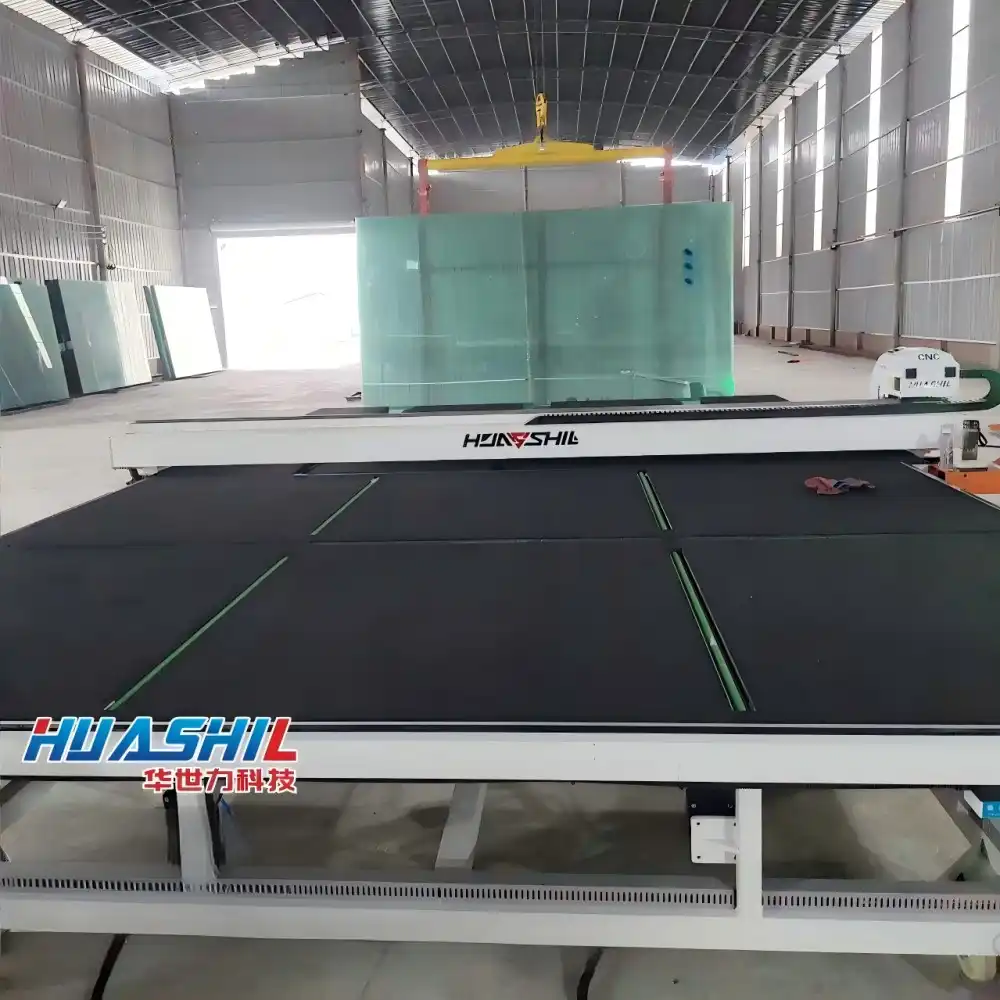
The HSL-LSX6133 model shows modern automatic cutting line capabilities. Three tables with above or below-ground rail allow for flexible placement in various facility configurations. The flexible 2+2 station architecture lets firms grow production without replacing equipment. This system serves architectural glass fabricators, curtain wall manufacturers, and furniture makers that need large-format processing by handling glass sheets up to 6100x3300mm.
Supplier Evaluation and Partnership Criteria
Glass cutting line suppliers are chosen based on more than just equipment and pricing. Supplier engineering and manufacturing quality control directly affect machine dependability. Facilities that buy equipment from providers with proven performance in similar applications lessen the chance of unexpected performance issues or component failures.
After-sales assistance should be carefully assessed for facilities with numerous shifts or time-sensitive markets. Suppliers with fast technical assistance, extensive spare parts stocks, and field service capabilities save downtime. Remote diagnostics and troubleshooting speed up issue resolution and eliminate on-site service visits.
Customization and OEM capabilities are essential when conventional equipment configurations don't meet operating needs. Suppliers with in-house engineering can alter equipment size, add specialist tools, or create bespoke automation sequences to enhance throughput for specific applications. This adaptability helps when processing non-standard glass diameters, combining cutting lines with upstream or downstream equipment, or meeting facility restrictions.
Cost Considerations and Investment Planning
Total cost of ownership includes purchase price, installation, training, maintenance, and operation during the equipment's lifespan. A complete financial analysis should include energy usage, consumable costs such as cutting wheels and gripper pads, and operation and maintenance personnel. Equipment that seems cost-competitive upon acquisition may have greater running expenses that reduce profitability.
Order volumes and production mix strongly impact equipment choice. High-throughput automated lines help steady, high-volume manufacturers producing standardized products. Operations serving various markets with varied order characteristics may value flexibility and rapid changeover over speed. Understanding operational trends eliminates over- or under-investment in needless capabilities or capacity restrictions.
Case Studies and Real-World Applications
How manufacturers have enhanced their glass cutting processes gives valuable lessons for various operating scenarios. These examples show how strategic equipment investment and process refinement provide results.
Architectural Glass Manufacturer Yield Improvement
The mid-sized architectural glass fabricator processing curtain wall glass had 18% material loss owing to improper cutting patterns and frequent edge quality concerns necessitating repair. The facility decreased waste to 6% and increased daily throughput by 35% after installing an automated cutting line with Optima optimization software. The optimization program developed cutting patterns that improved material consumption, while automated cutting heads' uniform scoring depth minimized edge flaws. The facility paid for itself in 22 months by lowering material costs and increasing manufacturing capacity to attract new customers.
Furniture Glass Producer Efficiency Gains
A furniture glass factory made shower doors and tabletops of uneven quality due to manual cutting and high labor expenses. Implementing an automated glass cutting line system with integrated loading, cutting, and breaking tables decreased labor needs from four to one each shift and improved dimensional accuracy from ±2mm to ±0.3mm. The improved precision reduced field installation difficulties and warranty claims, increasing customer satisfaction by 27%. With 45% more production capacity, the firm could accept larger orders from commercial furniture wholesalers.
Emerging Technology and Future Competitiveness
Automation, connection, and AI are changing glass cutting. IoT-enabled predictive maintenance systems analyze vibration patterns, temperature changes, and power usage to anticipate component breakdowns weeks in advance. This foresight lets maintenance teams arrange repairs during planned downtime, preventing production disruptions.
AI-assisted cutting control systems adjust settings in real time based on sensor-detected glass qualities. These systems automatically adapt scoring pressure, cutting speed, and breaking force for glass thickness, surface treatments, and stress patterns. Standard quality across glass types is achieved without operator interaction or parameter change.
Conclusion
Optimizing glass cutting processes requires a holistic approach that addresses equipment capabilities, operational procedures, maintenance discipline, and operator expertise. Modern automated cutting lines deliver substantial improvements in precision, throughput, and material efficiency compared to manual systems, though successful implementation depends on thorough planning and supplier partnership. By systematically identifying bottlenecks, implementing best practices, and selecting equipment aligned with production requirements, glass manufacturers achieve measurable gains in productivity and profitability. The integration of optimization software, predictive maintenance systems, and automation technologies positions forward-thinking manufacturers for sustained competitive advantage in increasingly demanding markets where quality consistency and delivery reliability differentiate market leaders from competitors.
FAQ
Q1: What maintenance tasks are essential for glass cutting lines?
Daily maintenance should include cleaning cutting wheels and gripper pads, verifying proper lubrication of moving components, and inspecting conveyor belts for wear or misalignment. Weekly tasks involve calibrating cutting head positioning, checking scoring depth consistency, and testing safety interlock systems. Monthly comprehensive maintenance includes replacing worn cutting wheels based on inspection criteria, verifying servo motor performance parameters, and lubricating all bearing assemblies according to manufacturer specifications. Maintaining detailed maintenance logs enables trend analysis that identifies developing issues before they cause failures.
Q2: How do I choose between manual and automatic cutting systems?
Production volume represents the primary decision factor. Operations processing less than 500 square meters daily with relatively simple cutting patterns may find manual systems adequate and economically justified. Facilities with higher volumes, complex cutting requirements, or tight precision tolerances benefit substantially from automatic systems despite higher initial investment. Consider labor availability and costs in your region, as automatic systems reduce operator requirements significantly. Evaluate your growth trajectory, as automatic systems provide capacity scalability that manual operations cannot match without proportional labor increases.
Q3: What safety practices are most critical in glass cutting operations?
Comprehensive operator training covering equipment operation, emergency procedures, and proper personal protective equipment use forms the foundation of cutting line safety. Machine guarding must prevent access to moving components during operation, with interlocked barriers that automatically stop equipment when opened. Regular inspection of automated handling systems ensures that grippers maintain proper clamping force and that release mechanisms function correctly. Establishing clear lockout/tagout procedures for maintenance activities prevents accidental equipment startup during service work. Maintaining clean work areas free of glass fragments and debris reduces slip and cut hazards.
Partner with HUASHIL for Your Glass Cutting Line Optimization
HUASHIL offers comprehensive glass cutting line solutions designed specifically for architectural glass fabricators, curtain wall manufacturers, furniture producers, and specialty glass processors seeking to enhance production efficiency and quality consistency. Our HSL-LSX6133 automated cutting line integrates precision engineering with user-friendly operation, featuring three specialized tables for loading, cutting, and breaking, along with Optima optimization software that maximizes material yield. With flexible rail configurations and adjustable station setups, our systems adapt to your facility requirements and production volumes. We provide complete technical support, operator training programs, and readily available spare parts inventory to ensure your operation maintains peak performance. Contact our team at salescathy@sdhuashil.com to discuss your specific requirements and discover how HUASHIL glass cutting line manufacturer solutions deliver measurable improvements in productivity, quality, and operational efficiency.
References
1. Johnson, M. & Williams, R. (2021). Advanced Glass Processing Technologies: Efficiency and Precision in Industrial Applications. Industrial Manufacturing Press.
2. Chen, L. (2022). "Optimization Strategies for Automated Glass Cutting Systems," Journal of Manufacturing Systems and Technology, 45(3), 178-194.
3. Rodriguez, A. & Kumar, S. (2020). Total Cost of Ownership Analysis for Glass Processing Equipment. B2B Procurement Institute Publications.
4. Thompson, K. (2023). "Predictive Maintenance in Glass Manufacturing: IoT Applications and ROI Analysis," International Glass Review, 58(2), 112-128.
5. Zhang, W. & Nakamura, H. (2021). Material Yield Optimization in Architectural Glass Fabrication. Glass Technology Research Foundation.
6. Morrison, E. (2022). "Safety Protocols and Risk Management in Automated Glass Cutting Facilities," Industrial Safety Quarterly, 37(4), 203-219.
