




To turn unrefined stone into goods with exact dimensions, an automatic stone cutting machine combines mechanical engineering, computer control systems, and precision cutting technology. High-speed diamond cutting tools and computer numerical control (CNC) technology help these complex machines make very precise cuts in many kinds of stone, like ceramic pieces, granite, sintered stone, and even marble. The first step in automation is entering a digital design. This is followed by placing the materials with vacuum suction systems and ending with exact cutting. This is done with complex control algorithms that make sure the quality and size are the same throughout all production runs. Before automatic stone cutters were invented, working stone was a very labor-intensive job that required a lot of skill. Now, thanks to these machines, the industry has undergone a complete transformation, as they enable tasks to be performed more efficiently, precisely, and automatically. More and more businesses around the world are using them in B2B manufacturing, especially in companies that process limestone, granite, and marble. This guide goes over how these advanced tools work, what technology makes them possible, and how they can be useful in real life. This information helps procurement managers and engineers make smart choices. The overview gives global industrial buyers a full picture by showing the best ways to maintain equipment, new inventions, and a comparison of these methods with hand cutting.
Understanding Automatic Stone Cutting Machines: How They Work
Modern stone cutting tools depend on a complex working together of mechanical accuracy and computer control systems. These tools use a number of different technologies to get reliable, high-quality results every time in the industrial processing of stone.
Core Components and Mechanical Systems
The strong steel parts of the mechanical system are made to stand up to the cutting forces. Linear guides with high precision make sure that movement along the X and Y directions is smooth. At the same time, servo motors give you control over the exact position. The cutting head unit has blades or wires with diamonds in them that can keep the edges sharp during long production runs. Water cooling systems keep things from getting too hot and cut down on dust, which makes the perfect conditions for cutting different kinds of stone.
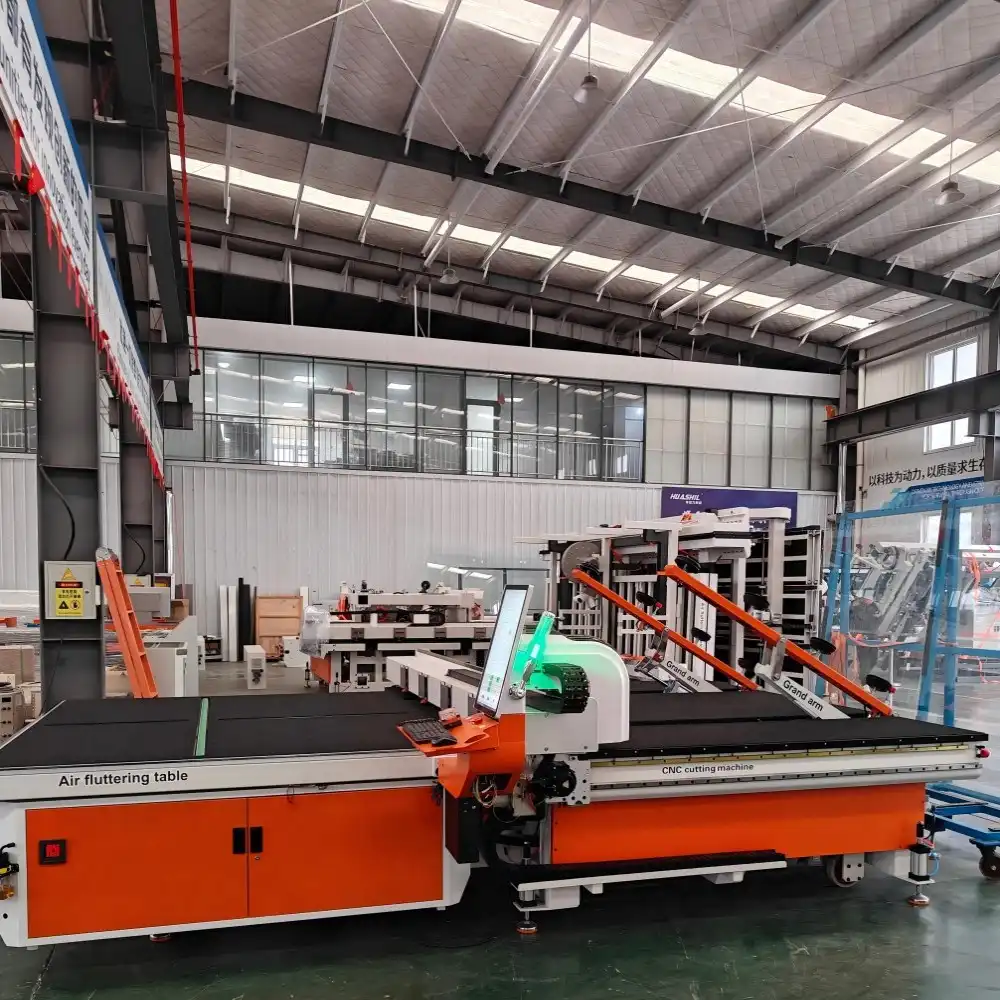
Control Systems and Software Integration
Today's CNC stone cutting machines use modern control systems such as the Eos-CNC platform, which handles all aspects of the machine's function through easy-to-use interfaces. These systems keep an eye on performance data as they combine feed rates, cutting speeds, and blade positioning. The software reads digital design files and makes very accurate cutting lines. This helps us use the material more efficiently and avoids wasting it. Programmable logic controllers (PLCs) manage safety tasks and help with other systems, like vacuum handling and positioning materials.
Automation Features and Material Handling
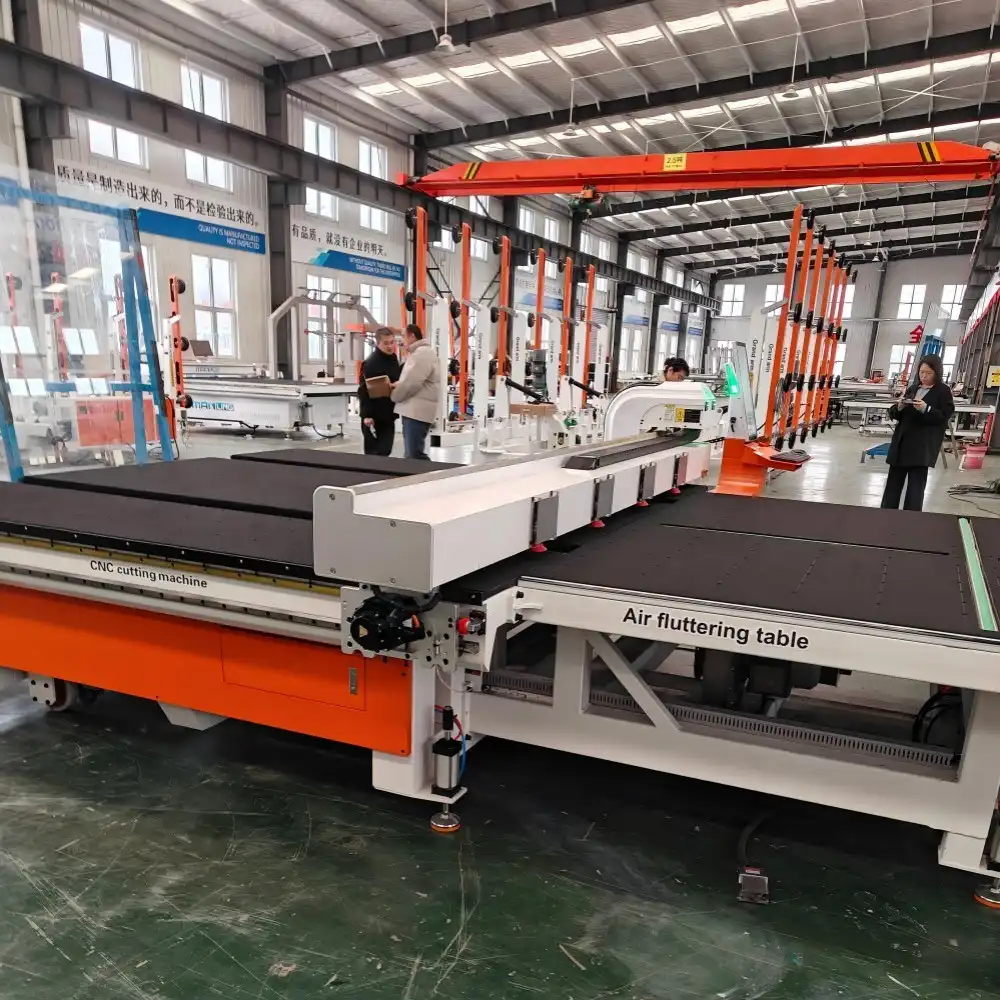
Today's stone processing machines have advanced automatic features that make the production process more efficient. Vacuum suction systems automatically move stone blocks into place and hold them there, and air flotation tables make it easy to move the material after cutting. The ability to automatically find edges makes sure that everything is lined up correctly, and systems that control pressure change the way that cutting is done based on the type of material. All of these features make it easier to work with different types of stone without having to do things by hand, and they make sure that the production is always the same.
Benefits of Using Automatic Stone Cutting Machines in Industrial Settings
The change from hand-cutting to automatic stone cutting makes a big difference in many areas of the business. These benefits have a direct effect on how efficiently, consistently, and cheaply things are made.
Enhanced Precision and Quality Control
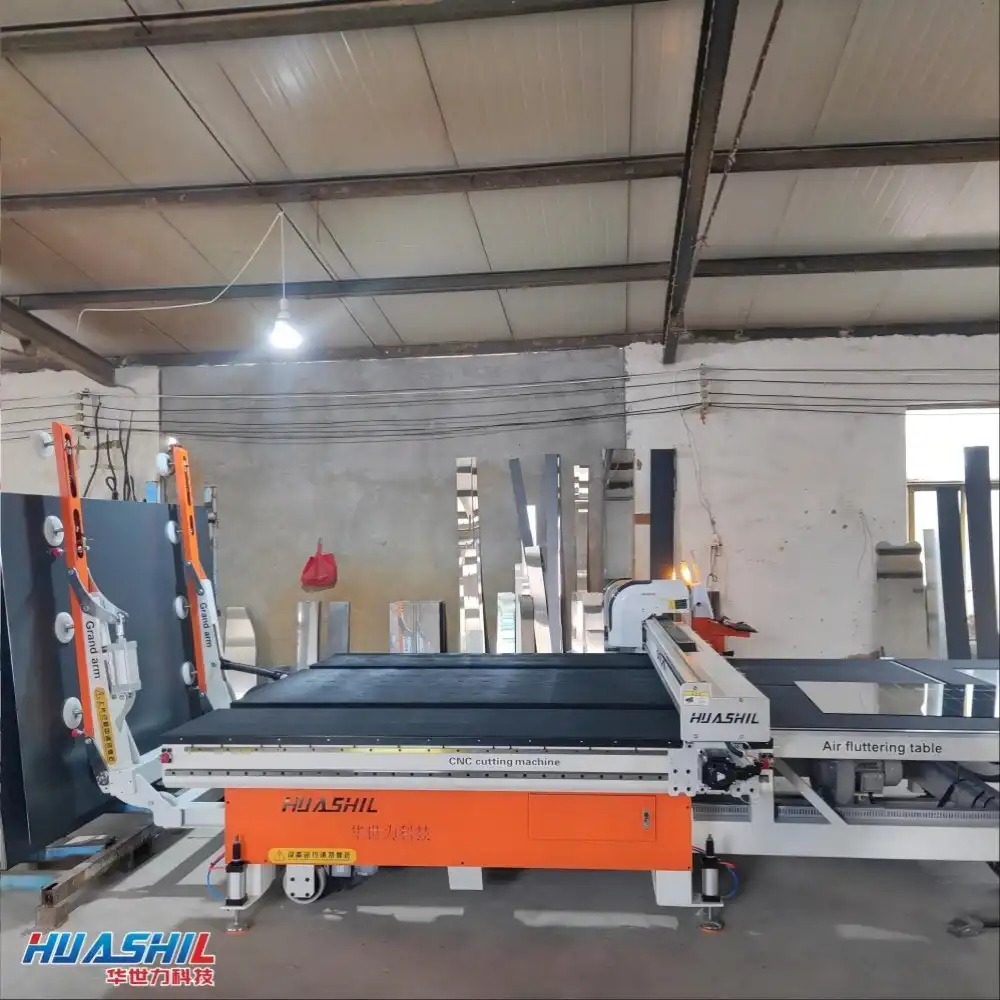
Automated cutting tools can cut to within ±0.1mm, which is a lot better than what you can do by hand with an automatic stone cutting machine. This level of accuracy leads to less wasted material and a better fit in assembly applications. Consistent cutting speeds and pressures get rid of differences that happen in manual processes. This makes sure that the edge quality and dimensional accuracy are the same every time. The HUASHIL HSL-CNC2716 model is a great example of this kind of accuracy because it can work with materials as big as 2700×1600mm while keeping tight limits all over the cutting area.
Improved Safety and Ergonomics
Automation makes it so that people don't have to work with cutting tools and heavy materials by hand anymore, which makes the workplace much safer. Emergency stop devices, protective enclosures, and sensor-based safety interlocks all work together to keep people safe. It costs less to insure workers when they do less physically demanding work, and they are happier on the job. With remote operation, operators can keep an eye on several tools at once from a safe distance while cutting is in progress.
Economic Advantages and ROI
Here are the main ways these tools help businesses save and make money:
- Lowering labor costs by requiring fewer people and increasing the amount of work done per person per hour
- Save money on materials by using better cutting designs and making less scrap.
- Improvements in energy economy through shorter cycle times and better cutting parameters
- Lowering maintenance costs with strong part design and predicted maintenance features
These benefits for the economy usually lead to 18- to 24-month payback times for most industrial uses, which makes investments in automation very appealing for stone processing businesses that are growing.
Automatic vs Manual Stone Cutting Machines: Making the Right Choice
The choice between automatic and manual stone cutting depends on the needs of the project, how much money is available, and the long-term goals for the business. Understanding these basic differences helps buying teams make smart technology purchases.
Production Capacity and Consistency
Depending on how skilled the person doing it is and how hard the object is, manual stone cutting usually makes 10 to 15 cuts per hour. No matter how experienced the person is, automatic systems make 30 to 50 cuts per hour with steady quality. The modern Eos-cnc control system on the HSL-CNC2716 is a great example of this benefit in terms of efficiency, as it processes sintered stone and ceramic slabs with amazing speed and accuracy. Automated systems also get rid of the differences in quality that come with doing things by hand, so every cut meets the required standards.
Operational Flexibility and Customization
While cutting by hand allows you to quickly adapt to different needs, current CNC systems offer even more flexibility with programmable cutting patterns and quick changeover capabilities. The automatic edge finding and pressure control features let you quickly switch between different types of material without having to manually calibrate them again. Being able to store and remember cutting programs makes it easier to set up production for repeat orders. This cuts down on the time it takes to change from one job to the next, which used to take hours and is now done in minutes.
Total Cost of Ownership Analysis
Cutting by hand costs more over time because of labor, wasted materials, and having to do things over again, but it costs less to start. While automated systems require a lot of money upfront, they are cheaper and more productive in the long run. For operations that handle over 200 pieces a month, the crossover point usually happens within two years. Because of this, automation is the best choice for middle to high-volume applications.
Maintenance, Common Issues, and Troubleshooting Tips
Good maintenance methods increase the time that equipment can be used, extend its overall lifespan, and reduce the costs of unexpected downtime. Maintenance teams can quickly deal with problems that come up in operations when they know about them and how to fix them.
Preventive Maintenance Protocols
As part of regular maintenance, the places where cutting happens and the vacuum systems should be cleaned every day, linear guides and ball screws should be oiled every week, and cutting tools and safety systems should be checked every month. The air float system needs extra care to make sure the filters stay clean and the pressure is right. To find possible problems before they affect production, control system checks should be done every three months. Proper maintenance paperwork helps keep track of how parts wear out and plan the best time to replace them.
Common Operational Issues
Diamond tools that are worn down, cutting settings that are set wrong, or not enough cooling water flow can all cause cutting quality problems in an automatic stone cutting machine. Edge chipping usually means that the feed rates are too high or the cutting tools are dull. Thermal expansion, not enough material clamping, or worn-out mechanical parts may cause dimensional errors. The automatic pressure control system helps avoid a lot of cutting problems by adjusting to different kinds of material, but it is still very important to set it up and calibrate it correctly if you want it to work well.
Safety System Management
For proper operation during critical situations, emergency stop circuits must be tested every month. Pressure tests and a look at the suction cups should be done every week to make sure the vacuum system is working right. To meet the standards for safety in the workplace, safety interlocks and security barriers must be checked often. Operator training programs should focus on safety rules and emergency plans so that unexpected scenarios can be handled quickly.
Trends and Innovations in Automatic Stone Cutting Technology
As technology changes and market demands shift, the stone cutting business is always changing. Procurement teams make smart choices about how to spend their money when they know about new trends.
Smart Manufacturing Integration
With an Internet of Things (IoT) connection, you can keep an eye on things from afar and predict when maintenance is needed, which helps avoid unexpected downtime. Real-time production data collection helps with ongoing process improvement and quality control systems. Cloud-based analytics tools show you how to cut performance trends and find ways to make things better. These smart features turn old-fashioned stone cutting into data-driven industrial settings.
Advanced Material Handling
Robotic loading systems work together with cutting tools to make fully automated production lines. Before cutting, vision devices let you automatically check materials and find defects. Adaptive cutting algorithms change settings based on information about the material in real time, which makes the cut quality better for different kinds of stone. These new inventions make it easier to control quality and make production more consistent, all while needing less work.
Environmental and Energy Considerations
When compared to older systems, improved cutting algorithms and motor drives that use less energy cut power usage by 15–20%. Water recycling systems with closed loops are better for the earth and cheaper to run. Better dust collection helps the air in the workplace and helps meet environmental rules. These environmentally friendly aspects of sustainability are in line with the company's eco-friendly targets and also help the business run more smoothly.
HUASHIL: Your Trusted Partner for Advanced Stone Cutting Solutions
For many years, Shandong Huashil Automation Technology Co., Ltd has made high-quality automatic stone cutting machines designed for a wide range of uses in the industry. Architectural glass fabrication, curtain wall making, furniture production, and sintered stone processing are all areas where our company helps businesses around the world come up with new ways to get the job done.
Product Excellence and Technical Innovation
Our promise to keep up with new technology is shown in the HSL-CNC2716 model, which can cut up to 2700×1600mm and through glass as thick as 18mm with an automatic stone cutting machine. The built-in Eos-cnc control system provides accurate automation by controlling pressure, finding edges, and using complex air flotation systems. Because of these features, sintered stone, ceramic slab, and tile cutting uses can be processed quickly, reliably, and with great accuracy.
Comprehensive Service and Support
We offer a range of services to meet the needs of different customers, including professional installation, extensive training for operators, quick technical support, and a variety of financing choices. To keep output delays at a minimum, we store a lot of spare parts and offer quick technical help. Our world service network makes sure that customers get quick help no matter where they are. This builds long-term partnerships based on trust.
Customization and OEM Capabilities
HUASHIL can be customized in many ways to meet unique needs and work with existing production lines. Our tech team works directly with customers to create custom solutions that make work more productive and efficient. OEM and ODM services help equipment integrators and system makers who need dependable, high-performance cutting technology for their work.
Conclusion
Automatic stone cutting tools are very important for modern stone processing businesses because they are more precise, efficient, and safe than cutting stone by hand. Adding advanced control systems, automation features, and smart manufacturing tools turns old-fashioned cutting operations into highly productive and consistent manufacturing processes. When buying, managers and engineers know how something works, its benefits, and how to take care of it, they can make smart choices about what to buy that will help the business run smoothly in the long term. Because of AI, IoT, and eco-friendliness, automatic stone cutting is always improving. This makes it a good way to get ahead of the competition in global markets.
FAQ
Q1: What kinds of stone do automatic cutting tools work well on?
A: These days' automatic stone cutting machines can work with many different kinds of materials, such as granite, marble, limestone, sintered stone, ceramic slabs, and engineered stone products. The HSL-CNC2716 is especially good at cutting ceramic and solid stone slabs that are up to 18 mm thick. It can cut areas as big as 2700×1600 mm. How well materials work together depends on how hard and rough they are and on their structural features. However, across different types of stone, cutting settings are automatically changed by advanced machines for the best results.
Q2: How do the automatic pressure control and edge-finding functions make cutting more precise?
A: Automatic pressure control systems keep an eye on cutting forces as they happen and change blade pressure to keep the best cutting conditions during the whole process. This stops the material from breaking and makes sure the cut quality stays the same, no matter how dense the stone is. Edge-finding technology uses sensors to automatically find the edges of a material and set cutting coordinates. This eliminates the need for human measurements, which saves time and improves accuracy.
Q3: When choosing an automatic stone cutting machine for use in businesses, what factors should be looked at?
A: The most important things to consider when choosing are maximum cutting dimensions, how thick a material it can cut, how many pieces need to be made, how much floor space is available, and how it will work with the equipment that is already there. Long-term operational success depends heavily on the control system's complexity, the degree of automation, the need for maintenance, and the suppliers' ability to offer assistance. Don't just look at the buy price when you're making budget plans. Look at the total cost of ownership, which includes installation, training, maintenance, and operational costs.
Partner with HUASHIL for Advanced Stone Cutting Technology
Ready to transform your stone processing operations with cutting-edge automation technology? HUASHIL combines decades of manufacturing expertise with innovative engineering to deliver reliable, high-performance automatic stone cutting machine solutions tailored to your specific requirements. Our HSL-CNC2716 model offers exceptional precision and efficiency for sintered stone and ceramic processing applications, backed by comprehensive technical support and service excellence. As a trusted automatic stone cutting machine manufacturer, we provide complete solutions including installation, training, and ongoing support to ensure optimal performance and productivity. Experience the HUASHIL difference through personalized consultation and discover how our advanced cutting technology can enhance your operational efficiency. Contact us at salescathy@sdhuashil.com to discuss your stone cutting requirements and receive detailed technical specifications tailored to your application needs.
References
1. Smith, J.A. and Chen, M.L. "Advanced CNC Stone Cutting Technology: Principles and Applications." Journal of Manufacturing Engineering, Vol. 45, No. 3, 2023, pp. 156-172.
2. Rodriguez, C.E. "Automation in Stone Processing: Economic Analysis and Implementation Strategies." International Stone Industry Review, Vol. 28, No. 8, 2023, pp. 89-104.
3. Wang, H. and Thompson, R.K. "Precision Control Systems for Automatic Stone Cutting Machines." Industrial Automation Quarterly, Vol. 15, No. 2, 2023, pp. 234-251.
4. Miller, D.S. "Safety and Ergonomic Considerations in Automated Stone Processing Equipment." Occupational Safety in Manufacturing, Vol. 32, No. 6, 2023, pp. 78-92.
5. Liu, Q. and Anderson, P.J. "Maintenance Strategies for CNC Stone Cutting Equipment: A Comprehensive Guide." Stone Processing Technology Review, Vol. 19, No. 4, 2023, pp. 145-161.
6. Brown, K.L. "Emerging Trends in Stone Cutting Technology: IoT Integration and Smart Manufacturing." Advanced Manufacturing Systems, Vol. 41, No. 7, 2023, pp. 203-218.
