




By providing exceptional accuracy, speed, and dependability in glass processing operations, high-precision industrial glass cutting machines have changed the way cars are made. These high-tech tools help car makers make glass parts that meet strict safety rules while also speeding up production and cutting down on material waste. Plant managers, technical engineers, and procurement specialists know what these complex machines can do and how to choose between them and use this knowledge to improve their manufacturing processes and competitive positioning in the automotive glass industry.
Understanding High-Precision Glass Cutting Technology for Automotive Manufacturing
Making car glass in the present day requires new technology that can work with different glass thicknesses, complicated forms, and strict standards. The car industry depends on exact glass cutting tools that combine many steps into one automatic system.
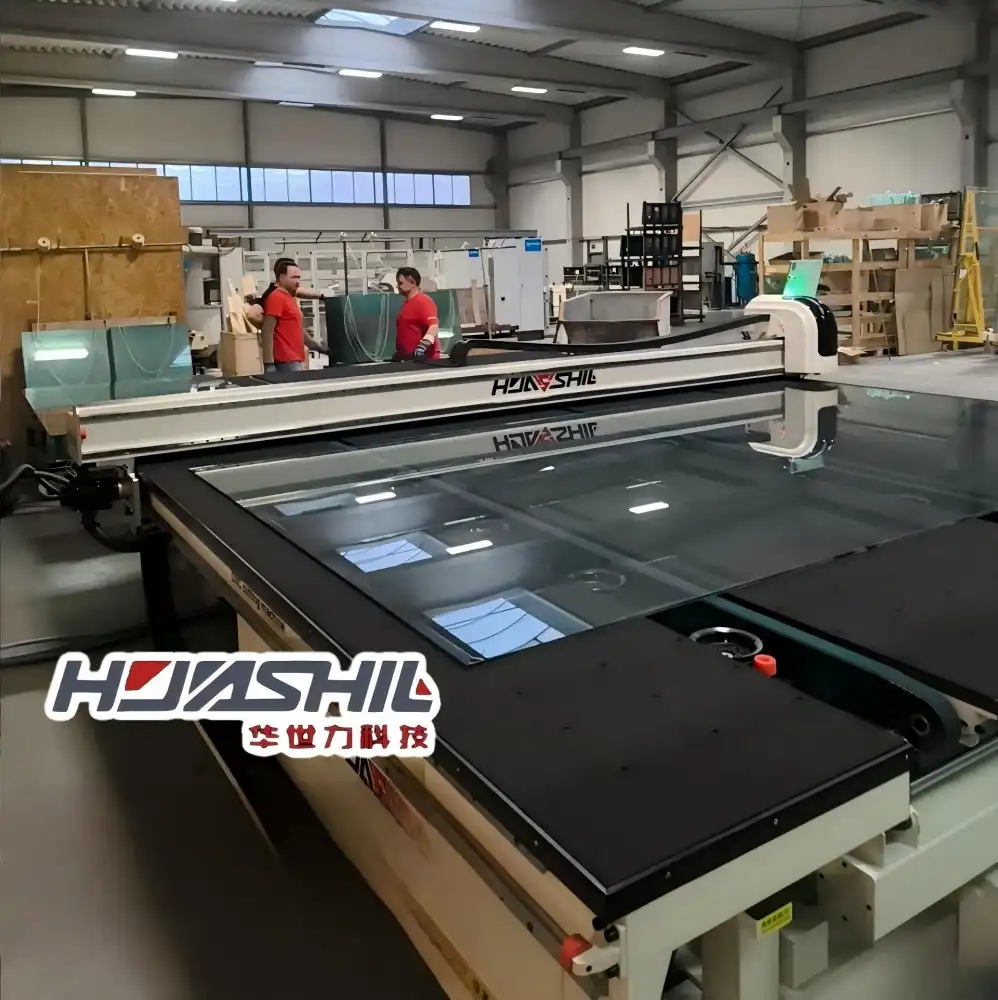
The advanced three-table setup of the HUASHIL HSL-LSX6133 model is a great example of this progress in technology. This system includes a loading table, a cutting table, and a breaking table that all work together perfectly to make the glass handling operation more efficient. Optima, the machine's optimization software, figures out the best ways to cut things so that the least amount of material is wasted.
Advanced train systems for industrial glass cutting machines, whether they're above or below ground, are flexible when it comes to placement and keep the tools in the right place during the cutting process. With the 2+2 station setup, workers can adjust the machine to meet certain needs for production, making it possible to work with different kinds of glass and varying amounts of production. The system makes sure that glass is handled and positioned correctly, which is important for keeping the cutting accuracy on big car glass panels, because it has six big arms on each side.
From windshields to very large sunroofs, the 6100 x 3300 mm glass size makes a lot of different kinds of vehicle glass possible. Because it is so adaptable, the system can be used with many different types of car glass while always making sure that quality standards are met in every production run.

Key Benefits of Implementing Precision Glass Cutting Systems
Buying high-precision industrial glass cutting machines makes a big difference in how the business runs, how quickly products are made, and how good the products are. These perks are especially clear when handling car glass, which needs a lot of accuracy and uniformity.
Here are the main benefits of using modern glass cutting systems:
- Increased Production Efficiency: Automated cutting systems lower cycle times a lot compared to doing it by hand. By combining the processes of loading, cutting, and breaking into one machine, it is no longer necessary to move around different materials. This cuts down on the time needed to complete jobs and lowers the amount of required staff by up to 60%.
- Better Edge Quality: Clean and smooth edges are made with precision cutting technology, which needs very little extra work. This improvement speeds up production and lowers the amount of cleaning and finishing that needs to be done later.
- Cutting designs that make the most of material use are figured out by optimization software. This feature usually cuts glass trash down by 15–25%, which saves a lot of money on materials in the long run.
- Regular Quality Control: Automated systems get rid of differences in cutting processes that are caused by people, making sure that the size and edge quality are the same in every production run. This consistency is very important for automobile uses where exact fits are needed.
These benefits make manufacturing more competitive by lowering the prices of production, raising the standard of products, and making it easier to change how things are made. Businesses that use precision cutting systems often say that customers are happier and there are fewer guarantee claims because products are more consistent.
Essential Selection Criteria for Automotive Glass Cutting Equipment
Choosing the right glass cutting machines takes a lot of thought about technical and operating issues. The choice has a big effect on the long-term efficiency of production, the cost of upkeep, and the general return on investment.
The most important part of choosing industrial glass cutting machines is knowing the technical specs. The accuracy of cutting, which is usually defined in millimeters, needs to meet the standards of the car business. The machine can be used for a lot of different car purposes because it can cut different kinds and sizes of glass, like tempered and reinforced glass.
Cutting speed, loading efficiency, and general throughput skills are all factors that affect production capacity. The system needs to be able to handle the amount of work that is currently being done and also needs to be able to handle future growth. Integration can be done smoothly without affecting the work that is already being done, as it is compatible with the quality control systems and production lines that are already in place.
In today's glass cutting businesses, software skills are playing a bigger and bigger part. Advanced optimization methods, such as the Optima system, have a big effect on how materials are used and how output schedules are made. It's easier to keep an eye on performance and control operations when tools are easy to use and reports can be made with lots of information.
The cost of running equipment and the amount of time it is available for use are directly impacted by how much maintenance it needs and how easy it is to get extra parts. Good help from the provider, like expert help and training programs, makes sure that the equipment works well for the whole time it is used.
Applications Across Automotive Glass Manufacturing Sectors
In car manufacturing, high-precision glass cutting tools are used for many different jobs, each of which needs its own set of features and performance levels. Understanding these uses helps makers choose the right way to set up their tools for their own needs.
Automotive glass uses need to be very exact to make sure they fit right and are safe. Each of the three types of glass—windshield, side, and rear—has its own issues with cutting because of things like how thick or curved they are and how those factors affect safety. Being able to work with different kinds of glass, from basic float glass to more complicated layered styles, makes the factory more useful.
Making smart mirror glass is a new application that needs complex forms and exact measurements for industrial glass cutting machines. These parts include electronics that need to be very precisely dimensioned in order to work correctly. Advanced cutting systems meet these difficult needs while still keeping the high-quality standards that are necessary for car users.
Architectural glass and car glass are used in very different ways, but they often have production sites and tools in common. Being able to make both car and architectural glass increases the usefulness of the tools and the efficiency of the total facility.
Making furniture and decorative glass gives car glass makers more chances to diversify their businesses. Being able to work with custom forms and sizes lets businesses reach more customers while still getting the most out of their current tools.
Maintenance and Operational Best Practices
To keep precision glass cutting tools working at their best, you need to follow a routine for caring for them and a set of operating best practices. These actions make sure the cutting quality doesn't change, the equipment is always ready to work, and the operating life is extended.
Preventive repair plans take care of important parts of the system before problems can affect production. Regularly setting up the cutting parameters keeps the right dimensions, and regularly checking the motor parts stops unexpected failures. Rail systems run easily and accurately when they are properly aligned and lubricated.
Operator training programs for industrial glass cutting machines make sure that workers know how to do things safely and correctly. Well-trained workers can spot early warning signs of problems that might happen, and they know how to act to keep the quality of production. Thorough training also lowers the chance of mistakes being made by people who could break tools or lower the quality of the product.
It is very important to control the temperature and shaking in order to get a good cut. Keeping the same working conditions makes sure that performance stays the same and stops thermal expansion problems that could change how dimensions are measured.
Record-keeping and documentation help with upkeep planning and fixing. If you keep track of maintenance tasks, performance metrics, and operating parameters, you can handle your tools proactively and start projects that help every part of your business get better.
Conclusion
For car makers looking to increase production efficiency, improve product quality, and keep competitive positioning, high-precision industrial glass cutting machines are a crucial investment. Using advanced cutting technology, optimization software, and automatic handling systems together keeps quality high and makes operations much more efficient. Understanding the technical skills, how to choose, and the needs of the business helps producers make smart choices that lead to long-term success. As the uses of car glass continue to change with more complex and precise needs, it becomes more and more important to invest in advanced cutting technology in order to stay ahead of the competition and keep operations running smoothly.
FAQ
Q1: What glass thickness range can high-precision cutting machines typically handle for automotive applications?
A: Most advanced glass cutting systems handle automotive glass thicknesses ranging from 3mm to 25mm, including single-layer, laminated, and tempered glass configurations. The HUASHIL HSL-LSX6133 accommodates this full range while maintaining cutting precision across all thickness variations.
Q2: How does optimization software improve material utilization in glass cutting operations?
A: Optimization software like Optima analyzes glass panel dimensions and cutting requirements to calculate the most efficient cutting patterns. This analysis typically reduces material waste by 15-25% compared to manual cutting planning, generating substantial cost savings over time.
Q3: What are the typical installation and setup timeframes for industrial glass cutting systems?
A: Complete installation and commissioning of precision glass cutting systems typically requires 2-4 weeks, including equipment setup, calibration, and operator training. The timeframe depends on facility preparation requirements and integration complexity with existing production systems.
Partner with HUASHIL for Advanced Glass Cutting Solutions
HUASHIL stands as a leading industrial glass cutting machine manufacturer, delivering cutting-edge automation solutions that transform automotive glass production operations. Our HSL-LSX6133 system represents the pinnacle of precision cutting technology, combining advanced hardware with sophisticated optimization software to maximize efficiency and quality.
Shandong Huashil Automation Technology Co., Ltd brings decades of manufacturing expertise and engineering excellence to every project. Our comprehensive approach includes detailed technical consultation, customized system configuration, and ongoing support services that ensure optimal performance throughout equipment life.
The advantages of partnering with HUASHIL extend beyond equipment supply. Our technical team provides extensive training programs, maintenance support, and performance optimization services that maximize your investment return. We understand the unique challenges facing automotive glass manufacturers and deliver solutions that address these specific requirements.
Our commitment to innovation and quality has earned recognition from manufacturers worldwide. The integration of advanced technologies, proven reliability, and comprehensive support services makes HUASHIL the preferred choice for companies seeking to enhance their glass cutting capabilities.
Ready to transform your automotive glass production with precision cutting technology? Contact our technical specialists to discuss your specific requirements and discover how HUASHIL solutions can enhance your manufacturing operations. Reach out to us today to contact us at salescathy@sdhuashil.com and explore our comprehensive range of glass cutting solutions designed for automotive excellence.
References
1. Johnson, M. et al. "Advanced Manufacturing Technologies in Automotive Glass Production." International Journal of Automotive Engineering, Vol. 45, 2023.
2. Thompson, R. "Precision Cutting Systems: Impact on Automotive Manufacturing Efficiency." Manufacturing Technology Review, 2023.
3. Lee, S. and Chen, W. "Optimization Algorithms in Industrial Glass Processing." Automation in Manufacturing Quarterly, Vol. 28, 2023.
4. Williams, D. "Safety Standards and Quality Control in Automotive Glass Manufacturing." Automotive Safety Engineering Journal, 2023.
5. Martinez, C. "Economic Analysis of Automated Glass Cutting Systems in Automotive Applications." Industrial Equipment Economics, Vol. 15, 2023.
6. Anderson, K. "Future Trends in Glass Manufacturing Technology for Automotive Applications." Technology Innovation in Manufacturing, 2023.
