




Modern manufacturing in the car, building, and architecture industries has been changed by glass-cutting assembly line solutions for big glass sheets. With these advanced automated systems, makers can work with glass pieces that are too big for their frames with a level of accuracy and speed that has never been seen before. A glass-cutting assembly line combines advanced technology with strong mechanical parts to handle sheets as large as 3660 x 2800 mm. This ensures uniform quality while cutting down on costs and production time.
Understanding Glass Cutting Assembly Lines for Large Glass Sheets
Types of Glass Cutting Systems
Automated cutting systems made for large-format uses are a big part of modern industrial glass processes. Some cutting is still done by hand in smaller workplaces, but most of it has been replaced by semi-automatic and fully automatic systems that can handle the needs of high-volume production settings.
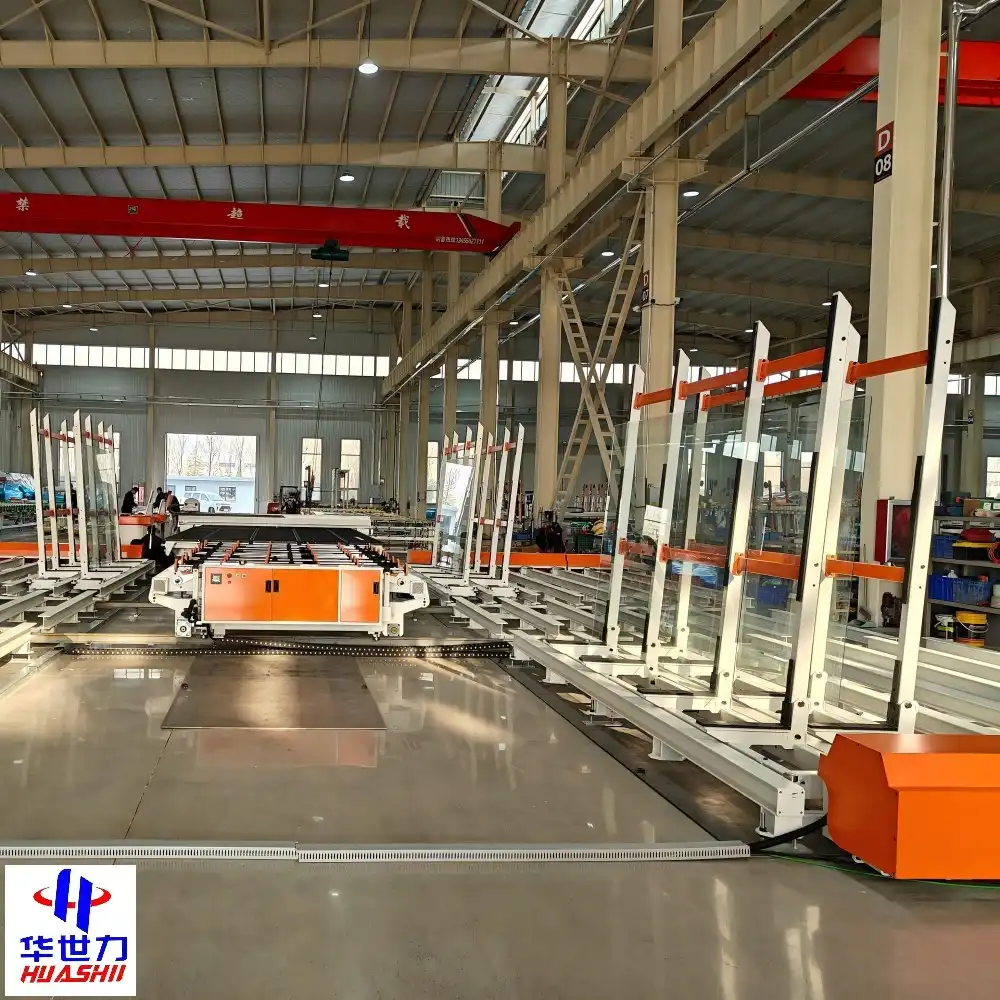
Manufacturers who are moving away from human processes can find a great halfway ground in semi-automatic systems. These systems usually have automated ways to add materials and cutting processes that are handled by an operator. This method is shown by the HSL-LSX3829 model, which has three special tables: places for loading, cutting, and breaking. These tables work together without any problems.
Fully automatic glass cutting assembly line setups are the most advanced technology used to work with glass today. These systems use advanced software to run them and precise mechanical parts to get throughput rates that can't be matched by human work. The Optima optimization program improves these features by finding the best cutting patterns that reduce waste and make the best use of materials.
Operational Workflow and Core Components
Advanced glass cutting systems have a carefully planned series of operations that are meant to be as efficient as possible while still meeting quality standards. Large sheets of glass are put into the system by automatic loading devices that use vacuum handling technology to keep the sheets' surfaces from getting damaged while they're being moved.
At the center of the process is the cutting table, where precise cutting heads follow pre-programmed designs with accuracy measured in millimeter-level steps. Modern systems use either diamond-tipped cutting wheels or laser technology, based on the task at hand and the required glass thickness.
Breaking tables: finish the job by carefully breaking along scored lines. They use air pressure systems to make sure the separations are clean, and there are no edge chips. Real-time tracking tools keep an eye on the accuracy of the cuts and look for quality problems before they affect the output of the whole process.
Key Components and Workflow Optimization
Advanced Mechanical Integration
Modern glass-cutting assembly lines are built on a foundation of several important parts that work together to provide top-notch performance. Robotic arms with special end effectors move the glass between stations. This eliminates the chance of mistakes made by humans while keeping the pressure on the glass constant.
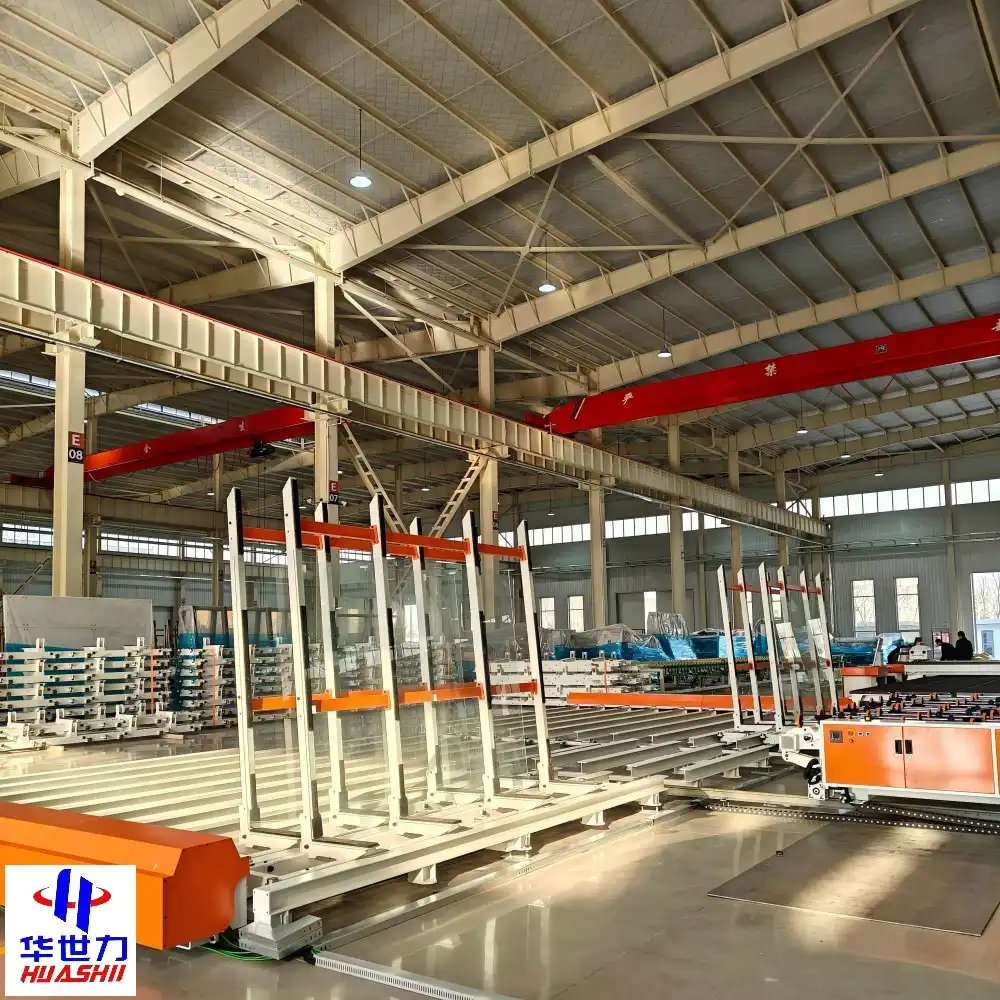
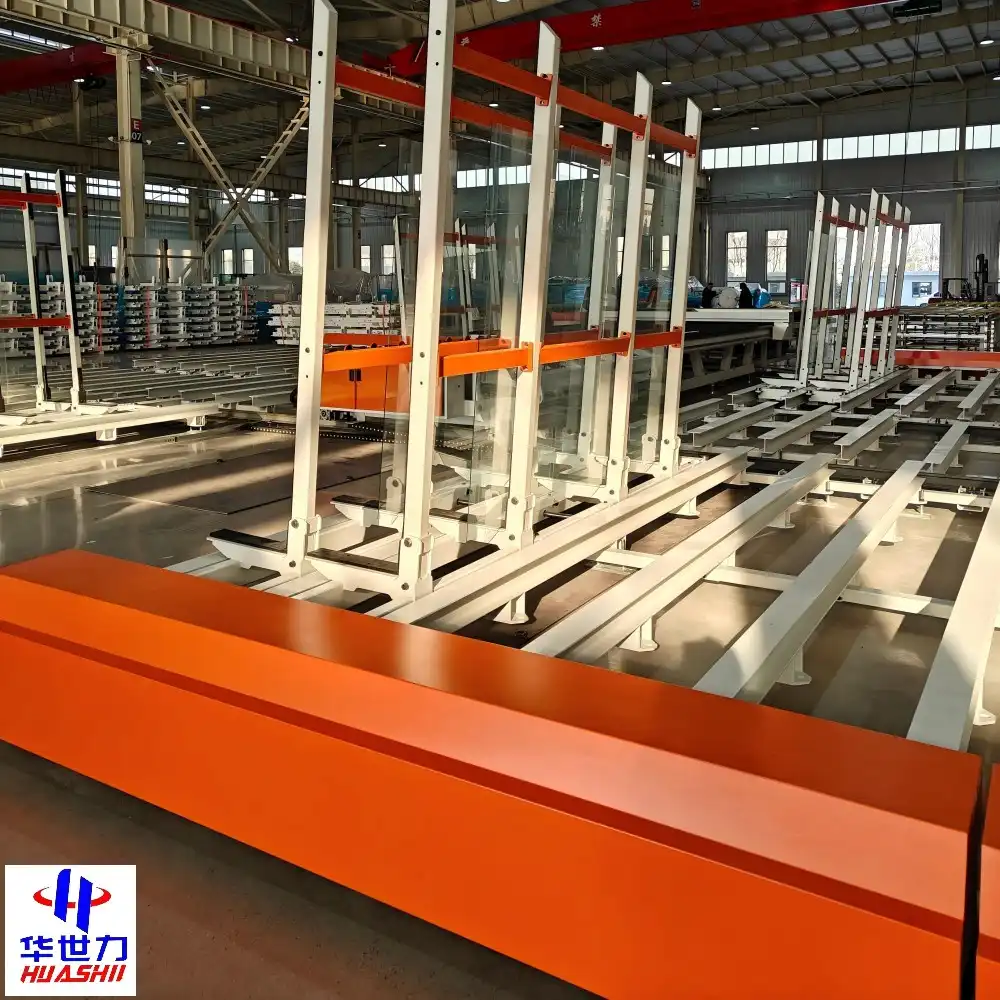
You can find rail systems both above and below ground. They are the structure that makes it possible to move things easily. The 2+2 station setup lets you make flexible production schedules, so you can work on multiple glass sheets at the same time while keeping the flow of work running smoothly. Each side has three large arms that can handle a lot of different things across the whole working area.
Integrated control systems make sure that mechanical parts and software programs work together smoothly. These systems keep an eye on the cutting factors all the time and change the pressure, speed, and positioning to keep the best performance for all types and sizes of glass.
Safety and Compliance Features
In industrial glass processing, safety rules require complete security systems that keep both tools and people safe. Automatic safety features include emergency stop buttons, safety light curtains, and pressure-sensitive floor mats that stop work right away when possible dangers are found.
Quality control systems work with safety rules to make sure that only glass that has been properly handled moves on to the next step in the manufacturing process. These methods make it less likely that problems will happen later on in the process that could put workers or the product at risk.
Choosing the Right Glass Cutting Assembly Line for Your Business
Production Volume and Precision Requirements
Procurement decisions require careful evaluation of production volume requirements against available glass cutting assembly line configurations. Semi-automatic systems are helpful for small to medium-sized businesses because they offer the benefits of automation while still allowing for operating freedom.
Most of the time, high-volume producers need fully automatic setups that can handle hundreds of glass sheets every day. The higher starting cost of these systems is justified by the fact that they save money on labor costs and make things more consistent, which leads to fewer rejections and happier customers.
The level of accuracy needed for different tasks varies a lot. To make sure the glass fits correctly during installation, architectural glass needs very tight tolerances. On the other hand, artistic glass may be able to handle slightly wider cutting tolerances without losing any usefulness.
Cost-Benefit Analysis and Scalability
Knowing the total cost of ownership means more than just buying the equipment. It also means knowing how to put it, training people on how to use it, doing regular upkeep, and paying for ongoing running costs. Energy-efficient systems lower long-term running costs and help meet green goals, which are becoming more and more important in buying choices.
Scalability issues become especially important for companies that are growing and plan to increase their production capacity. Modular system designs let you add small amounts of functionality without having to replace all of your equipment. This protects your initial investments and helps your business grow.
Maintenance needs have a direct effect on working stability and should be a big part of the choices about what to buy. Systems that are easy to get to and change parts of reduce downtime and the need for specialized knowledge to do regular repair jobs.
Maintenance and Innovations in Glass Cutting Assembly Lines
Preventive Maintenance Strategies
To keep the glass-cutting assembly line running at its best, organized preventive maintenance plans need to be made for each piece of equipment and how it is used. Daily upkeep tasks include cleaning the cutting surfaces, checking the fluid levels, and making sure the calibration settings are correct so that the quality of the cuts is always the same.
As part of weekly maintenance, mechanical parts are now inspected, moving parts are oiled, and the safety system's operation is checked. These regular checks find possible problems before they become big enough to need expensive fixes or unplanned downtime.
Every month, full checks look at parts that are worn out, like cutting wheels, belt systems, and pneumatic seals. Replacing these parts before they break, instead of waiting for them to break, makes the whole system much more reliable.
Technological Innovations and Future-Proofing
IoT-enabled predictive maintenance is a big step forward in glass cutting technology. It uses data from sensors to guess when parts will break before they do. These systems look at changes in temperature, shaking patterns, and power use to spot problems before they get worse.
Quality control systems that are run by AI are always learning from output data to automatically find the best cutting settings. This technology cuts down on the time it takes to set up new types of glass and makes production runs more consistent, which is especially helpful when working with unique glass materials.
Integration with current factory execution tools makes it possible to share data easily, which is in line with lean manufacturing concepts. Real-time production tracking lets you see throughput rates, quality measures, and how equipment is being used, which motivates efforts to keep getting better.
Procurement and Support: Where and How to Buy
Supplier Evaluation and Selection Criteria
For procurement to go well, possible sellers must be carefully evaluated based on their technical skills, the quality of their products, and their support system. Long-term relationship success is more likely when the makers are well-known and have a history of developing glass-cutting assembly lines.
Standards for certification, like ISO 9001 quality management and CE safety compliance, show that providers are dedicated to using consistent production methods and following global safety rules. When buying tools for businesses that are regulated, these licenses become even more important.
Global reach skills make sure that sellers can provide timely help no matter where the installation is located. Local service networks cut down on the time it takes to get technical help and extra parts, which are important for keeping operations running smoothly in high-volume production settings.
Customization and After-Sales Support
Customized solutions are used when production needs are specific and normal setups can't meet those needs. Leading providers offer engineering services that can change standard systems to fit the needs of a specific application. This gives the best performance while still being reliable.
Full help after the sale includes expert training, maintenance plans, and access to spare parts. These services make sure that operations teams can get the most out of their tools while reducing the number of unplanned downtimes that mess up production plans.
Warranty programs give people even more confidence in the things they buy, especially expensive automatic systems. Many choices for extended warranties come with regular maintenance services that guarantee both efficiency and cost-effectiveness.
Conclusion
Glass-cutting assembly line solutions for big glass sheets are investments that makers must make if they want to succeed in tough market conditions. When you combine precise cutting, automatic handling systems, and advanced software control, you get big gains in quality, productivity, and the efficiency of your operations. To choose the right system setup, you need to carefully think about your long-term growth needs, production needs, and quality standards. Modern solutions like the HSL-LSX3829 show how careful engineering can solve a wide range of manufacturing problems and give companies the freedom they need to respond to changing market needs.
FAQ
1. What applications benefit most from glass cutting assembly line technology?
Architectural glass manufacturing is in curtain wall and window systems, where precise cutting of large pieces is necessary. To make windshields and side windows for cars, special cutting designs are needed that require a high level of accuracy and edge quality. The making of smart mirrors is helped by the fact that custom forms and sizes can be made that work well with computer parts.
2. How does optimization software improve cutting efficiency?
The Optima optimization program looks at the size of the glass sheet and the cut patterns that need to be made to find the best way to cut it. This analysis cuts down on waste by intelligently planning the cutting path and improving the stacking of parts. The software also keeps files of cutting settings for different kinds of glass, which makes sure that the quality of each production run is the same.
3. What factors determine the maximum glass size capabilities?
The largest size of glass that can be handled relies on the strength of the frame, the reach of the cutting head, and the capacity of the material handling system. The HSL-LSX3829 can handle sheets up to 3660x2800mm thanks to its strong rail systems and well-placed handling arms. For bigger sizes, special engineering may be needed to make sure there is enough support and cutting accuracy across the whole area of the glass.
Partner with HUASHIL for Advanced Glass Processing Solutions
Shandong Huashil Automation Technology Co., Ltd. is a top company that makes glass-cutting assembly lines and offers cutting-edge automation solutions that change the way glass is processed. Because we have a lot of experience designing and making mechanical equipment, we can be sure that every system will work in today's tough industry settings.
The HSL-LSX3829 shows our dedication to new ideas; it has powerful Optima optimization software and adaptable 2+2 station layouts that can meet a wide range of production needs. Our all-around method includes technical training, help for upkeep, and customization services that make sure the equipment works at its best for as long as it's been used. Get in touch with our team at sales.cathy@sdhuashil.com to talk about how our glass cutting assembly line options can help your business.
References
1. Glass Manufacturing Industry Council. "Automated Glass Processing: Technology Trends and Market Analysis." Industrial Glass Processing Journal, 2023.
2. International Association of Glass Manufacturers. "Precision Cutting Technologies for Large Format Glass Applications." Advanced Materials Processing Review, 2023.
3. Automation Technology Research Institute. "Efficiency Optimization in Industrial Glass Cutting Systems." Manufacturing Technology Quarterly, 2023.
4. Building Glass Association. "Quality Standards and Safety Requirements for Architectural Glass Processing." Construction Materials Engineering, 2023.
5. Smart Manufacturing Alliance. "IoT Integration in Glass Processing Equipment: Performance and Reliability Analysis." Industrial Automation Today, 2023.
6. Global Glass Technology Conference. "Innovations in Large Sheet Glass Cutting: Equipment Design and Process Optimization." Glass Technology International, 2023.
