




Modern glass production needs accuracy, speed, and dependability automated glass processing systems that are hard to get with manual methods. By combining CNC technology with smart machinery that can cut, edge, drill, and temper glass without any problems, automated glass production systems have changed the industry. With these high-tech systems, makers can get very accurate results while cutting down on labour costs and waste. Knowing how automation improves production workflows helps technical buyers and plant managers make choices that have a direct effect on how competitive and profitable their facility is.
Understanding Automated Glass Processing Systems
Core Components and Workflow Integration
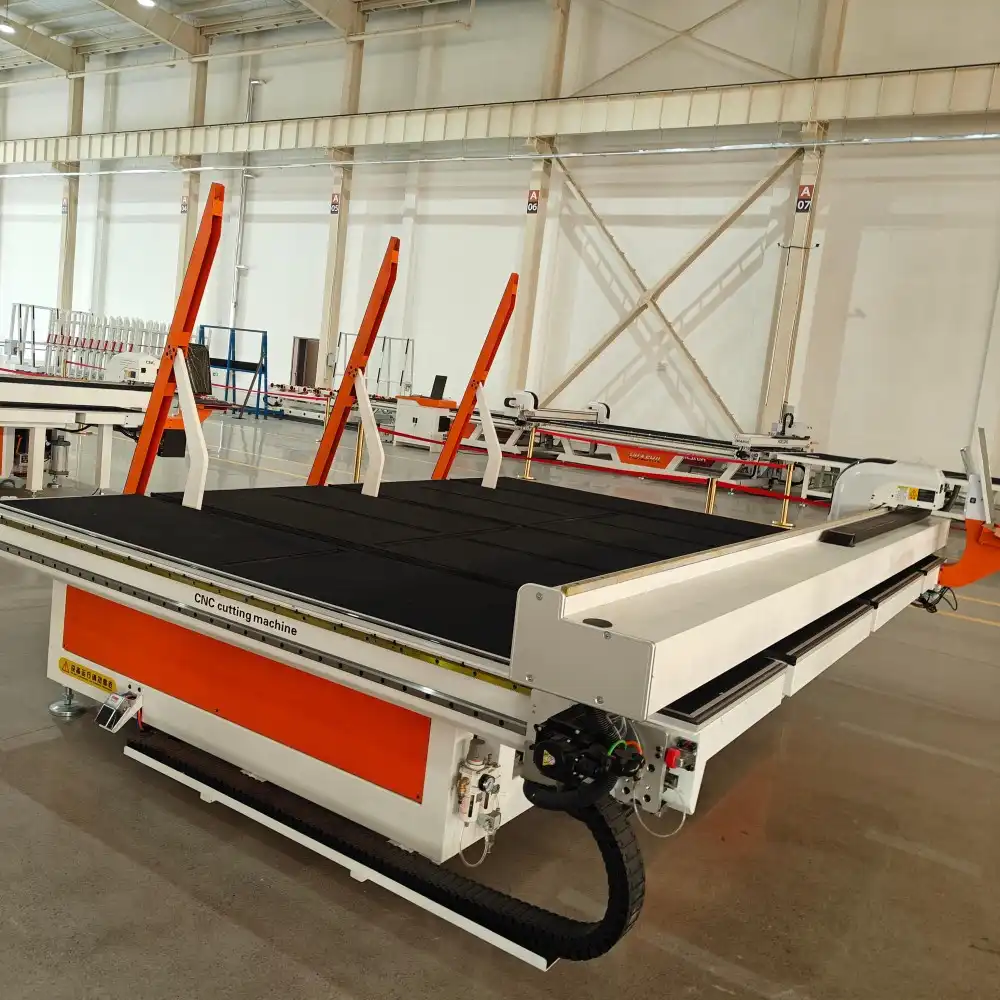
Currently used glass processing equipment has many parts that work together in sync to get the best output. Using air float technology, automated loading systems move raw glass sheets onto processing tables. This keeps the surfaces from getting scratched and makes sure they are handled carefully. CNC-controlled cutting heads with diamond wheels or laser systems follow exact patterns that are calculated by optimisation software, making the best use of the material. After cutting, edging machines apply flat polishes, consistent bevels, or pencil edges based on the specs. Automated pressure control systems change the grinding force in real time, which stops chip-out damage and keeps the quality of the finish the same. Scored glass is easily separated by breaking tables, and final pieces are moved to equipment further down the line for packaging or tempering.
Key Technical Advantages for Production Facilities
Production directors who are thinking about investing in automation need to know how the investments will lead to measured performance gains. Modern systems offer dimensional accuracy within ±0.3mm, which is very important for curtain wall uses that need to meet tight fit requirements. Automated edge finding can make up for flaws in the material, so cutting patterns always line up perfectly, even if the raw sheet isn't the same. Operators can handle multiple machines at once with remote control, which cuts the amount of work they have to do by 40–60% compared to manual workflows. Safety features like light curtains, emergency stop systems, and CE approval help keep workers safe while reducing the risk of liability. These professional skills directly lead to faster production, better quality, and lower costs for rework.
Comparing Automated vs Manual Glass Processing: Making the Right Choice
Limitations of Traditional Manual Operations
Skilled workers use hand tools to measure, score, and break glass sheets during manual glass production. This method gives you a lot of freedom for unique work, but it also adds a lot of variation. Human fatigue makes it harder to cut precisely during shifts, which causes edge quality and size differences that aren't regular. A lot of work limits how much can be made—experienced technicians usually work on 30 to 50 sheets every day, based on how complicated the work is. Handling things by hand increases the risk of injury. Worker compensation claims are made for injuries like repetitive motion injuries, cuts from sharp edges, and musculoskeletal strain from lifting heavy sheets. As production goes up, quality control automated glass processing systemsproblems get worse because it gets harder to keep standards the same across thousands of pieces without automated measurement systems.
Quantifiable Benefits of Automation
Companies that use automatic systems in their factories say they get much better results. When compared to manual work, production throughput goes up three to five times, and modern tools can handle 150 to 250 sheets of paper in an eight-hour shift. 10–18% less material is wasted thanks to optimised nesting software that sets up cutting patterns more efficiently than planning by hand. Lowering the cost of labour saves a lot of money over time. Automation cuts the number of workers needed from 6 to 8 operators per queue to 1 to 2 managers watching over several machines. Equipment is a big investment, but a return on investment (ROI) study usually shows that it pays for itself in 18 to 30 months for facilities that run two shifts every day. Servo motors and regenerative braking are used in energy-efficient designs that lower running costs even more than older hydraulic systems.
Latest Trends and Innovations in Automated Glass Processing Technology
Intelligence and Connectivity Advancements
Artificial intelligence programs are now built into cutting-edge processing equipment and are constantly improving how it works. Machine learning systems look at data on cutting force, spindle speed, and feed rate to make settings change automatically. This takes into account changes in material hardness and tool wear. This smart adjustment keeps the quality stable without the user having to do anything. IoT connectivity makes it possible to watch things from afar, which changes how maintenance is done. Predictive programs look at patterns of vibration, heat, and power use to figure out when a component will break down weeks before it does. Facility managers get mobile alerts when bearings show signs of early wear or when cooling systems need service. This lets them do planned maintenance during downtime in production instead of having to make emergency fixes. Vision inspection technology used in real-time quality control systems can quickly find edge flaws, dimensional errors, and surface flaws. Automated rejecting mechanisms send back pieces that don't meet specifications before they go through further steps in the process. This keeps expensive rework from happening and makes sure that only products that meet specifications reach customers.
Sustainability and Energy Efficiency
Environmental considerations increasingly influence equipment purchasing decisions. Modern glass processing machines incorporate energy recovery systems that capture braking momentum and regenerate electrical power back to facility distribution systems. Variable frequency drives adjust motor speeds precisely to task requirements, eliminating the wasted energy inherent in constant-speed designs. Water recycling systems within edging equipment reduce consumption by 60-75% compared to once-through cooling approaches. Closed-loop filtration removes glass particles while maintaining optimal coolant temperature, extending fluid life, and minimizing disposal costs. Manufacturers pursuing LEED certification or environmental sustainability goals find these features essential for meeting green building requirements.
Procuring Your Automated Glass Processing System: A Strategic Guide
Total Cost of Ownership Analysis
Equipment purchase price represents only 50-60% of true ownership costs over a ten-year operational period. Comprehensive financial analysis must include installation expenses, foundation preparation, electrical infrastructure upgrades, automated glass processing systems, and operator training programs. Shipping costs for heavy machinery can reach $15,000-$25,000 for international deliveries, impacting project budgets significantly. Ongoing maintenance represents a substantial recurring expense. Annual preventive maintenance contracts typically cost 4-6% of equipment purchase price, covering scheduled inspections, consumable replacement, and priority technical support. Spare parts inventory requirements vary by equipment complexity—maintaining critical components onsite prevents extended downtime but ties up working capital. Energy consumption affects operating costs considerably. Efficient modern systems consume 45-60 kWh per eight-hour production shift, while older designs may require 80-100 kWh for equivalent output. At industrial electricity rates averaging $0.12/kWh, annual energy costs can differ by $3,000-$5,000 between efficient and inefficient equipment choices.
Supplier Evaluation Criteria
Identifying reliable manufacturing partners requires thorough due diligence beyond initial price comparisons. Established manufacturers demonstrate longevity through decades of continuous operation, indicating stable engineering teams and sustained R&D investment. ISO9001 certification confirms quality management systems meet international standards, while CE marking ensures European safety compliance recognized in North American markets. Reference checks with existing customers provide invaluable insights into actual operating experience. Questions should address equipment reliability, responsiveness during technical issues, spare parts delivery times, and accuracy of performance specifications. Site visits to operating installations allow hands-on evaluation of build quality, user interface design, and actual production capabilities. Financial stability matters considerably for long-term support relationships. Equipment represents 10-15-year investments requiring ongoing technical assistance, software updates, and parts availability. Suppliers with strong financial positions and established distribution networks provide greater confidence in sustained support capabilities.
Enhancing Factory Efficiency with Automated Glass Cutting and Edging Systems
Workflow Integration and Process Optimization
Successful automation implementation extends beyond individual machine performance to encompass complete production flow coordination. Automated glass cutting systems function most effectively when integrated with upstream material handling and downstream processing stations. Synchronized conveyance systems eliminate manual transfer steps, reducing handling damage and accelerating throughput. The HSL-YTJ3829 model exemplifies advanced integration capabilities. Automatic loading systems equipped with air flotation technology transport raw sheets onto the cutting table, while automated edge finding compensates for material positioning variations. Once cutting completes, integrated breaking tables separate scored pieces, and synchronized belt conveyors transport finished glass directly to edging or packaging stations without manual intervention. This seamless workflow delivers measurable productivity improvements. Facilities report cycle time reductions of 35-45% compared to manual material handling between isolated processing stations. Reduced handling minimizes breakage losses—automated transport decreases damage rates from typical 3-5% to under 1%, directly improving material yield.
Measurable Performance Improvements
Production directors evaluating automation investments need concrete automated glass processing systemsperformance metrics demonstrating business impact. Advanced cutting systems achieve processing speeds of 80-120 meters per minute, compared to 15-25 meters per minute for manual scoring operations. This velocity increase translates directly to higher daily output without corresponding labor cost increases. Edge quality consistency improves dramatically with automated processing. CNC-controlled edging maintains uniform bevel angles and surface finish across entire production runs, eliminating the variation inherent in manual grinding techniques. Dimensional accuracy stays within ±0.3mm tolerances, meeting strict architectural specifications for curtain wall and structural glass applications. Material optimization software contributes significantly to waste reduction. Programs analyzing order patterns can improve raw material utilization by 8-15%, representing substantial savings on high-volume production. At typical architectural glass costs of $8-12 per square foot, a facility processing 50,000 square feet monthly saves $40,000-$90,000 annually through improved yield.
Real-World Implementation Results
Architectural glass manufacturers implementing comprehensive automation report compelling operational transformations. A Texas-based curtain wall fabricator reduced labor requirements from eight operators to three supervisors while increasing daily output from 1,200 to 3,500 square feet. Quality rejection rates decreased from 4.2% to 0.8%, and customer delivery times improved from 6-8 weeks to 3-4 weeks. Furniture glass producers experience similar benefits. A Midwestern manufacturer specializing in glass tabletops and shelving automated their cutting and edging operations, achieving 280% throughput increase with equivalent staffing. Consistent edge quality eliminated customer returns related to dimensional variations, improving profit margins by reducing rework costs that previously consumed 6-8% of revenue.

Conclusion
Automated glass processing represents a strategic investment that transforms manufacturing capabilities through enhanced precision, increased throughput, and reduced operating costs. Modern CNC-controlled systems integrate cutting, edging, and material handling operations into seamless workflows that eliminate manual inefficiencies while maintaining consistent quality standards. Technical advancements, including AI-driven optimization, IoT connectivity, and energy-efficient design, continue pushing performance boundaries. Successful procurement requires a comprehensive evaluation of total ownership costs, supplier capabilities, and integration requirements matching specific production needs. Facilities implementing advanced automation gain competitive advantages through faster delivery, improved quality, and lower per-unit costs that directly strengthen market positioning.
FAQ
1. What advantages do automated glass processing systems provide over manual methods?
Automated systems deliver substantial benefits, including 3-5 times higher throughput, improved dimensional accuracy within ±0.3mm tolerances, and 40-60% labor cost reduction. Consistent edge quality eliminates variation from operator fatigue, while optimization software reduces material waste by 10-18%. Enhanced safety features minimize injury risks, and predictive maintenance capabilities reduce unexpected downtime.
2. How do we select appropriate equipment for our facility's needs?
Start by analyzing daily production volume requirements across product categories, then specify machines with 20-30% excess capacity. Evaluate maximum glass dimensions, thickness range compatibility, and optimization software capabilities. Assess supplier technical support availability, spare parts inventory locations, and warranty terms. Request reference checks from existing customers operating similar production environments to verify actual performance against specifications.
3. What factors influence automated glass processing equipment pricing?
Equipment costs vary based on processing capacity, automation level, and customization requirements. Single cutting tables typically range $80,000-$150,000, while complete production lines with integrated cutting, edging, and handling systems reach $300,000-$600,000. Installation, training, and initial spare parts add 15-25% to base equipment costs. Total ownership analysis should include ongoing maintenance, energy consumption, and consumables expenses.
Partner with HUASHIL for Advanced Automated Glass Processing Systems
HUASHIL specializes in delivering precision-engineered glass processing automation that automated glass processing systemstransforms manufacturing efficiency. Our CE-certified equipment combines proven reliability with cutting-edge CNC technology, serving architectural glass fabricators, curtain wall integrators, and furniture manufacturers throughout North America. The HSL-YTJ3829 automated cutting system processes glass up to 3660×2800mm with a thickness range from 2-19mm, featuring Optima optimization software that maximizes material yield. Comprehensive capabilities, including automatic loading, pressure control, edge finding, and 360-degree remote operation, deliver the performance production directors demand. Explore how our automated glass processing systems supplier expertise can enhance your facility's capabilities—contact our team at salescathy@sdhuashil.com for technical consultation and customized solutions tailored to your specific requirements.
References
1. Glass Processing Technology: Modern Manufacturing Methods and Equipment Selection Criteria, International Journal of Advanced Manufacturing Technology, 2023.
2. Automation in Architectural Glass Fabrication: Performance Analysis and ROI Evaluation, Construction Materials Research Quarterly, 2024.
3. CNC Integration in Glass Processing: Technical Standards and Best Practices, American Glass Manufacturing Association Technical Guide, 2023.
4. Energy Efficiency in Automated Glass Production Systems, Sustainable Manufacturing Technology Review, 2024.
5. Predictive Maintenance Applications for CNC Glass Processing Equipment, Industrial Automation and Control Systems Journal, 2023.
6. Total Cost of Ownership Analysis for Glass Processing Automation Investments, Manufacturing Economics and Strategy Review, 2024.
