




To choose the best glass bilateral edging machine for your manufacturing business, you need to carefully consider its production ability, technical specifications, and operational needs. The best way to edge two pieces of glass relies on what you're using them for, like making architectural glass panels, auto parts, or furniture decorations. By learning about important performance factors like the shape of the grinding wheel, its automation features, and its customisation options, you can be sure that the equipment you buy will increase production efficiency and keep the quality of the edges uniform across a wide range of glass processing tasks.
Understanding Glass Bilateral Edging Technology
Modern glass edging tools have changed the way manufacturers work with precision glass. These high-tech systems use advanced bilateral grinding technology to work on both sides of glass panels at the same time. This cuts production time by a huge amount compared to traditional methods that only work on one side.
In order to get regular edge finishing across different glass thicknesses, the main idea is for several grinding wheels to work together. Today's bilateral systems are controlled by servo motors, which allow for exact positioning and even pressure distribution throughout the grinding process. This new technology makes sure that the edges are of higher quality while also lowering the amount of waste and the need for operator input.
Integration of automation is becoming more and more important in the glassmaking industry. Programmable logic controllers (PLCs) are built into modern systems for two-sided edging. These PLCs let makers store processing parameters for various types of glass and edge profiles. This feature speeds up the production process and makes sure that quality standards are met across all batches of production.
The precise engineering that goes into these tools solves common problems in manufacturing, like edge chipping, differences in size, and uneven surface finishes. Modern cooling systems keep the work area from overheating while grinding, and technologies that reduce vibrations keep things running smoothly even at high processing speeds.
Key Features That Define Superior Performance
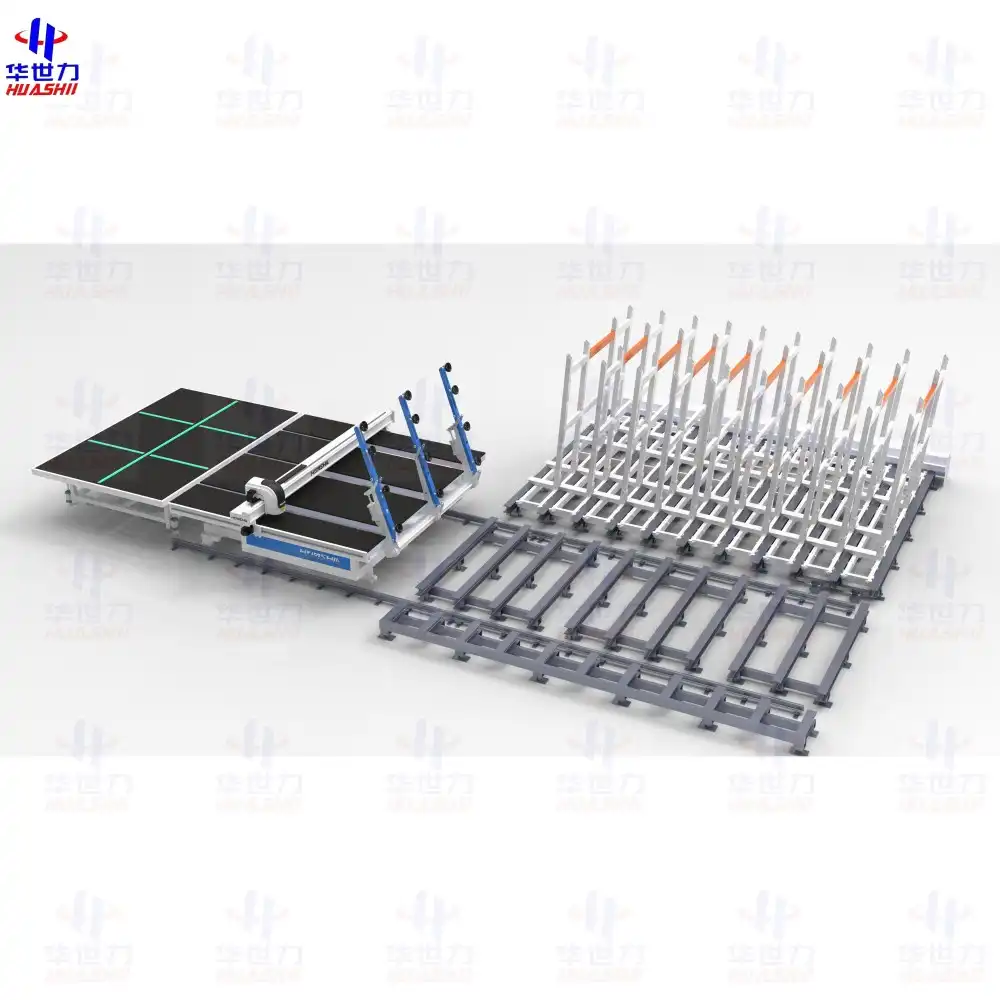
Modern glassmaking equipment has complex mechanical parts that are made to work in harsh industrial settings. One of the most important performance factors is the arrangement of the grinding wheels. Professional-grade systems usually have 12 grinding wheels on one side, with 2 upper chamfers, 2 lower chamfers, and 8 flat grinding stations.
Both the moving parts and the opening and closing features are controlled by servo motor technology, which gives you very precise control. With this automation, processing can go from a minimum opening of 0.35 meters to a maximum opening of 2.5 meters, so different-sized glass panels can be made in the same setting.
Cheap glass double side grinding machine, automatic glass edging systems put the safety of the operator first by including emergency stop functions, protective guards, and sensor-based impact detection. These safety features keep the production flow running smoothly while protecting both the tools and the people who use them.
Monitoring of processing factors like grinding pressure, conveyor speed, and cooling fluid distribution can be done in real time by advanced control systems. This tracking feature lets you plan maintenance and quality control ahead of time, which keeps production from stopping for long periods of time and costing a lot of money.
The strong building materials used in high-end paired systems make them last a long time, even when they are used all the time. Precision-machined surfaces, hardened steel parts, and industrial-grade bearings all help the machine last longer and need less upkeep.
Industrial Applications Across Manufacturing Sectors
The biggest group of people who buy bilateral edging tools are architectural glass manufacturers. Large-format glass panels are made here for use in curtain wall systems, industrial windows, and structural glazing. Precision glass edging is needed for architectural setups because of the tight tolerances that are needed. Bilateral systems easily meet these needs.
To meet safety standards and fitting requirements, automotive glass production needs very precise measurements and edges. When it comes to meeting the strict quality standards that automakers demand, bilateral glass edging tools are the best at working with windscreens, side windows, and rear glass panels.
Applications in the smart mirror business have become a big growth area. Interactive display panels and smart mirror systems need special edge finishing. Modern bilateral systems can precisely calibrate the edges, which makes sure that the optical qualities are at their best and that they can be seamlessly integrated with electronic parts.
These tools can work with a wide range of glass shapes and edge profiles, which is useful for making furniture and decorative glass. When it comes to design, bilateral edging technology can handle a wide range of needs, from tabletops with smooth edges to artistic panels with bevelled edges. It does all of this while still keeping production costs low.
With the ability to incorporate bevelled glass machines into bilateral systems, manufacturers can make complex edge profiles that improve both the function and appearance of finished goods. This versatility opens up more market possibilities and raises the potential value-added of production.
Technical Specifications and Performance Metrics
To figure out production capacity, you need to know how fast the glass is processed compared to its thickness and the complexity of its edges. Depending on the type of glass and the level of edge finish that is wanted, modern bilateral systems can process at speeds of 1 to 4 meters per minute.
The quality of finishing the edges of glass relies on the grinding wheel used, how the coolant is spread, and how well the pressure is controlled. When edges are polished, premium methods keep edge deviation tolerances within ±0.1mm and get surface roughness values below Ra 0.8μm.
The amount of power used has a big effect on running costs. Variable frequency drives (VFDs) in efficient bilateral systems make the best use of energy based on the processing needs. During active grinding processes, these VFDs usually use 15 to 25 kW.
Through adjustable processing settings, dimensional flexibility can meet a wide range of production needs. The glass thickness runs from 3 mm to 25 mm, and the edge angle can be changed from 90 degrees for a square edge to 45 degrees for a complex bevel profile.
Coolant systems make sure that all of the grinding sites have the right amount of fluid at the right temperature. Recycling systems reduce the amount of coolant that is used, and filtration parts keep the quality of the fluid stable throughout production processes.
Quality Control and Precision Standards
Assessing the quality of an edge includes measuring a number of things, such as its strength, surface finish, and accuracy in measurements. Professional two-way systems have inline measurement features that keep an eye on edge sizes during processing steps.
To treat glass surfaces consistently, a glass bilateral edging machine lets you make sure that the pressure is just right at all of the grinding sites. Modern systems let you change the pressure on each grinding wheel separately, which lets you get the best results for different types of glass and edge needs.
Data logging features that keep track of processing parameters for each production batch help quality assurance processes. This documentation helps with efforts for continuous improvement and meets the standards for traceability.
For precise glass shaping, the temperature must stay stable during the whole process. Thermal management systems stop changes in size that come from thermal expansion, so the shape of the edges stays the same from one production run to the next.
Statistical process control integration lets automated measurement tools check the quality in real time. These features make inspections less necessary while still keeping detailed quality records for legal compliance.
Cost Analysis and Return on Investment
When figuring out the total cost of ownership (TCO), you have to take into account the initial investment in tools, the costs of installation and training, and the ongoing costs of maintenance. Depending on the amount of work that needs to be done and the amount of money saved on labour, bilateral cutting systems usually pay for themselves in 18 to 36 months.
Less handling is needed, working speeds are faster, and edge quality consistency is better, all of which increase operational efficiency. Because of these changes, production capacity has gone up, and rework costs have gone down, which has a big effect on profitability.
Labour cost reduction is the main economic gain. Compared to manual or semi-automatic alternatives, automated bilateral systems require 40–60% less operators. This cutback lets companies put skilled workers to work on more important production tasks.
Modern systems are more energy efficient, which lowers running costs by making motor controls and grinding processes more efficient. During production cycles, variable speed drives and intelligent power control systems keep the amount of electricity used to a minimum.
Predictive maintenance and strong component design lead to the optimisation of maintenance costs. Premium bilateral systems have diagnostic tools that can find repair needs before parts break, which cuts down on unplanned downtime costs.
Customisation Options for Specialised Applications
When it comes to glass edging, CNC machines can handle complicated edge shapes and unique geometric needs. Programmable control systems let producers make processing programs that are specific to each product.
Customisation of glass production equipment goes beyond standard edge profiles and includes unique grinding wheel arrangements, personalised conveyor systems, and automation features designed for specific uses. Because of these changes, it is now possible to work with speciality glass goods like laminated panels, tempered glass, and coated substrates.
Different businesses have very different needs when it comes to flat glass edging, so machines need to be able to be set up in a variety of ways to meet those needs. When manufacturers use modular system designs, they can choose the best configurations for each purpose.
Integration with current production lines needs careful thought about how to handle materials, how to make sure that control systems work with each other, and how to make sure that quality standards are met. Professional two-way systems have many integration choices that make production processes run more smoothly.
Bilateral systems can add the feature of a glass chamfering machine to give them more edge treatment options in a single processing station. This integration cuts down on the amount of space needed for tools while increasing the processing options.
Maintenance and Service Considerations
Preventive maintenance plans improve the performance of machines and cut down on unplanned downtime. To keep the best working quality, bilateral edging systems need to have their grinding wheels, coolant systems, and mechanical parts checked on a regular basis.
The availability of spare parts is a very important factor in choosing equipment, especially for makers in other countries. A large inventory of parts and the ability to send them quickly mean that production is interrupted as little as possible during maintenance.
Access to technical help has a big effect on how well operations run. Manufacturers gain when suppliers offer a variety of support methods, such as on-site service, remote diagnostics, and full training programs for maintenance staff.
The steps for replacing a grinding wheel should be easy to follow and cause little downtime in production. Modern systems have quick-change methods that make it easier to replace wheels while keeping them in the right place and aligned.
Service paperwork for the cheap glass double side grinding machine, such as troubleshooting guides, parts catalogues, and maintenance schedules, helps maintenance work run smoothly. Having a lot of paperwork makes you less reliant on outside service providers and lets you do proactive maintenance.
Future Trends in Glass Edge Processing
Automation integration keeps getting better thanks to AI apps that automatically find the best processing parameters based on the properties and quality standards of the glass. Machine learning systems look at processing data to find ways to make things work better and faster all the time.
With Industry 4.0 connection, you can check on production in real time and do diagnostics from afar. Integration of the Internet of Things (IoT) gives manufacturers complete production analytics and predictive maintenance insights that make tools work better overall.
Sustainability concerns lead to the creation of more energy-efficient ways to handle materials and lower needs for consumables. Modern technologies for grinding wheels and improved coolant systems keep the environment safe while maintaining high-quality processing.
Glass corner rounding and other edge processes are getting better thanks to more advanced CNC machines and better grinding wheel technologies. Because of these changes, makers can make edge profiles that are more complex to meet the changing needs of the market.
With digital twin technology, processing parameters can be virtually optimised before they are put into use in production settings. This feature cuts down on setup time and improves processing speed for bringing out new products.
Conclusion
Selecting the optimal glass bilateral edging machine requires a comprehensive evaluation of technical specifications, application requirements, and operational considerations. Modern bilateral systems offer exceptional versatility through advanced automation, precise control systems, and robust construction designed for demanding industrial environments. The investment in premium bilateral edging technology delivers significant returns through improved production efficiency, enhanced quality consistency, and reduced operational costs. Manufacturers benefit from partnering with experienced suppliers who provide comprehensive support, including customisation capabilities, technical training, and ongoing service support to maximise equipment performance throughout its operational lifecycle.
Choose HUASHIL as Your Trusted Glass Bilateral Edging Machine Manufacturer
HUASHIL delivers cutting-edge bilateral glass edging solutions engineered for demanding manufacturing environments. Our advanced servo-controlled systems featuring 12-wheel configurations and customizable automation capabilities ensure superior edge quality and production efficiency. Contact our technical specialists at salescathy@sdhuashil.com to discuss your specific glass processing requirements and discover how our proven glass bilateral edging machine technology can optimise your manufacturing operations.
References
1. Glass Manufacturing Industry Council. "Advanced Glass Processing Technologies: Bilateral Edging Systems Performance Standards." Industrial Glass Processing Quarterly, 2023.
2. Chen, L., & Rodriguez, M. "Automation in Glass Edge Finishing: Technological Advances and Manufacturing Applications." Journal of Glass Technology and Engineering, 2023.
3. International Glass Processing Association. "Quality Standards and Best Practices for Bilateral Glass Edging Operations." Glass Industry Technical Manual, 2023.
4. Thompson, R., et al. "Energy Efficiency in Glass Manufacturing: Bilateral Edging System Optimization." Sustainable Manufacturing Technologies Review, 2023.
5. European Glass Technology Institute. "Precision Glass Edge Processing: Equipment Selection and Performance Optimization Guidelines." Technical Publication Series, 2023.
6. Manufacturing Technology Research Center. "Economic Analysis of Automated Glass Processing Equipment: ROI and Performance Metrics." Industrial Automation Journal, 2023.
