




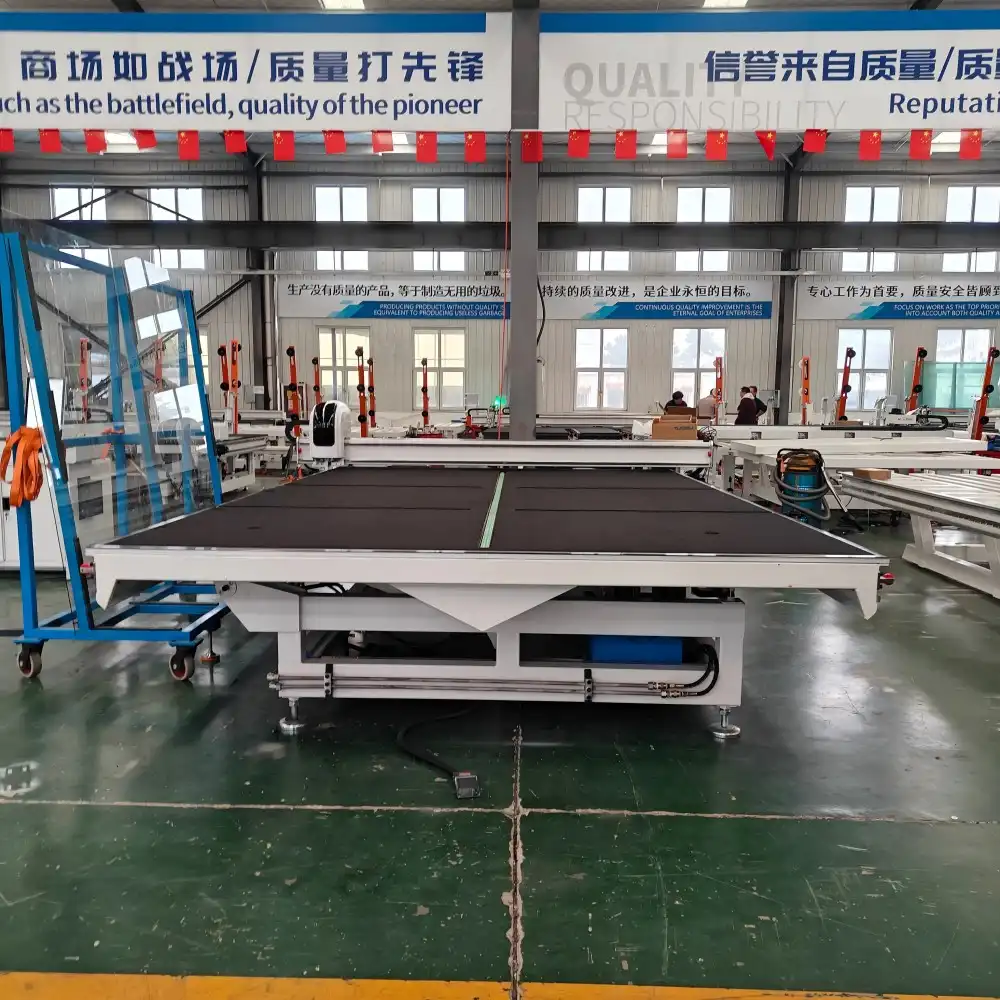
Energy-efficient glass loaders are a huge step forward in automating the glass-making process. They directly help architectural glass makers and curtain wall manufacturers deal with their rising costs. Modern glass loaders use a lot less energy than older ones because they have smart motors, air-float technology, and automatic settings. They can still handle a lot of work at once. The HSL-SPT3624 model is a good example of this change because it has both remote control walking and an advanced air float system that lowers friction while handling glass, which means less electricity is used per production cycle. When plant managers look at new equipment, these improvements will help them save money on monthly energy costs without affecting the accuracy needed for large-format glass sheets up to 3660x2440mm.
Understanding Energy-Efficient Glass Loaders
Core Technologies Driving Energy Savings
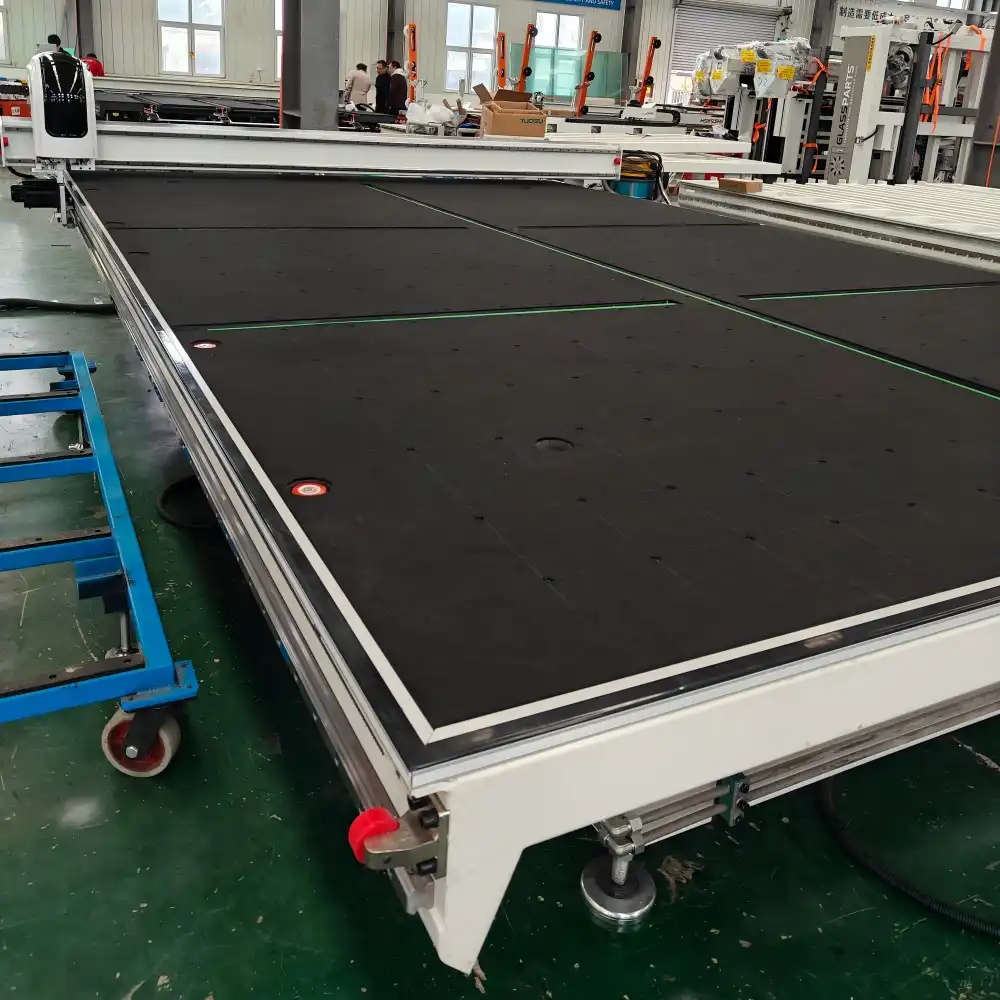
Servo-driven motors in modern automatic filling systems change how much power they use based on the load needs at any given time. Unlike traditional systems that keep the speed steady, these clever drives work at their most efficient levels throughout the loading cycle. Advanced types have an air float device that puts a thin layer of air under the glass sheets. This greatly reduces surface friction and the energy needed to move laterally. When working with large building glass panels, this technology comes in very handy because moving them by hand would take multiple people and a lot of time.
Smart sensors built into the equipment constantly check the position of the glass, how the weight is distributed, and how fast it is moving. This information is used by control programmes to fine-tune the output of the motor. This keeps any extra energy from being lost during times of low demand or idle time. When compared to hydraulic or gas options, these systems usually use 20–30% less energy, according to production leaders who use them in the first operating quarter.
How Does Automation Enhance Operational Efficiency?
Adding automatic filling changes the way production works by getting rid of the bottlenecks that come with handling glass by hand. The 360-degree walking function on the remote control lets workers place loads exactly without having to be close to heavy glass sheets. This cuts down on both safety risks and the amount of work that needs to be done. Breaking tables built into the loading station makes it easy to switch between cutting and loading tasks, keeping the flow of materials going smoothly and making the most of the equipment's efficiency.
Curtain wall makers who work with different sizes of glass during the same shift can benefit from the ability to switch between sizes quickly. The automatic placement system can adapt to different glass sizes without having to be recalibrated by hand. This means that cycle times stay the same across all production runs. This versatility is very important for companies that make furniture and home decor that have to follow specific requirements, since setup time has a direct effect on how profitable a project is.
Addressing Common Misconceptions About Advanced Equipment
Some buying managers are hesitant to invest in technology that uses less energy because they are worried about the initial capital costs. By looking at the total cost of ownership, we can see that saving energy, lowering the need for upkeep, and making output more consistent usually lead to a positive cash flow within 18 to 24 months. It is false to think that advanced automation leads to operating instability when equipment is approved to CE and ISO9001 standards and goes through strict testing processes to show that it is reliable.
Another misunderstanding has to do with how well it works with current production systems. Modern glass filling systems are made up of separate parts that fit together easily with different cutting tables, edging lines, and packing stations. These solutions can be put in place gradually by engineering teams, improving parts of the production line without having to rebuild the whole line. This method minimises disruptions while boosting productivity right away in specific work areas.
Evaluating Glass Loader Options: Criteria for B2B Procurement
Key Performance Metrics for Decision-Making
When engineering managers look at automatic glass handling equipment, they should focus on a few technical details that have a direct effect on the cost of production. The HSL-SPT3624 can hold pieces of glass up to 3660x2440mm, which is the usual size for building panels used in business construction. This makes the project more flexible. The loading cycle time, which is the time it takes from picking up the glass to putting it down, affects the total line flow and is very important when figuring out the equipment's return on investment (ROI) in high-volume settings.
Ratings for energy use should be carefully looked at when comparing vendors. Ask for thorough specs that show how much power is used during busy loading, idle rest, and peak performance. In all of these operating states, equipment with variable frequency drives and energy recovery systems always does a better job than equipment with set speeds. Lifecycle costs are also affected by how often maintenance needs to be done. Systems with sealed bearings, self-lubricating parts, and remote diagnostics have lower costs for both planned breaks and emergency repairs.
When it comes to cutting glass, the breaking table feature built into full-service loading stations, including the glass loader, is very useful. This feature gets rid of the need for different breaking tools and the time- and space-wasting process of moving materials from one place to another. When considering models that can do this, procurement teams should check the table sizes, scoring fit, and amount of automation.
Comparing Solutions Across Different Production Scales
Architectural glass plants that work with hundreds of sheets of glass every day need strong machinery that requires little help from operators. In these high-volume settings, the best value comes from advanced models that fully automate glass recognition, have customisable placement routines, and are integrated with plant management systems. When production needs are high and there isn't much room for surface damage or placement mistakes that would require expensive repair, the air-float system becomes very important.
Furniture and artistic glass makers who work with smaller batches can benefit from technology that is flexible and strikes a good balance between speed and efficiency. Equipment with easy-to-use computer interfaces and quick-adjust fittings can handle the wide range of requirements that are common in custom manufacturing settings. Semi-automated trucks that can be controlled from a distance are often the best choice for these kinds of businesses because they reduce the need for workers while also saving money on capital.
Because the material is so heavy and brittle, sintered stone makers have to deal with special handling problems. For these uses, special lifting equipment has stronger support structures and pressure-sensitive contact points that keep the edges from chipping during shift operations. Instead of depending on glass-only specs when reviewing providers, make sure that the suggested equipment takes into account the specific qualities of the materials that will be used in your production.
Financial Analysis: Balancing Investment and Returns
In order to make correct cost estimates, you need to look at more than just the price of the tools. The cost of installation depends on the infrastructure of the building. For example, businesses that already have compressed air systems and three-phase power distribution will have lower setup costs than those that need to connect to new utilities. Investing in training is also important, but tools with clear instructions and easy-to-use settings can help keep learning curve costs low.
The operating cost models you use should take into account how much energy you use at the current power rates in your area. Energy-efficient systems that lower the highest load during production hours are especially helpful for plants in places where demand charges are high. The cost of maintenance depends on the length of the guarantee, the availability of extra parts, and whether routine maintenance needs to be done by a specialist or by people in-house.
Productivity gains usually have the biggest effect on money, but they're hard to measure when evaluating a purchase. When cycle times go down, orders can be filled faster, which could lead to more money coming in from faster projects. Better first-pass quality rates cut down on wasted materials and extra work. These operating gains add up over the life of the equipment and often create more value than the direct energy savings.
Implementing Energy-Efficient Glass Loaders: Best Practices
Planning Installation for Minimal Production Disruption
Successful equipment integration begins with thorough site preparation that addresses both physical infrastructure and workflow continuity. Conduct detailed facility assessments identifying optimal loader placement relative to cutting stations, storage racks, and downstream processing equipment. Material flow patterns should minimise glass transportation distances while maintaining clear operator access for monitoring and adjustment tasks.
Coordinate installation scheduling during planned production downtime or lower-volume periods to reduce revenue impact. Modular implementation strategies allow phased deployment where new loaders initially handle specific product lines while existing equipment continues servicing other operations. This approach provides operational backup during the commissioning period and enables gradual workforce adaptation to new processes.
Utility requirements deserve careful attention—verify that electrical service capacity supports peak equipment demand without overloading existing circuits. Compressed air systems must deliver adequate volume and pressure for air flotation operation throughout extended production runs. Inadequate utility infrastructure creates performance bottlenecks that negate efficiency advantages, making pre-installation verification essential for realising projected benefits.
Operator Training and Process Standardisation
Comprehensive training programmes ensure personnel effectively utilise automation capabilities rather than reverting to manual workarounds that diminish efficiency gains. Training should cover normal operation procedures, remote control functionality, routine maintenance tasks, and troubleshooting common issues. Hands-on practice during commissioning allows operators to develop proficiency before production pressure intensifies.
Developing standardised operating procedure documents optimal equipment use protocols for different glass types and production scenarios. These guidelines help maintain consistent performance across shifts and reduce variability from individual operator preferences. Include visual aids showing proper glass placement, control panel settings for common configurations, and safety protocols specific to automated handling systems.
Ongoing skill development maintains operational excellence as production requirements evolve. Schedule periodic refresher sessions introducing advanced features that operators may not have explored during initial training. Encourage feedback from floor personnel regarding workflow improvements—operators working daily with equipment often identify optimisation opportunities that engineering teams might overlook during specification phases.
Maintenance Strategies for Sustained Performance
Preventive maintenance programmes protect equipment investments while ensuring energy efficiency characteristics persist throughout operational life. Establish inspection schedules based on manufacturer recommendations and actual usage patterns observed in your facility. Critical attention points include glass loader, air filtration systems that prevent contamination affecting flotation performance, motor connections where loose terminals increase resistance and energy waste, and sensor calibration affecting positioning precision.
Diagnostic software available on advanced loaders provides valuable insights into operational trends that might indicate developing issues. Monitor energy consumption patterns over time—gradual increases suggest mechanical wear or control system drift requiring adjustment before efficiency losses become significant. Temperature sensors tracking motor and drive performance help predict component failures, enabling proactive replacement during scheduled downtime rather than emergency repairs disrupting production.
Maintaining relationships with equipment suppliers ensures access to technical support when troubleshooting complex issues beyond in-house capabilities. Establish clear communication channels with vendor service teams and verify response times for urgent situations. Suppliers offering remote diagnostic capabilities can often resolve software-related issues without site visits, minimising downtime and support costs.
Return on Investment: Assessing Financial and Environmental Impact
Quantifying Direct Cost Reductions
Calculating energy savings begins with establishing baseline consumption from existing equipment or industry benchmarks for similar operations. Modern glass loaders consume approximately 30-40% less electricity than conventional systems due to optimised motor controls and reduced mechanical friction from air flotation technology. At industrial electricity rates averaging $0.08-0.12 per kWh in major U.S. manufacturing regions, a single loader operating 16 hours daily generates annual energy savings of $3,000-$5,000, depending on production intensity and regional utility costs.
Maintenance expense reductions complement energy savings through fewer wear components and extended service intervals. Traditional mechanical transfer systems require frequent replacement of rollers, bearings, and drive belts, subject to constant friction and glass contact. Air flotation designs minimise physical contact points, substantially extending component life. Documented maintenance cost reductions of 40-50% are common when comparing five-year operational expenses between conventional and energy-efficient systems.
Labour efficiency gains emerge from automation capabilities that reduce manual handling requirements. Operations previously requiring two workers for glass positioning and transfer can often operate with single-person oversight when deploying advanced loaders with remote control functionality. The resulting labour savings must account for redeployment opportunities—workforce reductions versus reassignment to higher-value tasks like quality inspection or equipment monitoring affect the net financial impact.
Environmental Compliance and Sustainability Benefits
Energy-efficient equipment helps manufacturers meet increasingly stringent environmental regulations while supporting corporate sustainability commitments. Reduced electrical consumption directly lowers carbon emissions associated with production activities—a significant consideration as more construction projects require environmental impact documentation from material suppliers. Facilities generating renewable energy on-site maximise sustainability returns by reducing total energy demand through efficient equipment deployment.
Green building certification programmes like LEED increasingly evaluate supply chain environmental performance when awarding project credits. Glass fabricators demonstrating measurable energy efficiency improvements strengthen their competitive position for environmentally focused construction projects. Documenting equipment certifications such as CE compliance and energy performance data provides tangible evidence supporting sustainability claims during bid evaluations.
Waste reduction represents another environmental benefit derived from improved automation precision. Accurate glass positioning minimises breakage during glass loader operations, including loading and transfer, reducing both material waste and disposal costs. Over a production year, breakage rate improvements of just 2-3% generate substantial material savings while decreasing environmental impact from waste glass processing and landfill requirements.
Conclusion
Energy-efficient glass loaders deliver compelling operational and financial advantages for glass fabricators across multiple industry segments. Advanced technologies, including air flotation systems, intelligent motor controls, and automation capabilities, reduce energy consumption by 30-40% while improving production throughput and quality consistency. The HSL-SPT3624 exemplifies these innovations, offering capabilities that address real production challenges faced by architectural glass plants, curtain wall fabricators, and furniture manufacturers. Procurement decisions should evaluate the total cost of ownership, including energy savings, maintenance reductions, and productivity gains that collectively generate an attractive return on investment within 18-24 months. Environmental benefits and regulatory compliance advantages provide additional strategic value as sustainability requirements increasingly influence construction industry purchasing decisions.
FAQ
1. How do energy-efficient glass loaders compare to traditional loading systems?
Energy-efficient models reduce electricity consumption by 30-40% through optimised motor controls and air flotation technology that minimises mechanical friction. Traditional loaders rely on constant-speed motors and mechanical rollers that consume consistent power regardless of actual load requirements. Advanced systems adjust energy usage dynamically based on glass weight and positioning needs, substantially lowering operational costs over equipment lifespan.
2. What factors should procurement teams consider when calculating the total cost of ownership?
Beyond purchase price, evaluate installation expenses, operator training costs, energy consumption at local utility rates, maintenance requirements, and productivity impacts. Equipment requiring specialised installation or extensive facility modifications increases upfront investment. Energy-efficient systems typically command 15-20% higher initial costs but generate savings exceeding this premium within two years through reduced operating expenses.
3. How can we verify manufacturer credibility and equipment reliability?
Prioritise suppliers holding recognised certifications such as CE and ISO9001, indicating adherence to established quality and safety standards. Request customer references from similar operations and verify claimed performance specifications through third-party testing documentation. Examine warranty terms and after-sales support infrastructure—manufacturers offering comprehensive spare parts availability and technical support demonstrate long-term commitment to equipment performance.
Partner with HUASHIL for Advanced Glass Handling Solutions
HUASHIL specialises in delivering energy-efficient glass loader systems engineered specifically for architectural fabricators, curtain wall manufacturers, and furniture producers seeking measurable operational improvements. Our HSL-SPT3624 automated loading system combines proven air flotation technology with remote control operation and integrated breaking table functionality, addressing the complete spectrum of glass handling requirements. CE and ISO9001 certifications validate our commitment to manufacturing excellence, while comprehensive technical documentation supports informed procurement decisions.
We invite plant managers and procurement directors to explore how our solutions reduce energy costs while improving production efficiency. Contact our technical team at salescathy@sdhuashil.com to discuss your specific application requirements and arrange equipment demonstrations. As an established glass loader manufacturer serving global markets, HUASHIL provides complete support from initial specification through installation, training, and ongoing maintenance.
References
1. Anderson, M.J., & Chen, L. (2022). Energy Efficiency in Industrial Glass Processing: Technologies and Economic Analysis. Journal of Manufacturing Systems, 63, 245-258.
2. European Committee for Standardization. (2021). Automated Glass Handling Equipment: Safety and Performance Requirements. Brussels: CEN Technical Publications.
3. Glass Manufacturing Industry Council. (2023). Best Practices for Sustainable Glass Fabrication Operations. Washington, DC: GMIC Press.
4. International Energy Agency. (2022). Industrial Energy Efficiency Accelerator: Glass Processing Sector Analysis. Paris: IEA Publications.
5. Roberts, K.T. (2023). Total Cost of Ownership Models for Capital Equipment Procurement. Industrial Management Review, 45(3), 112-127.
6. Zhang, W., & Mueller, R.D. (2021). Air Flotation Systems in Material Handling: Performance Characteristics and Applications. Automation Technology Quarterly, 38(2), 67-82.
