




Precision, dependability, and scalability are essential for organisations looking for the Best Automatic Glass Cutting Assembly Line for OEM Production. With the use of sophisticated automation technologies, computer-controlled cutting systems, and integrated quality control mechanisms, contemporary automatic glass cutting assembly lines revolutionise conventional glass processing. OEM manufacturers can maximise throughput and reduce material waste while achieving constant cutting accuracy thanks to these advanced manufacturing systems. Today's automatic glass cutting assembly lines are essential for competitive OEM manufacturing environments because they integrate robotics, vision systems, and real-time monitoring capabilities.
Introduction
OEM glass producers are under more pressure than ever to produce high-quality goods at competitive prices with shorter lead times. Production effectiveness, product quality, and overall profitability are all directly impacted by the choice of an automatic glass cutting assembly line. By combining automated material handling, sophisticated quality control mechanisms, and precision cutting technology, these innovative manufacturing technologies have completely transformed the glass processing industry.
Significant technological advancements have occurred in the global glass processing business, and producers catering to the furniture, automotive, and architectural markets now depend heavily on automatic cutting systems. By combining AI optimisation algorithms with CNC machine technology, modern assembly lines allow manufacturers to achieve cutting tolerances that were previously unattainable with manual operations. It is normal to see 40–60% increases in production efficiency when switching from semi-automated to completely automatic cutting systems.
Purchasing state-of-the-art assembly automation equipment is a calculated move that impacts long-term competitiveness. When choosing their optimal glass processing solution, manufacturers need to consider several aspects, including processing capabilities, customization choices, after-sales support, and total cost of ownership.
Why Focus on Automatic Glass Cutting Assembly Lines?
Due to the growing need for precisely cut glass components across a variety of industries, including wholesale glass machining, the glass manufacturing landscape has seen a significant transformation in the last ten years. While automobile manufacturers expect constant quality for safety glass production, architectural glass applications require precise dimensions for curtain wall installations. These exacting standards cannot be satisfied by conventional cutting techniques while preserving the output levels required for successful OEM operations.
Glass makers have always faced significant challenges that are addressed by assembly automation technology. Global labour prices are still rising, and it's getting harder to find and keep experienced operators. Regardless of shift changes or operator experience levels, automatic cutting systems provide consistent output quality while eliminating human error variables.
Improvements in quality control are yet another strong benefit of contemporary glass production machinery. Cutting processes can be monitored in real time thanks to integrated vision systems and sensor technologies, which can quickly identify deviations from predetermined tolerances. By stopping faulty items from moving on to later phases of production, this proactive method drastically lowers waste and rework expenses.
Selection Criteria for Top Assembly Lines
Performance and Precision Standards
The primary criterion for assessing automatic glass cutting systems is cutting accuracy. For common applications, top manufacturers specify tolerances of ±0.1mm; certain sophisticated systems can meet even stricter requirements. Downstream assembly processes are directly impacted by precision cutting capabilities, especially in architectural and automotive applications where component fit is crucial.
Equipment return on investment and total production throughput are determined by processing speed capabilities. Depending on the size and intricacy of the glass panels, modern systems can handle 60 to 100 of them every hour. Operators can optimise cutting parameters for various glass types and thicknesses while upholding quality standards thanks to variable speed control.
Automation Integration Features
Throughout the cutting process, smooth material handling is made possible by robotics integration capabilities. In order to minimise user intervention and maximise safety, advanced systems use numerous robotic arms for loading, positioning, and unloading activities. When needed, human operators can collaborate with automated systems thanks to collaborative robotics technology.
Adaptive cutting optimisation and real-time quality monitoring are made possible by vision system integration. Each glass sheet is photographed in detail by high-resolution cameras, which makes it possible to automatically identify flaws and create the best cutting patterns. Using past performance data, machine learning algorithms continuously increase cutting efficiency.
Customization and Flexibility Options
Equipment that can adjust to various product requirements and shifting market needs is necessary for OEM producers. Manufacturers can configure systems to meet their unique needs while preserving upgrade paths for future growth by using modular design principles. Quick transitions between various product requirements are made possible by flexible programming interfaces.
Compatibility with current enterprise resource planning platforms and factory execution systems is guaranteed by software integration capabilities. Open architecture concepts safeguard investments in pre-existing infrastructure while facilitating third-party integration.
Top Automatic Glass Cutting Assembly Lines
HUASHIL HSL-LSX4228 Advanced Glass Cutting System
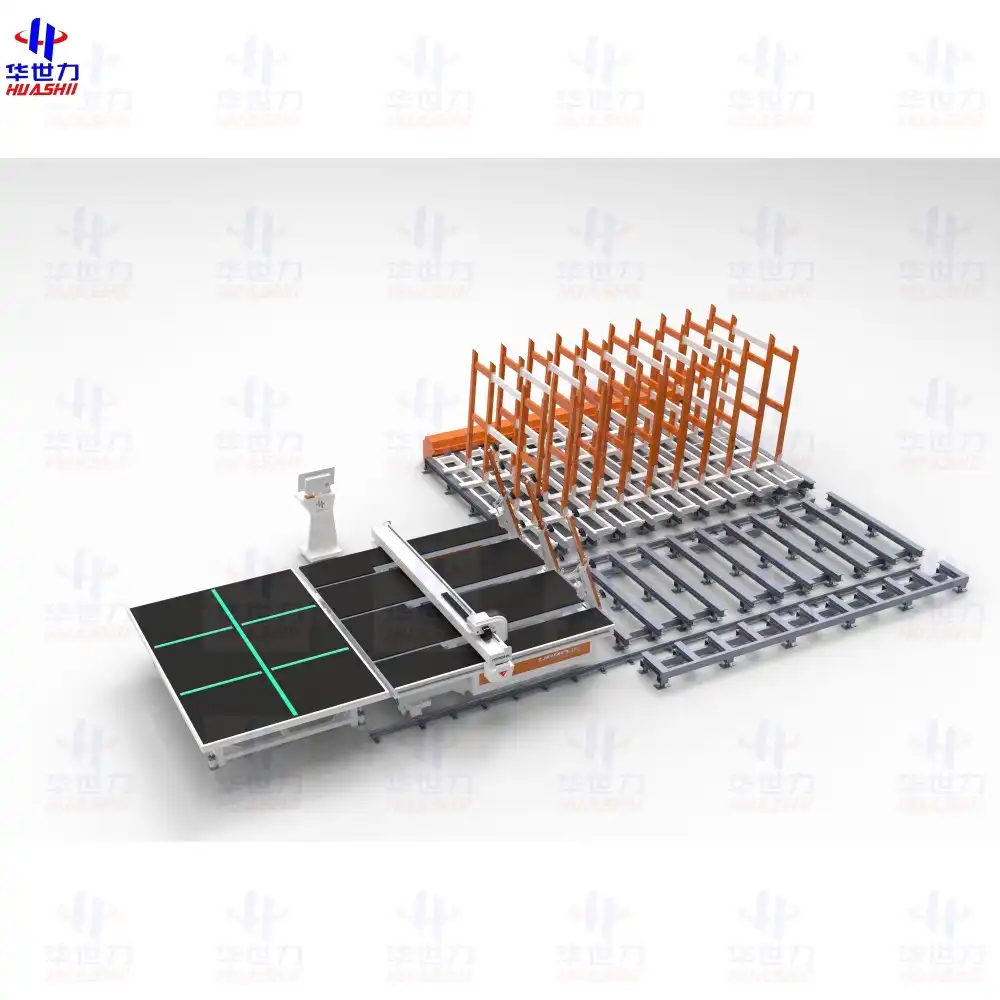
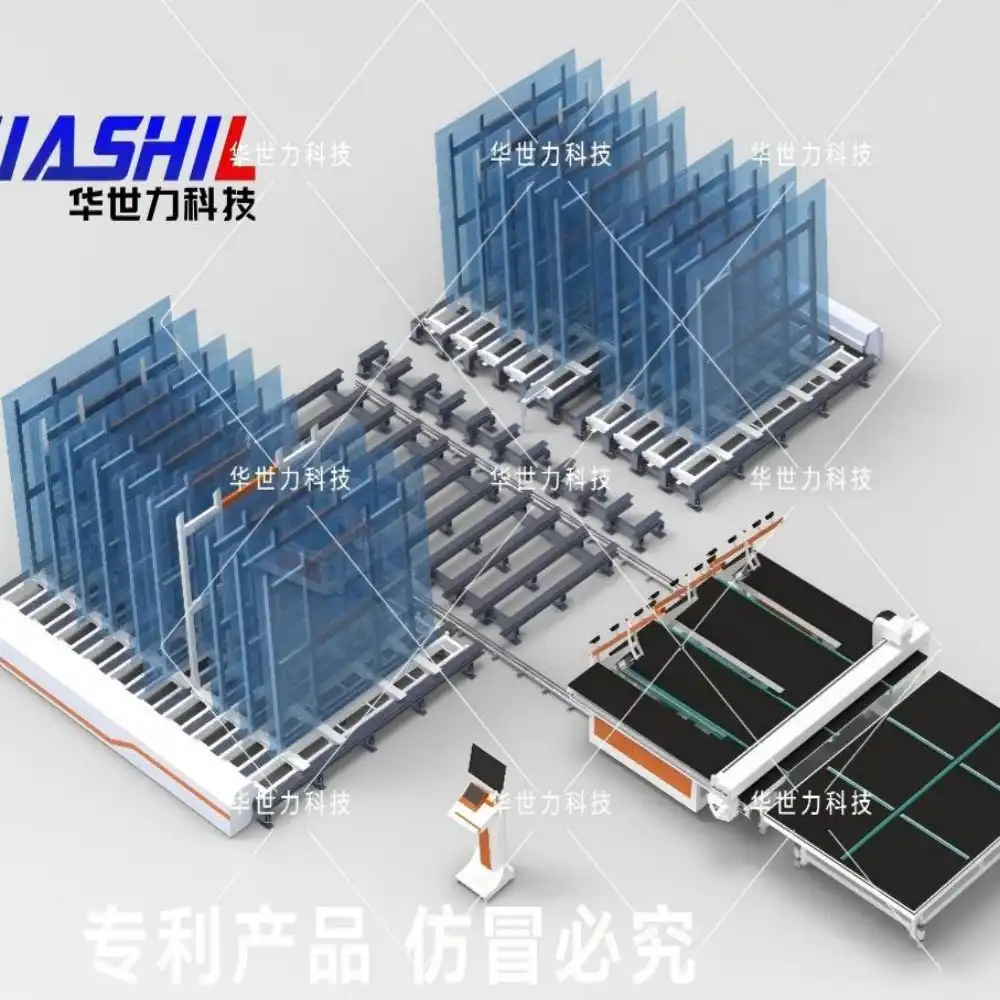
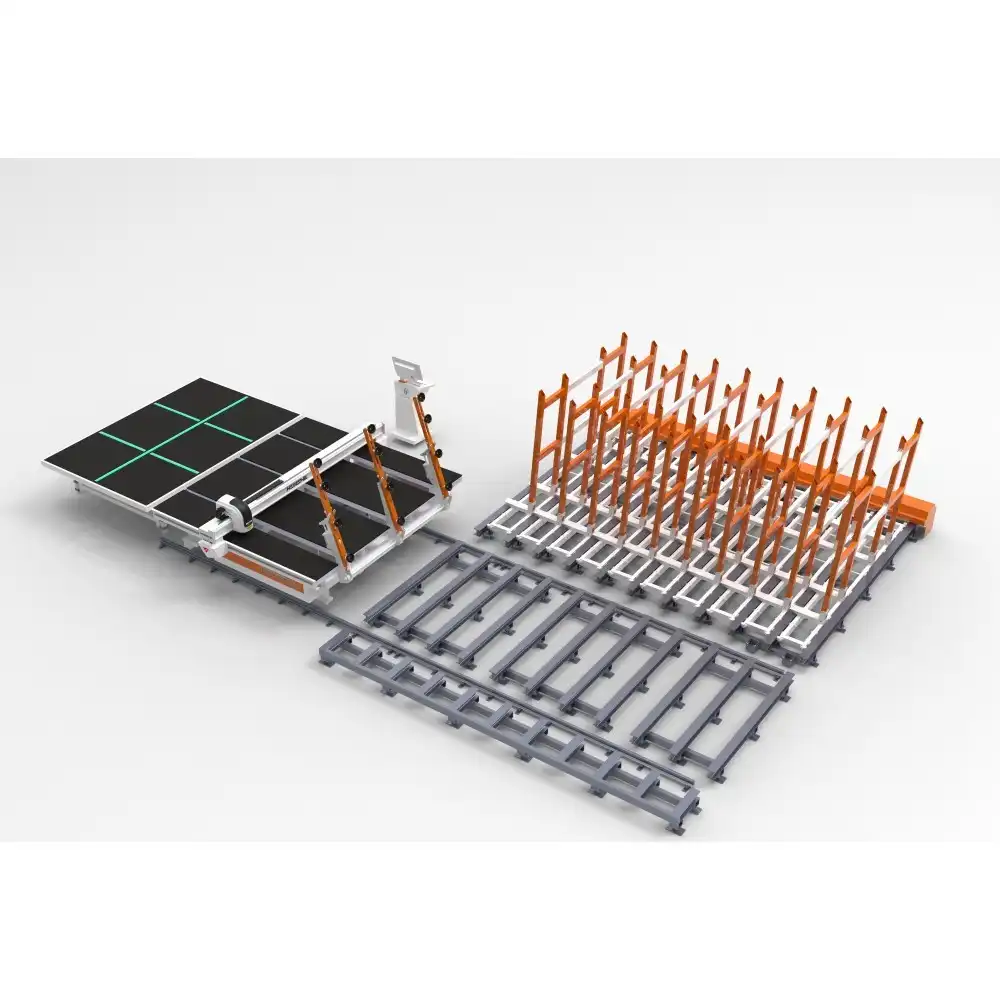
Advanced technology in automatic glass cutting assembly lines, designed especially for high-volume OEM manufacturing settings, is embodied by the HUASHIL HSL-LSX4228. This advanced technology can handle glass sheets up to 4200 x 2800 mm, meeting the large-format needs of automotive and architectural applications.
Important technical details:
- Maximum glass dimensions for processing are 4200 × 2800 mm.
- Station Setup: Two plus two adaptable stations with movable positions
- Rail System: Options for above- and below-ground rails to maximise space
- Robotic Integration: For thorough material handling, each side has four grand arms
- Control Software: Intelligent cutting pattern generation using Optima optimisation software
Advanced Features and Advantages:
- Three-Table Configuration: A continuous operating workflow is ensured by the loading, cutting, and breaking tables.
- Precision Control: Cutting accuracy within a tolerance of ±0.1mm is consistently provided by CNC machine technology.
- Automation of Material Handling: Loading, positioning, and unloading processes are fully automated using eight grand arms.
- Flexible Configuration: Different production requirements can be accommodated by adjusting the station's placement.
- Area Efficiency: Using an underground rail system reduces the amount of floor area needed while preserving functionality.
This assembly line is unique thanks to the Optima software system's sophisticated optimisation algorithms, which optimise material use while reducing waste. Predictive maintenance scheduling and continual process improvement are made possible by real-time monitoring capabilities, which provide operators access to extensive production data.
Comprehensive protection barriers, emergency stop systems, and automated collision detection are examples of safety features. By enabling operators to oversee all system operations from a single location, the ergonomic control interface lowers the need for training while increasing operational effectiveness.
Premium European Glass Processing Systems
When it comes to glass cutting technology, European manufacturers, including Automatic Glass Cutting Assembly Line systems, are well known for their precise engineering and sturdy construction. Manufacturers catering to the exacting automotive and architectural markets are drawn to these systems because they often have complex quality control processes and cutting-edge sensor technology.
Qualitative Benefits:
- Engineering Excellence: Long-term dependability is ensured by precision production procedures.
- Advanced Software: Complex programming interfaces that offer a wide range of customisation possibilities
- Quality Control: Comprehensive quality monitoring is provided via integrated inspection systems.
- Service Networks: Well-established backbones in key markets
Things to Think About for OEM Applications:
- Investment Requirements: Timelines for returns on investment may be impacted by higher initial costs.
- Complexity: Intensive operator training may be necessary for advanced functionality.
- Maintenance: Long-term service expenses may rise due to specialised components.
Asian Innovation Leaders
Leading Asian producers make sophisticated glass cutting solutions affordable for emerging market firms by fusing cutting-edge technology with low prices. These systems frequently combine the newest automation technology with cost-effectiveness, which appeals to OEM manufacturers on a tight budget.
Benefits of the Market:
Value engineering is the process of striking the ideal balance between features and price.
- Rapid Innovation: Using new technologies quickly
- Manufacturing Scale: Competitive price is made possible by high-volume production.
Strong service networks in important growing markets provide regional support.
Performance attributes:
- Dependable Performance: Tried-and-true designs with a wealth of field knowledge
- Flexible Configuration: Systems that can be adjusted to meet a range of production needs
- Technology Integration: Interoperability with contemporary production systems
Regional Market Analysis
Southeast Asia: Rapid Industrial Growth
Southeast Asian markets demonstrate exceptional growth in glass manufacturing, driven by urbanization and infrastructure development. The region's expanding automotive industry creates substantial demand for precision glass cutting capabilities, while the construction boom generates requirements for architectural glass products.
Market Characteristics:
- Growth Trajectory: Annual market expansion exceeding 8% in key countries
- Investment Climate: Government incentives supporting manufacturing modernization
- Skilled Workforce: Improving technical education infrastructure
- Infrastructure Development: Enhanced logistics and transportation networks
Regional Preferences:
- Cost-Effective Solutions: Balance between advanced features and reasonable investment levels
- Local Support: Strong preference for suppliers offering regional service capabilities
- Training Programs: Comprehensive operator education and technical support
Russia: Industrial Modernization Focus
Russian glass manufacturers prioritize equipment reliability and cold-weather performance capabilities. The market emphasizes robust construction and proven technology that performs consistently in challenging environmental conditions.
Operational Requirements:
- Climate Adaptability: Equipment designed for extreme temperature variations
- Maintenance Simplicity: Preference for straightforward service procedures
- Local Content: Increasing emphasis on domestic sourcing where possible
South America: Emerging Manufacturing Hub
South American markets show increasing sophistication in glass processing requirements, driven by automotive industry expansion and architectural development. Manufacturers seek technology that provides competitive advantages while maintaining reasonable investment levels.
Market Dynamics:
- Automotive Growth: Expanding vehicle production drives precision glass demand
- Construction Sector: Infrastructure investment creates architectural glass opportunities
- Technology Adoption: Increasing acceptance of automated manufacturing solutions
Middle East: Quality and Reliability Emphasis
Middle Eastern manufacturers prioritize equipment that delivers consistent performance in demanding environmental conditions. The region's focus on construction quality and architectural innovation drives demand for precision glass cutting capabilities.
Regional Characteristics:
- Quality Standards: High expectations for product consistency and reliability
- Environmental Considerations: Equipment must perform effectively in high-temperature conditions
- Service Excellence: Strong preference for comprehensive support services
Purchasing Recommendations and Considerations
Technical Evaluation Framework
Prospective buyers should establish comprehensive evaluation criteria that align with their specific production requirements and long-term business objectives. Technical specifications must be carefully matched to current needs while considering future expansion possibilities.
Performance Assessment:
- Cutting Accuracy: Verify tolerance specifications meet application requirements
- Production Speed: Ensure throughput capabilities align with volume projections
- Material Handling: Evaluate automation level and safety features
- Quality Control: Assess monitoring and inspection capabilities
Financial Analysis Approach
Total cost of ownership calculations should encompass initial investment, installation costs, training expenses, ongoing maintenance, and spare parts availability. Energy consumption and labor reduction benefits significantly impact long-term profitability calculations.
Investment Considerations:
- Payback Period: Calculate realistic ROI timelines based on production improvements
- Operating Costs: Include energy, maintenance, and consumables in ongoing expense projections
- Financing Options: Explore leasing or installment payment alternatives
- Insurance Requirements: Factor equipment protection costs into budget planning
Vendor Selection Criteria
Supplier evaluation should emphasize technical expertise, service capabilities, and long-term partnership potential, especially in wholesale glass machining. References from similar applications provide valuable insights into real-world performance and support quality.
Evaluation Factors:
- Technical Support: Assess responsiveness and expertise levels
- Spare Parts Availability: Ensure reasonable delivery times and inventory accessibility
- Training Programs: Evaluate comprehensiveness of operator education offerings
- Warranty Coverage: Compare protection levels and claim processes
Industry Trends and Summary
The automatic glass cutting industry continues evolving rapidly, incorporating artificial intelligence, predictive maintenance, and advanced robotics integration. Manufacturers increasingly demand solutions that provide real-time production optimization while maintaining the flexibility necessary for diverse product requirements. Energy efficiency improvements and sustainable manufacturing practices represent growing priorities across all market segments. These technological advances position automatic glass cutting assembly lines as essential investments for competitive OEM production operations seeking long-term success in dynamic global markets.
Conclusion
The best automatic glass cutting assembly line must be chosen after a thorough analysis of technical prowess, local market dynamics, and long-term corporate goals. With precise cutting, clever optimisation, and thorough quality control, modern systems like the HUASHIL HSL-LSX4228 show how cutting-edge automated technology can revolutionise OEM glass production. Success hinges on aligning system capabilities with particular production needs while making sure there is sufficient support infrastructure for long-term operations. In the quickly changing global glass markets, manufacturers that make strategic investments in state-of-the-art assembly automation set themselves up for long-term competitive advantages.
FAQ
Q1: What factors determine the best cutting speed for different glass types?
Cutting speed optimization depends on glass thickness, hardness, and intended application requirements. Thicker architectural glass typically requires slower cutting speeds to maintain edge quality, while thinner automotive glass can accommodate higher speeds. Most modern systems automatically adjust cutting parameters based on material specifications and desired quality levels.
Q2: How do automatic systems handle different glass thicknesses and types?
Advanced automatic glass cutting assembly lines incorporate adaptive control systems that automatically adjust cutting pressure, speed, and tool positioning based on material characteristics. Sensor technology detects glass thickness and type, enabling real-time parameter optimization without manual intervention. This capability ensures consistent quality across diverse product specifications.
Q3: What maintenance requirements should manufacturers expect?
Regular maintenance includes daily cleaning, weekly lubrication, and monthly calibration procedures. Preventive maintenance schedules typically require 2-4 hours weekly for routine servicing, with major overhauls scheduled annually. Predictive maintenance systems monitor component wear and performance, enabling proactive service scheduling that minimizes unexpected downtime.
Q4: How long does installation and operator training typically require?
Standard installation processes require 1-2 weeks, depending on system complexity and facility preparation requirements. Operator training programs typically span 3-5 days for basic operations, with advanced programming training requiring additional time. Most manufacturers provide comprehensive documentation and ongoing support to ensure smooth implementation.
Q5: What warranty coverage and support services are typically available?
Industry-standard warranty coverage includes 12-24 months for major components with extended options available. Support services encompass remote diagnostics, on-site technical assistance, and 24/7 helpdesk availability. Spare parts inventory and rapid delivery capabilities ensure minimal production interruptions during service events.
Partner with HUASHIL for Superior Glass Cutting Solutions
HUASHIL delivers industry-leading automatic glass cutting assembly line solutions designed specifically for demanding OEM production environments. Our HSL-LSX4228 system represents the pinnacle of cutting technology, combining precision engineering with intelligent automation to maximize your production efficiency. As a trusted glass cutting assembly line supplier, we provide comprehensive support, including installation, training, and ongoing technical assistance. Contact our expert team at salescathy@sdhuashil.com to discover how HUASHIL technology can transform your glass manufacturing operations and deliver competitive advantages in your target markets.
References
1. Global Glass Processing Equipment Market Analysis and Technological Advancement Study, International Glass Manufacturing Association, 2024.
2. Automation Integration in Glass Manufacturing: Performance Benchmarking and Best Practices, Industrial Automation Research Institute, 2023.
3. Regional Market Dynamics in Southeast Asian Glass Manufacturing Sector, Asian Manufacturing Development Council, 2024.
4. Cost-Benefit Analysis of Automated Glass Cutting Systems in OEM Production Environments, Manufacturing Efficiency Research Group, 2023.
5. Quality Control Standards and Precision Requirements in Modern Glass Processing Operations, Glass Industry Technical Standards Committee, 2024.
6. Emerging Technologies and Future Trends in Automatic Glass Cutting Assembly Line Development, Advanced Manufacturing Technology Journal, 2024.
