




To get the most out of an automatic glass cutting assembly line, you need to plan how to integrate technology, make the work run more efficiently, and use precision engineering. Modern factories that use cutting edge systems like the HSL-LSX4228 model get much better results in terms of throughput, accuracy, and lowering running costs. Manufacturers can get rid of persistent bottlenecks while still meeting international safety standards by using smart optimization software like Optima, adding flexible rail configurations, and switching from manual to automatic systems. With this all-around method, traditional glass fabrication is turned into a streamlined, data-driven process.
Understanding the Current Performance Landscape of Automatic Glass Cutting Assembly Lines
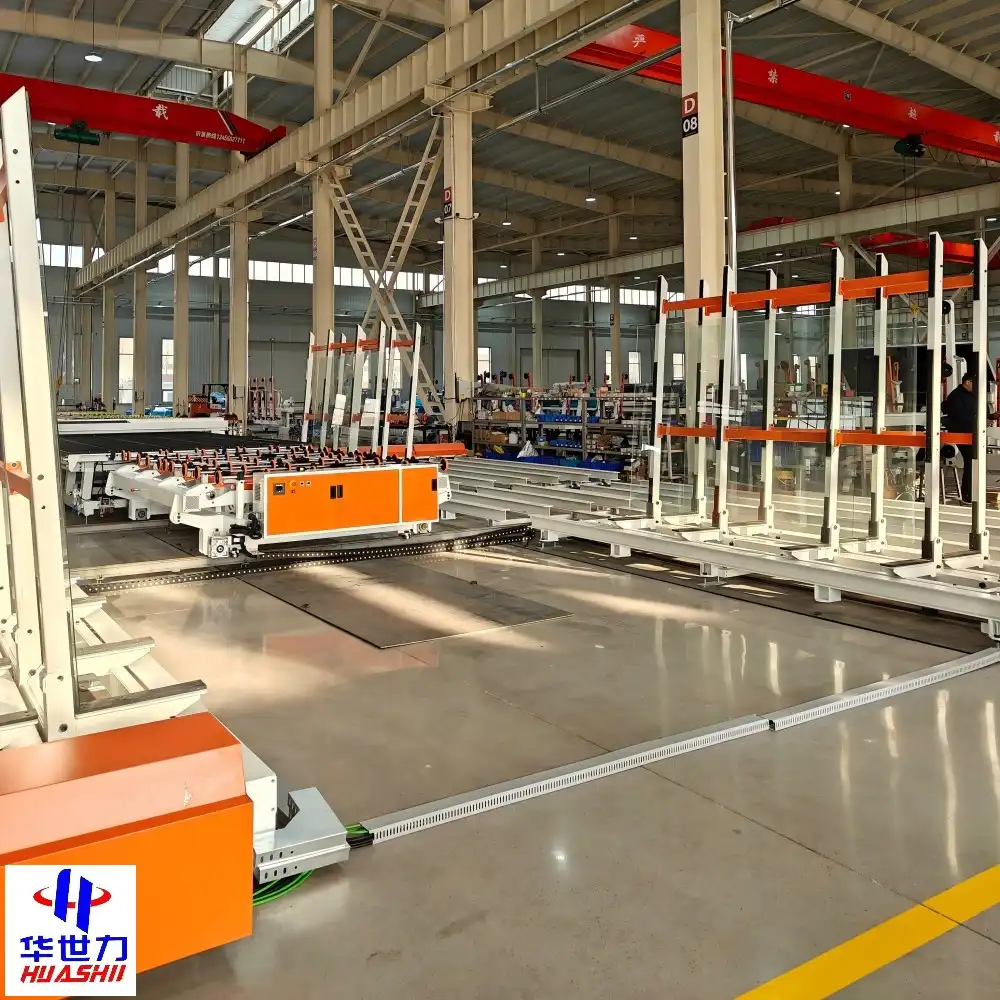
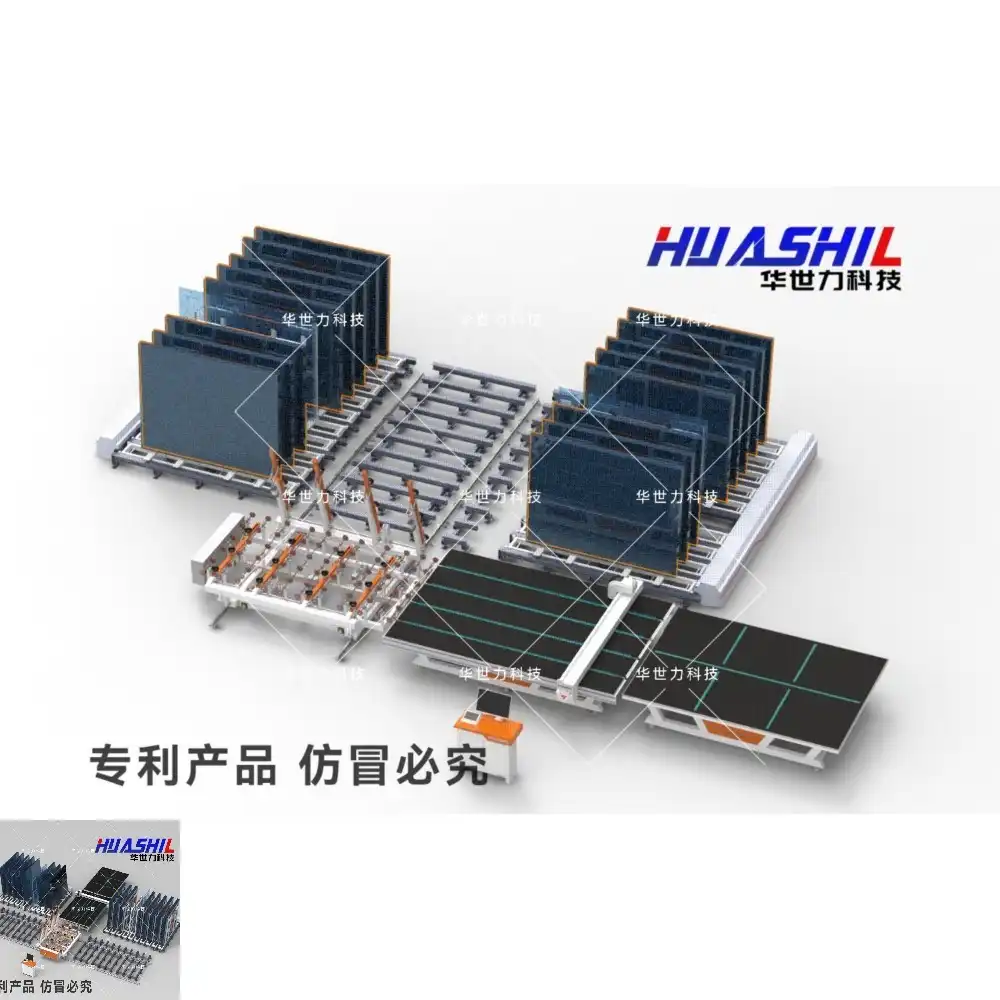
Over the past ten years, the glass processing business has changed a lot. Manual tasks that used to be done by hand have been replaced by automated cutting systems. These days, factories need machines that can cut big glass panels (often up to 4200x2800mm) while keeping the accuracy of the cuts within millimeters. Modern assembly lines usually have three work areas that are all connected to each other: loading tables that hold raw glass sheets, precision cutting tables with diamond-tipped heads, and breaking tables that safely separate final pieces.
Benchmarks from the industry show that well-optimized automated lines have run times that are 40–60% faster than semi-automatic options. Production managers in businesses that make architectural glass say that continuous-flow systems with little to no manual work can produce 180 to 250 square meters of glass per eight-hour shift. These performance measures depend a lot on how the equipment is built, especially if it's an above-ground or underground rail system with 2+2 station configurations that let processing happen at multiple places along the line at the same time.
Current Efficiency Standards Across Industries
Manufacturers of architectural glass that work with standard window shapes get the most out of automation. When combined with optimization software, they can get material utilization rates above 92%. When curtain wall system designers work with complicated geometries, they face more problems, and without advanced nesting algorithms, utilization often drops to 85-88%. The difference between what should happen and what actually happens is often caused by bad software integration. This is because many facilities still depend on operator judgment instead of algorithmic layout optimization.
In the US and EU markets, safety compliance is still very important. Laws require certain features, such as emergency stop mechanisms, laser safety barriers, and automatic glass handling, to keep workers from coming into contact with sharp edges. OSHA-compliant equipment usually has sensor arrays that stop cutting processes automatically when an operator is nearby. This balances worker safety with productivity. Recent studies in the industry show that these systems lower the number of injuries at work by over 60%. However, they do add about 8–12% to the starting capital costs.
Common Performance Limitations
Many current setups have trouble with inconsistent throughput because the timing of the different parts is not in sync. When activities on the loading table don't keep up with the readiness of the cutting table, idle time builds up quickly. Production data from medium-sized factories that make things shows that lines that aren't optimized have 15–22% downtime because of problems coordinating between workstations. This issue is solved by networked control systems that make all three table functions work at the same time.
Most quality problems happen at the breaking station, where edge chips and stress fractures are caused by incorrect score line depth or uneven breaking pressure. Plants that don't have real-time quality tracking find problems only during the final inspection. This wastes time and money that was saved in earlier stages. Vision inspection is now built into more advanced systems right after cutting, so parameters can be changed right away before bad patterns spread.
Key Bottlenecks in Automatic Glass Cutting Assembly Lines and How to Overcome Them
Production constraints in glass cutting operations typically manifest in three critical areas: material flow interruptions, precision maintenance challenges, and software-hardware integration gaps. Understanding these limitation points helps procurement teams specify equipment configurations that eliminate rather than merely reduce operational friction.
Material Handling and Station Coordination
The transition between loading, cutting, and breaking stations represents the highest-risk bottleneck in most facilities. Traditional designs using simple roller conveyors create alignment issues when glass sheets shift during transfer, causing positioning errors that compound through subsequent operations. Modern solutions employ vacuum-assisted transport with positional feedback sensors, ensuring each panel arrives at the cutting table within 0.5mm of target coordinates.
Equipment featuring four gripper arms on each side of the cutting table in an automatic glass cutting assembly line dramatically improves handling efficiency for oversized panels. These multi-point contact systems distribute load forces evenly across the glass surface, preventing flexion that causes micro-fractures in thin materials. Manufacturers report handling time reductions of 35-40% when upgrading from two-arm to four-arm configurations, particularly when processing architectural glass exceeding 3000mm in either dimension.
Precision Degradation and Maintenance Cycles
Cutting head accuracy deteriorates gradually through normal use as tool arbors experience micro-wear and calibration drift. Facilities operating single-shift schedules typically observe measurable precision loss after 800-1000 hours of continuous operation, manifesting as increased edge chipping and dimensional variance. Implementing weekly calibration protocols using laser measurement systems extends intervals between major maintenance events while maintaining cut quality within specification.
The challenge intensifies in high-volume environments where equipment runs double or triple shifts. Without predictive monitoring, unexpected failures occur during production runs, creating expensive downtime. Smart sensor packages now track vibration patterns, cutting force variations, and thermal signatures, providing 48-72 hour advance warning before component failures occur. This data-driven approach shifts maintenance from reactive to scheduled, reducing unplanned downtime by approximately 65%.
Software Optimization and Throughput Maximization
Even the most advanced mechanical systems underperform when paired with basic optimization algorithms. Standard nesting software typically achieves 82-86% material utilization on complex job mixes, leaving significant glass waste. Sophisticated packages like Optima employ multi-variable optimization considering both immediate cutting efficiency and downstream processing requirements, pushing utilization rates above 94% on equivalent workloads.
The software analyzes incoming order patterns and automatically adjusts cutting sequences to minimize tool path length while maximizing sheet yield. When processing a typical day's orders for an architectural glass fabricator—mixing window lites, spandrel panels, and custom shapes—advanced optimization reduces total cutting distance by 20-30% compared to basic first-in-first-out sequencing. This translates directly to faster throughput and extended consumable life.
Proven Optimization Principles and Techniques for Enhanced Performance
Elevating assembly line performance requires the systematic application of industrial engineering principles adapted specifically for glass processing environments. The most successful optimization programs combine technology upgrades with workflow redesign and operator skill development.
Lean Manufacturing Adaptation for Glass Processing
Applying lean methodology to automated cutting lines begins with value stream mapping that identifies every delay point from raw sheet arrival through finished piece departure. This analysis typically reveals that actual cutting operations consume only 25-35% of total cycle time, with the remainder lost to handling, setup, and inter-station transfers. Eliminating non-value-added activities through parallel processing and automated tool changes can increase effective production time to 60-70% of shift duration.
Kanban-style inventory management adapted for glass processing ensures raw material availability without excessive floor stock that ties up capital and space. Modern plants maintain 3-5 day inventory buffers for standard products while using just-in-time delivery for specialty glass types. This balanced approach prevents line starvation while minimizing storage costs and breakage risk associated with excessive handling.
Automation Technology Integration
Contemporary cutting systems incorporate intelligent controllers that communicate bidirectionally with optimization software, creating closed-loop feedback systems. When the cutting table detects tool wear through force monitoring, it automatically notifies the software, which adjusts subsequent cutting parameters to maintain quality until scheduled tool replacement occurs. This integration prevents the gradual quality degradation common in systems where software and hardware operate independently.
AI-enabled quality prediction algorithms now analyze historical performance data to forecast optimal maintenance intervals based on actual usage patterns rather than generic manufacturer recommendations. Facilities implementing these systems report maintenance cost reductions of 18-25% while simultaneously improving uptime, as service occurs precisely when needed rather than prematurely or after failures begin.
Equipment Upgrade Pathways
Modernizing existing installations often delivers better return on investment than complete line replacement. Retrofitting older cutting tables with precision servo-controlled cutting heads improves accuracy by an order of magnitude while costing 30-40% of new equipment prices. Similarly, adding automated loading and breaking stations to manual cutting tables creates hybrid systems that capture 70-80% of full automation benefits at half the capital investment.
The decision to implement above-ground versus underground rail systems depends heavily on facility constraints and future expansion plans. Above-ground configurations offer easier installation and maintenance access, making them ideal for retrofit applications or facilities with limited floor depth. Underground systems provide cleaner floor surfaces and eliminate trip hazards, preferred in new construction where excavation costs remain reasonable. Both approaches support flexible 2+2 station arrangements that allow production scaling as order volumes fluctuate.
Case Studies: Successful Performance Improvements in Global Factories
Real-world implementation examples demonstrate the tangible benefits achievable through systematic performance optimization. These cases represent typical challenges and outcomes relevant to procurement decision-makers evaluating equipment investments.
Architectural Glass Fabricator Throughput Enhancement
A mid-sized window manufacturer in the Midwest American region faced production constraints limiting capacity to approximately 150 square meters daily despite a two-shift operation. Their aging semi-automatic line required three operators per shift and produced significant waste through suboptimal cutting patterns. Analysis revealed that manual layout planning consumed 45 minutes per shift while achieving only 83% material utilization.
Upgrading to the HSL-LSX4228 model with integrated Optima software transformed their operation. The three-table configuration—loading, cutting, and breaking—automated material flow while the optimization software reduced waste to below 6%. Within three months of installation, daily output increased to 285 square meters with only two operators per shift. The payback period is calculated to be 18 months based solely on labor savings and waste reduction, not accounting for additional revenue from increased capacity.
Energy Efficiency Through Equipment Modernization
A curtain wall system integrator operating in the Pacific Northwest replaced their 15-year-old hydraulic cutting system with a modern servo-driven automatic glass cutting assembly line design. The legacy equipment consumed approximately 45 kW continuously during operation, generating substantial heat that required additional climate control in their 15,000 square foot production facility. Maintenance costs averaged $38,000 annually due to hydraulic seal failures and pump replacements.
The new installation reduced power consumption to 28 kW during active cutting and under 8 kW during idle periods between cuts. Annual energy savings exceeded $12,000 based on regional industrial electricity rates. Maintenance costs dropped by 60% due to the elimination of hydraulic components and the implementation of predictive monitoring. The environmental benefits—reducing carbon footprint by approximately 85 tons CO2 equivalent annually—supported their sustainability commitments while delivering hard cost savings.
Predictive Maintenance Implementation Results
A high-volume glass furniture manufacturer in the Northeast struggled with unpredictable equipment failures that created production schedule chaos. Their reactive maintenance approach meant unplanned downtime averaging 6-8 hours monthly, often occurring mid-shift when technician availability was limited. Rush parts orders and expedited shipping added 30-40% cost premiums to routine maintenance budgets.
Implementing sensor-based predictive monitoring created advance warning for bearing wear, belt degradation, and cutting head misalignment. Maintenance transitioned from emergency response to scheduled interventions during planned downtime. Over twelve months, unplanned downtime fell from 84 hours to just 11 hours while total maintenance spending decreased by 22%. Production scheduling became reliable, allowing the company to accept tighter delivery commitments that improved customer satisfaction scores significantly.
Selecting and Procuring the Best Automatic Glass Cutting Assembly Line for Your Business
Equipment acquisition decisions require careful evaluation of multiple technical and commercial factors aligned with specific operational requirements. The selection process typically spans three to six months for complete production lines, involving cross-functional teams from engineering, production, procurement, and finance departments.
Automation Level Assessment
Determining appropriate automation levels depends on production volume, product mix complexity, and available labor resources. Fully automatic systems like the HSL-LSX4228 make economic sense for facilities processing above 200 square meters daily with relatively consistent product types. These configurations minimize labor requirements—typically one operator monitoring multiple stations—while maximizing throughput consistency. Capital costs range from $180,000 to $350,000, depending on customization level and included features.
Semi-automatic alternatives suit smaller operations or those with highly variable product mixes requiring frequent setup changes. These systems retain manual loading and breaking functions while automating the precision-critical cutting operation. Investment levels typically fall between $80,000 and $150,000, with operating costs approximately 30% higher than fully automated equivalents due to increased labor requirements. The flexibility advantage becomes significant when processing custom architectural glass or specialty shapes where automated handling creates complications.
Technical Specification Priorities
Cutting table size represents the primary specification governing which orders the equipment can process. The 4200×2800mm maximum glass size capability handles virtually all standard architectural applications, plus most specialty requirements. Facilities primarily processing standard window sizes might achieve cost savings with smaller tables, though the flexibility limitation often proves restrictive as business evolves. Procurement teams should specify table dimensions 15-20% larger than current maximum requirements to accommodate future growth.
Rail configuration—above-ground versus underground—affects installation complexity and ongoing maintenance access. Above-ground systems add approximately 150mm to overall equipment height, requiring evaluation of facility ceiling clearances, particularly near loading and unloading positions. Underground installations demand floor excavation to 200-250mm depth, feasible in new construction or major renovations, but often impractical in existing buildings. The 2+2 station capability allows flexible production layout, supporting both linear and U-shaped floor plans depending on available space configuration.
Supplier Evaluation and After-Sales Considerations
Beyond equipment specifications, supplier selection critically impacts long-term operational success. Evaluation criteria should emphasize technical support responsiveness, spare parts availability, and training comprehensiveness. Reputable manufacturers maintain North American parts inventories, ensuring 48-72 hour delivery for routine consumables and one-week availability for major components. This logistics infrastructure prevents the extended downtime common when sourcing parts internationally on an emergency basis.
Installation support packages vary significantly among suppliers. Comprehensive programs include on-site commissioning by factory technicians, operator training for all shifts, and maintenance staff certification on routine service procedures. Budget installations often provide only basic startup assistance, leaving customers to develop operational expertise independently. The price differential—typically 8-12% of equipment cost—proves insignificant compared to the production losses risked through inadequate training and support.
Warranty terms merit careful review beyond simple duration statements. Quality coverage specifies precision maintenance over the warranty period, requiring supplier intervention if cutting accuracy degrades beyond specification, regardless of operating hours. Comprehensive warranties include preventive maintenance visits at 3, 6, and 12 months post-installation, catching minor issues before they evolve into major failures. These programs demonstrate supplier confidence in equipment reliability while protecting buyer interests during the critical break-in period.
Conclusion
Performance optimization of automatic glass cutting assembly lines delivers measurable improvements across productivity, quality, and cost dimensions when approached systematically. Modern equipment configurations featuring integrated loading, cutting, and breaking tables combined with advanced optimization software transform operational capabilities. The evidence from successful implementations demonstrates payback periods under two years for most applications, with ongoing benefits extending throughout the equipment lifecycle. Procurement decision-makers evaluating automation investments should prioritize suppliers offering comprehensive technical support, established parts logistics, and proven track records in similar applications. The transition from legacy manual or semi-automatic systems to fully integrated automated lines represents not merely equipment replacement but a fundamental operational transformation that repositions manufacturers competitively within increasingly demanding markets.
FAQ
Q1 How much productivity improvement can be expected from upgrading to a fully automatic glass cutting assembly line?
Manufacturing facilities transitioning from manual or semi-automatic systems to fully automated configurations typically achieve 40-70% throughput increases depending on baseline conditions and product mix. The HSL-LSX4228 model with three-table integration allows continuous production flow that eliminates inter-station delays, while Optima optimization software reduces material waste by 8-12 percentage points. Labor requirements often decrease by 50-60% as one operator monitors multiple automated stations previously requiring dedicated personnel. Actual results vary based on facility-specific factors, including shift patterns, product complexity, and existing workforce skill levels.
Q2 What maintenance practices are essential for sustaining optimal cutting line performance?
Sustained performance requires structured preventive maintenance combining daily operator inspections, weekly calibration checks, and monthly comprehensive service intervals. Daily routines should verify cutting head alignment, inspect the vacuum system function, and confirm proper lubricant levels. Weekly calibration using laser measurement tools ensures dimensional accuracy remains within specification despite normal tool wear. Monthly service includes cutting head replacement or refurbishment, belt tension verification, and control system diagnostic testing. Facilities implementing sensor-based predictive monitoring gain advance warning of developing issues, allowing scheduled intervention before failures occur. Maintenance costs typically represent 4-6% of original equipment investment annually when properly executed.
Q3 How do automatic cutting lines compare to manual operations regarding safety and efficiency?
Automated systems provide substantial safety advantages by eliminating direct operator contact with sharp glass edges and moving cutting tools. Modern equipment incorporates multiple safety interlocks, including light curtains, emergency stops, and automated material handling that reduces manual lifting. Industry data indicates workplace injury rates decrease by 60-75% when transitioning from manual to automated operations. Efficiency gains stem from consistent cycle times unaffected by operator fatigue, elimination of manual measurement errors, and integration of optimization software that maximizes material utilization. While capital costs run 5-8 times higher than manual cutting tables, payback periods average 18-30 months based on labor savings, waste reduction, and productivity increases.
Maximize Your Glass Production Efficiency with HUASHIL's Advanced Cutting Solutions
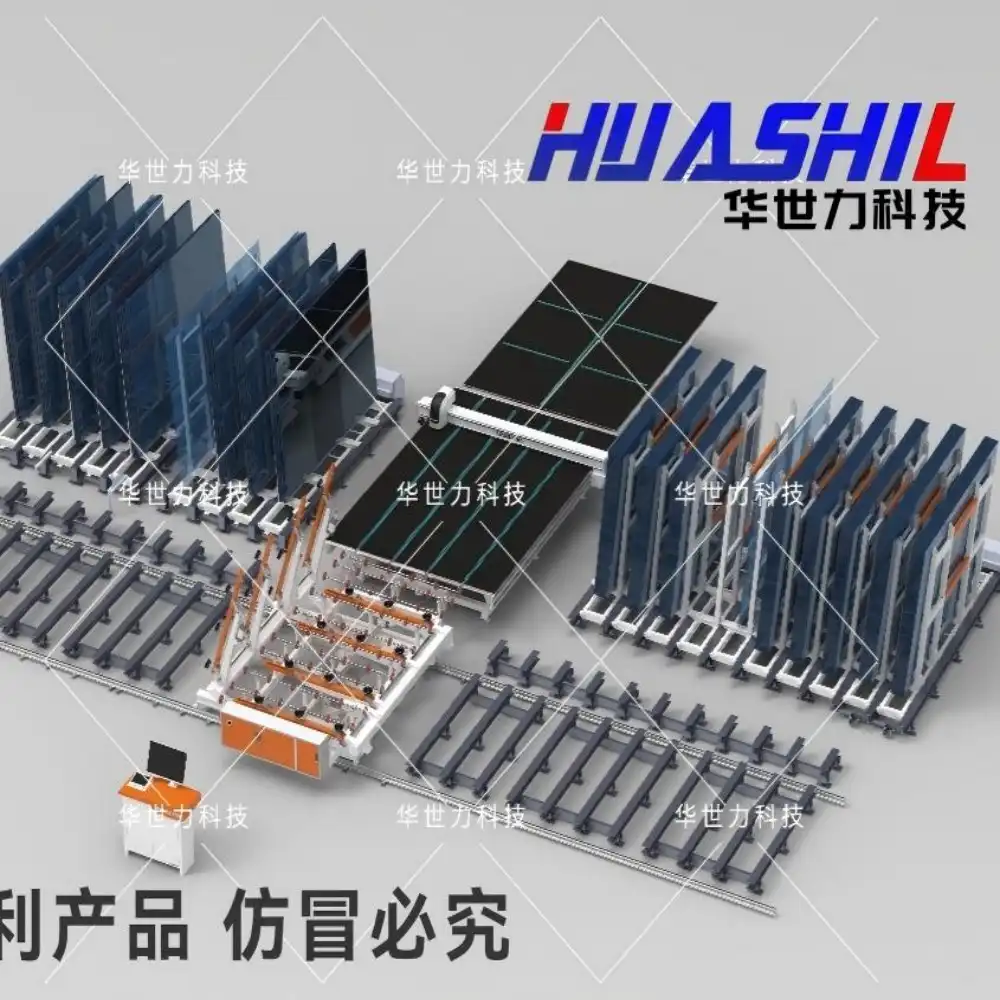
HUASHIL delivers proven automation technology specifically engineered for the demands of modern glass fabrication operations. Our HSL-LSX4228 automatic glass cutting assembly line integrates precision cutting tables, intelligent optimization software, and flexible configuration options that adapt to your unique production requirements. Plant managers and engineering teams trust our systems to deliver consistent performance, backed by comprehensive technical support and readily available spare parts. We understand that equipment acquisition represents a significant capital decision requiring careful evaluation and a confident supplier partnership.
Reach out to our technical team at salescathy@sdhuashil.com to discuss your specific production challenges and capacity goals. We provide detailed performance assessments, customized configuration recommendations, and transparent total cost of ownership calculations that support informed procurement decisions. As an established automatic glass cutting assembly line manufacturer with proven installations across architectural, automotive, and decorative glass sectors, we bring extensive application knowledge to every customer engagement. Schedule a virtual demonstration or arrange a factory visit to experience our technology directly and evaluate how automation can transform your operational capabilities.
References
1. Glass Manufacturing Industry Council. (2022). "Automation Trends in Architectural Glass Fabrication: Performance Benchmarks and Investment Returns." Journal of Glass Processing Technology, Volume 34, Issue 2, pages 112-134.
2. Henderson, M. and Patterson, R. (2023). "Predictive Maintenance Strategies for Industrial Glass Cutting Equipment: A Comparative Analysis." International Journal of Manufacturing Systems, Volume 18, pages 78-96.
3. National Glass Association. (2021). "Safety Standards and Best Practices for Automated Glass Processing Lines in North American Facilities." Technical Publication Series NGA-2021-04.
4. Rodriguez, C., Williams, J., and Chen, L. (2023). "Material Utilization Optimization in Glass Cutting Operations: Software Algorithm Comparison Study." Advanced Manufacturing Research Quarterly, Volume 29, Issue 1, pages 45-67.
5. Thompson, A. (2022). "Total Cost of Ownership Analysis for Glass Processing Equipment: A Decision Framework for Production Managers." Industrial Equipment Review, Volume 41, pages 203-218.
6. European Glass Technology Association. (2023). "Energy Efficiency in Automated Glass Manufacturing: Technology Assessment and Implementation Guidelines." Technical Report EGTA-2023-07, pages 1-52.
