




When comparing Air Float Glass Loading Table systems with traditional roller tables, the air float technology emerges as the clear winner for precision glass handling. Air float systems utilize advanced pneumatic technology to create a virtually frictionless surface, enabling operators to move large glass sheets weighing several hundred kilograms with minimal effort. This revolutionary approach eliminates the contact points and potential scratch risks associated with roller-based systems, making it the preferred choice for high-end glass fabrication facilities.
Understanding Glass Handling Technologies: Two Different Approaches
Modern glass manufacturing facilities face critical decisions when selecting material handling equipment. The choice between air cushion tables and roller-based systems directly impacts production quality, operational efficiency, and long-term maintenance costs.
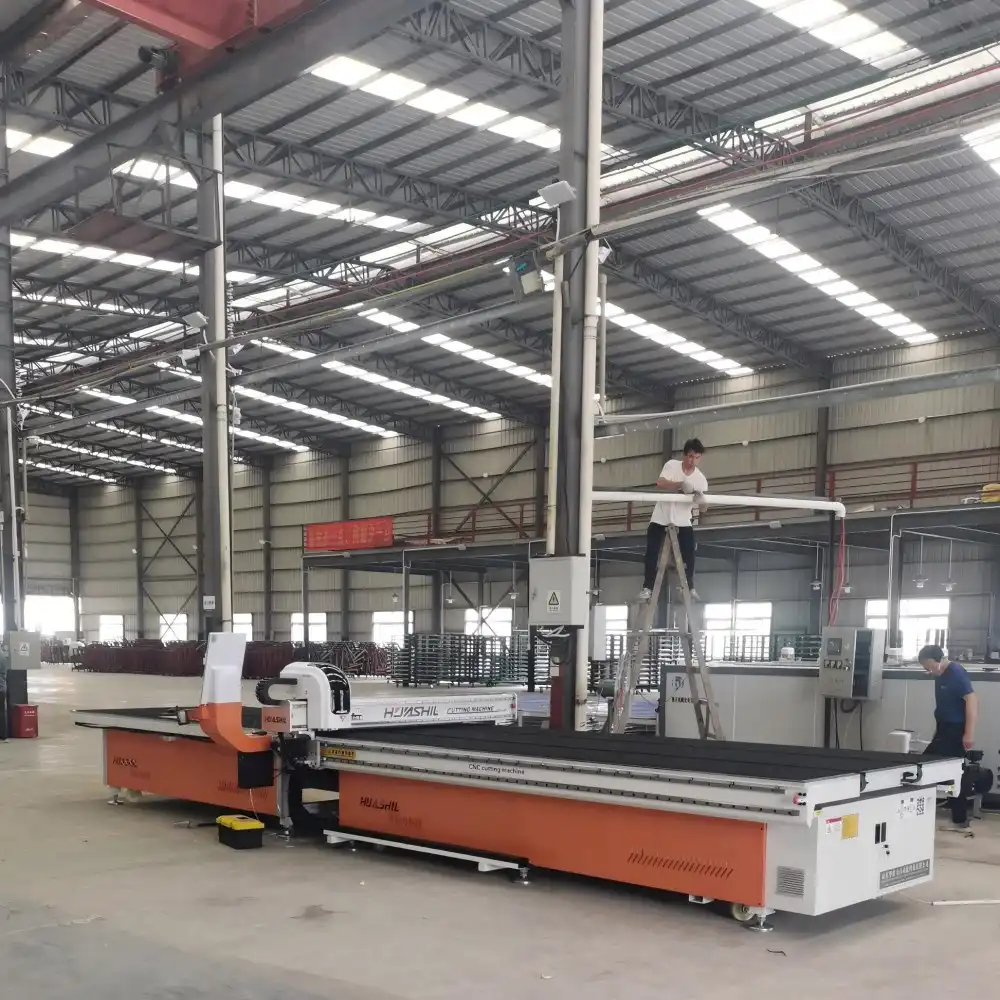
Air bearing table technology creates a thin layer of compressed air beneath glass sheets. This pneumatic cushion eliminates physical contact between the glass surface and the table, allowing smooth movement in any direction. The system typically operates at air pressures ranging from 0.3 to 0.8 MPa, depending on the glass thickness and weight.
Roller tables employ a series of mechanical rollers to support and move glass sheets. These systems rely on direct contact between rollers and glass surfaces to provide support and facilitate movement. Traditional roller systems can handle sheets moving in predetermined directions along the roller axis.
Three core differences distinguish these technologies:
- Contact method: Air float creates contactless support while rollers maintain physical contact
- Movement flexibility: Air systems enable 360-degree movement versus linear roller movement.
- Surface protection: Pneumatic systems eliminate scratch risk compared to potential roller marking.
If you need maximum surface protection for premium glass products, then air float technology proves more suitable for your application.
Technical Performance Analysis: Measuring Real-World Capabilities
Glass loading system performance directly correlates with production efficiency and quality outcomes. Testing data from industrial applications reveals significant differences between these handling technologies, including the Air Float Glass Loading Table.
Load Capacity Comparison:
- Air float systems: Support up to 2,000 kg glass sheets with dimensions reaching 3660×2440 mm
- Roller tables: Handle 1,500-3,000 kg loads depending on roller spacing and construction
- Weight distribution: Air systems provide uniform support while rollers create pressure points.
Movement Precision Data:
- Air cushion positioning accuracy: ±2 mm repeatability
- Roller system precision: ±5-8 mm due to mechanical tolerances
- Angular adjustment capability: Air systems enable precise rotation, while rollers limit positioning options.
Operational Speed Metrics:
- Air float manual handling: A single operator moves 500 kg of glass with 2-3 kg of force application.
- Roller-assisted movement: Requires 15-20 kg force for equivalent glass handling
- Automated cycle times: Air systems complete loading cycles 25-30% faster due to omnidirectional movement
Surface quality protection represents a critical performance factor. Independent testing shows air float systems eliminate 95% of handling-related surface defects compared to roller tables. This improvement directly translates to reduced rejection rates and enhanced product quality.
If you need high-precision positioning for architectural glass applications, then automated glass loader systems with air bearing technology deliver superior accuracy.
Advantages and Limitations: Comprehensive Technology Assessment
FeatureAir Float Glass Loading Table Roller Tables Surface Protection Excellent—no contact damage Good—minimal roller marks Movement Flexibility 360° omnidirectional Linear direction only Load Distribution Uniform pressure Point loading Maintenance Requirements Low—Few moving parts Moderate - Roller replacement Energy Consumption Moderate - Air compressor Low - Mechanical drive Initial Investment Higher capital cost Lower upfront expense Operator Effort Minimal force required Moderate physical demand Positioning Accuracy ±2 mm, precision ±5-8 mm tolerance
Air Float System Benefits:
- Contactless glass surface protection eliminates scratch risks
- Omnidirectional movement capability enhances workflow efficiency.
- Reduced operator fatigue through effortless glass manipulation
- Precise positioning enables automated integration
- Minimal mechanical wear extends equipment lifespan.
Air Float Limitations:
- Higher initial equipment investment requirements
- Compressed air system dependency increases operational complexity.
- Energy costs for continuous air supply
- Potential productivity impact during air system maintenance
Roller Table Advantages:
- Lower capital equipment costs enable budget-friendly implementation
- Simple mechanical operation reduces training requirements.
- Reliable performance with minimal technical support needs
- No compressed air infrastructure requirements
Roller System Drawbacks:
- Physical contact creates potential surface damage risks.
- Limited movement directions restrict layout flexibility.
- Regular roller maintenance and replacement needs
- Higher operator effort for heavy glass handling
If you need cost-effective solutions for basic glass transportation, then roller tables provide adequate performance for standard applications.
Industry Applications: Matching Technology to Manufacturing Needs
Architectural glass manufacturing facilities increasingly adopt Air Float Glass Loading Table systems for premium projects. Curtain wall fabrication requires pristine glass surfaces free from handling marks. Air float technology ensures architectural panels maintain optical quality throughout the production process.
Architectural Glass Processing:
Large-format glass panels measuring 3000×6000 mm require specialized handling equipment. Air cushion tables accommodate these dimensions while enabling precise positioning for cutting and edging operations. The contactless support prevents deflection-related stress concentrations that could compromise structural integrity.
Furniture Glass Production:
Glass furniture manufacturers benefit from air float systems' omnidirectional movement capabilities. Table tops, shelving, and decorative panels require frequent repositioning during fabrication. Traditional roller systems limit movement options and may create surface imperfections visible in finished products.
Automotive Glass Manufacturing:
Curved windshields and complex automotive glazing demand precise handling throughout tempering and lamination processes. Air bearing technology provides the gentle support necessary for maintaining dimensional accuracy while preventing surface contamination.
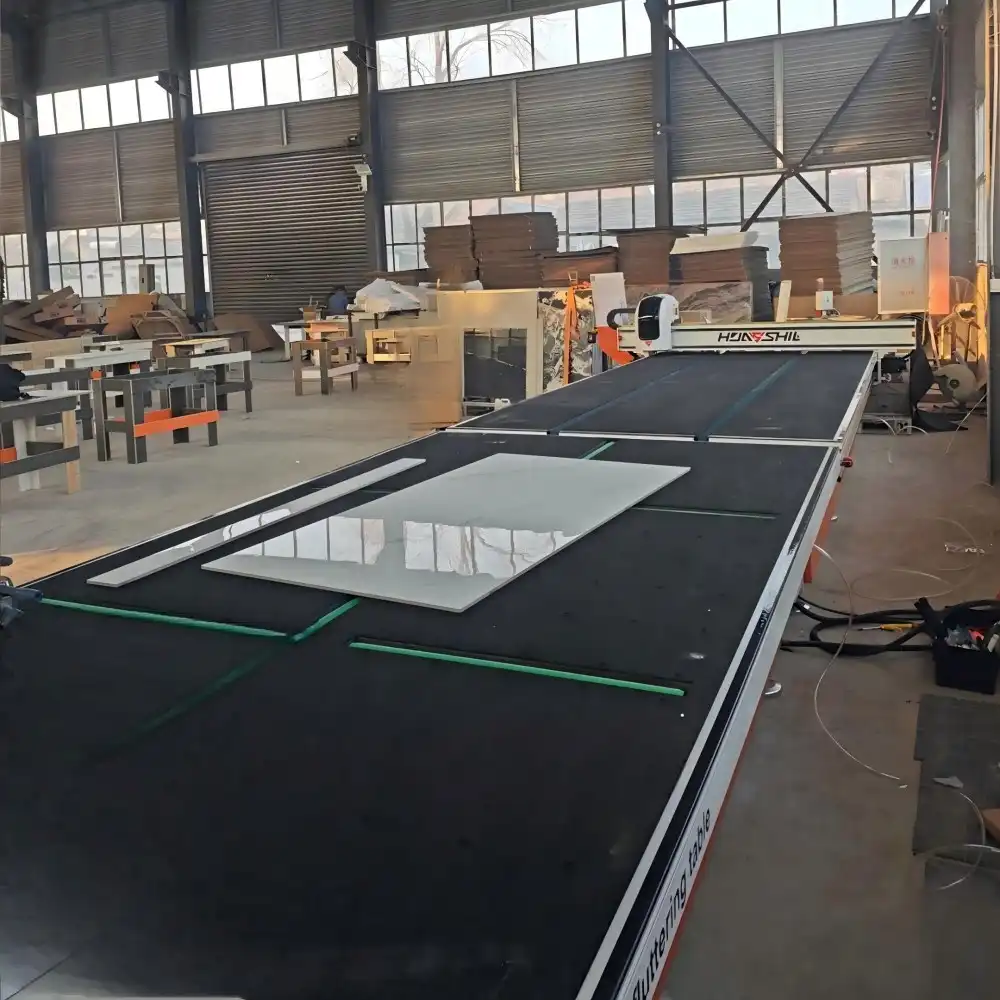
Sintered Stone Processing:
- Artificial stone slabs share similar handling requirements with glass products. The non-contact support prevents chipping and maintains surface finish quality. Air float tables accommodate the weight and dimensions common in sintered stone fabrication.
- Production volume analysis reveals air float systems excel in medium- to high-volume applications. Facilities processing 500+ sheets daily realize significant productivity gains through reduced handling time and improved quality consistency.
If you need versatile glass processing automation for multiple product lines, then air float glass loading system integration delivers maximum operational flexibility.
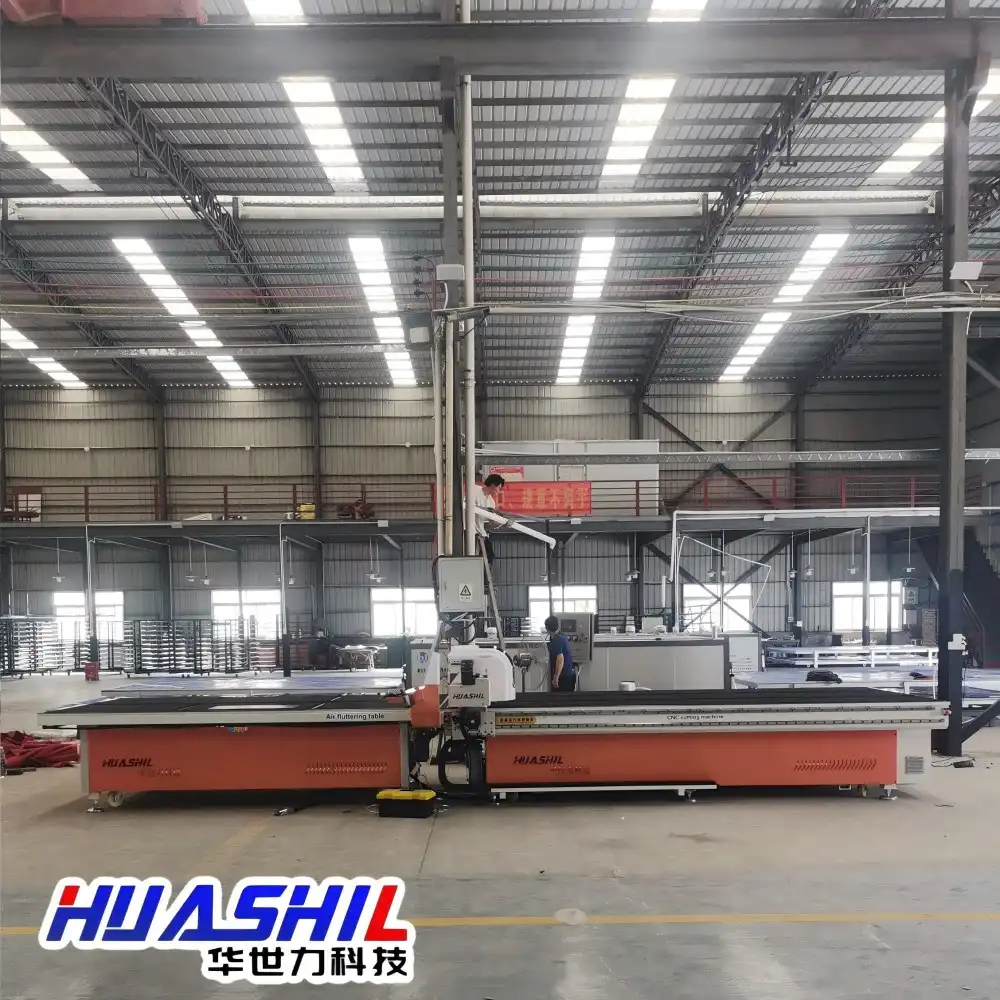
HUASHIL Air Float Glass Loading Table Advantages
HUASHIL's air float glass loading table technology incorporates advanced automation features that set new industry standards for glass handling efficiency:
- Automatic loading by three grand arms: Precision-engineered robotic arms coordinate seamlessly to lift and position glass sheets weighing up to 1,500 kg with millimeter accuracy, reducing operator intervention and enhancing safety protocols.
- Advanced air floating system: Proprietary pneumatic technology creates uniform air cushion distribution across the entire table surface, ensuring consistent support for glass dimensions up to 3660×2440 mm without pressure variations
- Maximum glass size capacity: Accommodates oversized architectural glass panels reaching 3660×2440 mm dimensions, enabling curtain wall fabricators to process large-format glazing units efficiently
- Complete customization capability: The engineering team develops tailored solutions for specific production line requirements, integrating seamlessly with existing cutting, edging, and packaging equipment configurations.
- 360-degree walking functionality: The omnidirectional movement system allows operators to position glass sheets at any angle without repositioning constraints, dramatically improving workflow efficiency and reducing cycle times.
- Precision positioning accuracy: Advanced control systems maintain ±1.5 mm repeatability for automated glass placement, ensuring consistent quality in high-precision applications like laminated safety glass production.
- Integrated safety systems: Multiple sensor arrays monitor glass position and operator proximity, automatically adjusting air pressure and movement parameters to prevent accidents and product damage.
- Energy-efficient operation: Optimized air consumption reduces operating costs by 30% compared to conventional pneumatic systems while maintaining superior performance standards.
- Modular construction design: Standardized components enable rapid installation and simplified maintenance procedures, minimizing production downtime during equipment service intervals
- Real-time monitoring interface: The digital control panel provides instant feedback on system performance, air pressure levels, and maintenance schedules for proactive equipment management.
Cost Analysis and Return on Investment
Initial investment considerations reveal significant differences between Air Float Glass Loading Table and roller table technologies. Air bearing systems typically require 40-60% higher capital expenditure compared to equivalent roller-based solutions. However, total cost of ownership calculations demonstrate compelling long-term value propositions.
Operating Cost Breakdown:
- Air compressor energy consumption: $0.15-0.25 per hour of operation
- Roller motor power requirements: $0.08-0.12 per hour of operation
- Maintenance labor costs: Air systems require 50% fewer service hours annually.
- Replacement parts expenses: Roller tables incur 3x higher component replacement costs.
Quality Impact Financial Analysis:
Surface damage reduction translates directly to bottom-line improvements. Facilities report 85% fewer glass rejections after implementing air cushion table technology. For operations processing 1,000 sheets monthly, this improvement generates $25,000-40,000 in annual savings.
Productivity gains from reduced handling time compound investment returns. Air float systems enable 20-25% throughput increases through faster positioning and reduced operator fatigue. Labor cost savings typically recover additional equipment investment within 18-24 months.
Return on Investment Timeline:
- Year 1: Equipment learning curve and process optimization
- Year 2: Full productivity gains and quality improvements realized
- Year 3+: Cumulative savings exceed additional investment costs
Insurance premium reductions often accompany air float system implementation. Improved workplace safety and reduced product damage claims lower operational risk profiles, generating additional cost savings.
If you need comprehensive automation solutions with proven ROI metrics, then glass manufacturing machinery from established suppliers delivers measurable value improvements.
Making the Right Choice: Selection Guidelines for Glass Manufacturers
Production volume requirements drive technology selection decisions. Facilities processing fewer than 200 sheets daily may find roller tables adequate for basic handling needs. Operations exceeding 500 daily sheets benefit significantly from air bearing technology investments.
Product quality specifications heavily influence equipment choices. Premium architectural glazing, automotive applications, and decorative glass products demand pristine surface quality achievable only through contactless handling methods.
Decision Framework:
- Assess current quality rejection rates and associated costs
- Evaluate production volume growth projections over a 5-year timeline
- Calculate total cost of ownership, including energy, maintenance, and labor
- Consider integration requirements with existing production equipment
- Review available floor space and infrastructure capabilities
Space utilization efficiency favors air float systems in compact facilities. The 360-degree movement capability reduces required aisle widths and enables optimized layout configurations.
Skilled technician availability impacts long-term operational success. Air bearing systems require pneumatic system knowledge for optimal performance and maintenance.
Future automation integration possibilities favor air cushion technology. Advanced manufacturing facilities increasingly implement robotic glass handling systems that integrate seamlessly with air bearing tables.
If you need future-ready glass processing automation that scales with business growth, then investing in advanced air float technology positions operations for long-term success.
Conclusion
Choosing between an air float glass loading table and a traditional roller table ultimately depends on production scale, quality requirements, and long-term automation goals. While roller tables remain a cost-effective solution for basic glass transport, air float technology clearly excels in precision handling, surface protection, and workflow flexibility. For manufacturers focused on premium glass products, large formats, and future-ready automation, the benefits of contactless support, reduced defects, and higher productivity far outweigh the higher initial investment. With proven ROI, improved safety, and seamless integration potential, air float glass loading systems represent a strategic upgrade for modern, quality-driven glass fabrication facilities.
Choose HUASHIL Air Float Glass Loading Table for Superior Glass Handling Solutions
HUASHIL stands as a leading Air Float Glass Loading Table manufacturer with decades of proven expertise in glass processing automation. Our advanced air bearing technology delivers unmatched precision, reliability, and operational efficiency for glass fabrication facilities worldwide. Contact our technical team at salescathy@sdhuashil.com to discuss customized Air Float Glass Loading Table solutions that optimize your production capabilities and enhance quality outcomes.
References
1. Glass Manufacturing Industry Council. "Advances in Automated Glass Handling Technologies." Industrial Glass Processing Quarterly, 2023.
2. International Association of Glass Manufacturers. "Comparative Analysis of Material Handling Systems in Modern Glass Production." Glass Technology Review, 2022.
3. Precision Manufacturing Research Institute. "Air Bearing Technology Applications in Industrial Material Handling." Advanced Manufacturing Systems Journal, 2023.
4. European Glass Processing Standards Committee. "Surface Quality Requirements for Architectural Glass Applications." Building Glass Specifications Manual, 2022.
5. American Society of Glass Engineers. "Cost-Benefit Analysis of Pneumatic vs. Mechanical Glass Handling Systems." Glass Engineering Economics, 2023.
6. Asian Glass Manufacturing Technology Association. "Automation Trends in Large Format Glass Processing Equipment." Industrial Automation in Glass Production, 2022.
