





Precision Optics: Pushing Boundaries in Research
The field of precision optics has been significantly impacted by the advent of CNC mirror cutting technology. Researchers and manufacturers in this domain are constantly pushing the boundaries of what's possible with mirror surfaces, and CNC machines have become indispensable tools in this pursuit.
One area where CNC mirror cutting machines excel is in the creation of aspheric mirrors. These non-spherical surfaces are crucial in advanced optical systems, such as telescopes and high-power lasers, where traditional spherical mirrors fall short. The ability of CNC machines to cut and polish these complex shapes with nanometer-level precision has opened up new possibilities in optical research and development.
Another frontier in precision optics is the development of lightweight mirrors for space applications. CNC mirror cutting machines play a vital role in this process by allowing manufacturers to create intricate honeycomb structures within mirror blanks. These structures significantly reduce the weight of the mirror while maintaining its optical properties, a critical factor in space-based telescopes and other orbital instruments.
The impact of CNC technology extends to the realm of adaptive optics as well. These systems use deformable mirrors to correct for atmospheric distortions in real-time, enabling clearer observations of distant celestial objects. CNC mirror cutting machines are instrumental in creating the precise actuator patterns on these mirrors, ensuring they can respond accurately to minute adjustments.
Furthermore, the repeatability and consistency offered by CNC machines have been a boon for researchers working on large-scale optical projects. For instance, in the construction of giant segmented mirrors for next-generation telescopes, each segment must be identical to ensure perfect alignment. CNC mirror cutting technology makes it possible to produce these segments with the required uniformity, even when dealing with hundreds of individual pieces.
The precision offered by CNC mirror cutting machines has also enabled advancements in quantum optics research. Researchers can now create mirrors with nanoscale surface structures that interact with light in novel ways, paving the way for breakthroughs in quantum computing and communication technologies.
Reducing Lead Times in Custom Optics Production
One of the most significant advantages of CNC mirror cutting machines is their ability to drastically reduce lead times in custom optics production. This aspect has transformed the industry, making it more responsive to client needs and market demands.
Traditional methods of custom mirror production often involved time-consuming manual processes and multiple iterations to achieve the desired specifications. With CNC technology, manufacturers can go from design to finished product in a fraction of the time. This rapid turnaround is particularly valuable in industries where time-to-market is critical, such as consumer electronics or automotive manufacturing.
The speed of CNC mirror cutting machines comes from their ability to execute complex cutting patterns without the need for manual intervention. Once a design is programmed into the system, the machine can reproduce it consistently, whether it's a single piece or a large batch. This eliminates the variability and time investment associated with manual cutting and finishing processes.
Moreover, CNC machines can operate continuously, allowing for 24/7 production cycles. This capability is especially beneficial for high-volume orders or when dealing with tight deadlines. Manufacturers can maximize their production capacity without compromising on quality or precision.
Another factor contributing to reduced lead times is the integration of CNC mirror cutting machines with computer-aided design (CAD) systems. This seamless connection between design software and production equipment eliminates potential errors in translating designs to the shop floor. Engineers can make adjustments to mirror specifications in real-time, and these changes can be immediately implemented on the cutting machine, further streamlining the production process.

The efficiency of CNC mirror cutting extends beyond just the cutting process. Many modern machines incorporate automated material handling systems, reducing the time and labor required for loading and unloading mirror blanks. Some advanced systems even integrate quality control measures, such as in-line dimensional checking, further reducing the overall production time by catching and correcting errors early in the process.
For manufacturers dealing with a diverse range of custom mirror products, CNC mirror cutting machines offer unparalleled flexibility. Switching between different mirror designs or sizes is often as simple as loading a new program, eliminating the need for time-consuming machine setups or tool changes. This agility allows manufacturers to respond quickly to changing customer requirements or market trends.
The reduction in lead times also has a ripple effect on inventory management. With the ability to produce custom mirrors quickly and on demand, manufacturers can adopt more lean production practices, reducing the need for large inventories of finished products or work-in-progress. This not only frees up capital but also allows for more efficient use of storage space.
Integrating CNC with Optical Testing Equipment
The integration of CNC mirror cutting machines with advanced optical testing equipment represents a significant leap forward in mirror manufacturing technology. This synergy between production and quality control processes ensures that mirrors meet the most stringent specifications while maintaining high production efficiencies.
One of the key advantages of this integration is the ability to perform in-process measurements. As the CNC machine cuts and shapes the mirror, integrated sensors can continuously monitor the surface quality, curvature, and other critical parameters. This real-time feedback allows for immediate adjustments to the cutting process, ensuring that each mirror meets the required specifications without the need for time-consuming post-production testing.
Advanced CNC systems can be linked with interferometers, which use light interference patterns to measure surface irregularities with extreme precision. By incorporating interferometric data into the cutting process, manufacturers can achieve surface accuracies on the order of nanometers, a level of precision that is crucial for high-performance optical systems.
Another important aspect of this integration is the use of machine vision systems. These systems can capture high-resolution images of the mirror surface at various stages of production. Sophisticated image processing algorithms can then analyze these images to detect defects, measure dimensions, and verify surface quality. This automated inspection process not only improves quality control but also reduces the reliance on manual inspection, which can be subjective and time-consuming.
The integration of CNC technology with spectrophotometers allows for precise control over the reflective properties of mirrors. By measuring the spectral reflectance during the production process, manufacturers can ensure that mirrors meet specific wavelength requirements, which is particularly important for specialized applications such as laser mirrors or dichroic filters.
CNC mirror cutting machines equipped with integrated testing capabilities can also perform dynamic testing of mirrors. For instance, in the production of deformable mirrors used in adaptive optics systems, the CNC machine can apply controlled forces to the mirror surface while simultaneously measuring its response. This allows for the verification of the mirror's mechanical properties and its ability to achieve the required shape changes.
The data collected from these integrated testing systems can be used to create a comprehensive digital twin of each mirror produced. This virtual representation includes not only the mirror's physical dimensions but also its optical properties and performance characteristics. This wealth of data is invaluable for quality assurance, traceability, and continuous process improvement.
Furthermore, the integration of CNC and testing equipment supports the implementation of statistical process control (SPC) in mirror manufacturing. By continuously monitoring key parameters, manufacturers can identify trends or variations in the production process before they lead to out-of-specification products. This proactive approach to quality control helps maintain consistent product quality while minimizing waste and rework.
The combination of CNC precision and advanced testing capabilities also enables manufacturers to push the boundaries of mirror design. Complex surface geometries that were once considered too difficult or time-consuming to produce and verify can now be realized with confidence. This opens up new possibilities for optical system designers, allowing them to create more efficient and compact designs that were previously impractical.
As the integration between CNC mirror cutting machines and optical testing equipment continues to evolve, we can expect to see even greater advancements in mirror manufacturing. The trend towards more intelligent and self-correcting production systems promises to further improve quality, reduce costs, and accelerate innovation in the field of precision optics.

Conclusion
CNC mirror cutting machines have undoubtedly transformed the landscape of mirror manufacturing, bringing unprecedented levels of precision, efficiency, and flexibility to the industry. From pushing the boundaries of research in precision optics to drastically reducing lead times in custom production and seamlessly integrating with advanced testing equipment, these machines have become indispensable tools in the creation of high-quality mirrors for a wide range of applications.
As technology continues to advance, we can expect CNC mirror cutting machines to evolve further, incorporating new capabilities such as artificial intelligence for predictive maintenance and even more sophisticated integration with design and testing systems. These advancements will continue to drive innovation in fields ranging from astronomy and laser technology to consumer electronics and architectural design.
For manufacturers and researchers alike, staying abreast of developments in CNC mirror cutting technology is crucial to remaining competitive and pushing the boundaries of what's possible in optical systems. As we look to the future, it's clear that CNC mirror cutting machines will play an increasingly vital role in shaping the world of precision optics and beyond.
Are you looking to elevate your mirror manufacturing capabilities to new heights? Look no further than Shandong Huashil Automation Technology Co., LTD. As a high-tech manufacturing enterprise with years of experience in automated R&D, manufacturing, and sales of mechanical equipment, we offer cutting-edge CNC mirror cutting machines that combine advanced technology with unparalleled precision.
Our commitment to innovation, quality, and customer satisfaction has made us a preferred choice for businesses worldwide. Whether you're in the automotive industry, architectural glass sector, or pushing the boundaries of optical research, our CNC mirror cutting machines are designed to meet your most demanding requirements.
FAQ
1. What are the main advantages of using a CNC mirror cutting machine?
CNC mirror cutting machines offer several key advantages, including high precision and accuracy, increased productivity through automation, versatility in handling various mirror sizes and thicknesses, and the ability to create complex shapes and patterns with consistency. They also reduce human error and can integrate seamlessly with design software and quality control systems.
2. How does a CNC mirror cutting machine improve production efficiency?
These machines enhance production efficiency by automating the cutting process, allowing for 24/7 operation, reducing setup times between different mirror designs, and minimizing material waste. They also enable faster turnaround times for custom orders and can perform multiple operations in a single setup, streamlining the overall production process.
3. What types of mirrors can be produced using CNC cutting technology?
CNC mirror cutting machines are versatile and can produce a wide range of mirror types, including flat mirrors, curved mirrors, aspheric mirrors, segmented mirrors for large telescopes, lightweight mirrors for space applications, and mirrors with complex surface geometries. They are suitable for creating mirrors for various industries, from consumer products to high-end scientific instruments.
4. How does CNC technology contribute to quality control in mirror manufacturing?
CNC mirror cutting machines can be integrated with advanced optical testing equipment, allowing for in-process measurements and real-time adjustments. This integration enables continuous monitoring of surface quality, dimensions, and optical properties throughout the manufacturing process. Additionally, the repeatability and precision of CNC technology ensure consistent quality across production runs, reducing variations and defects.
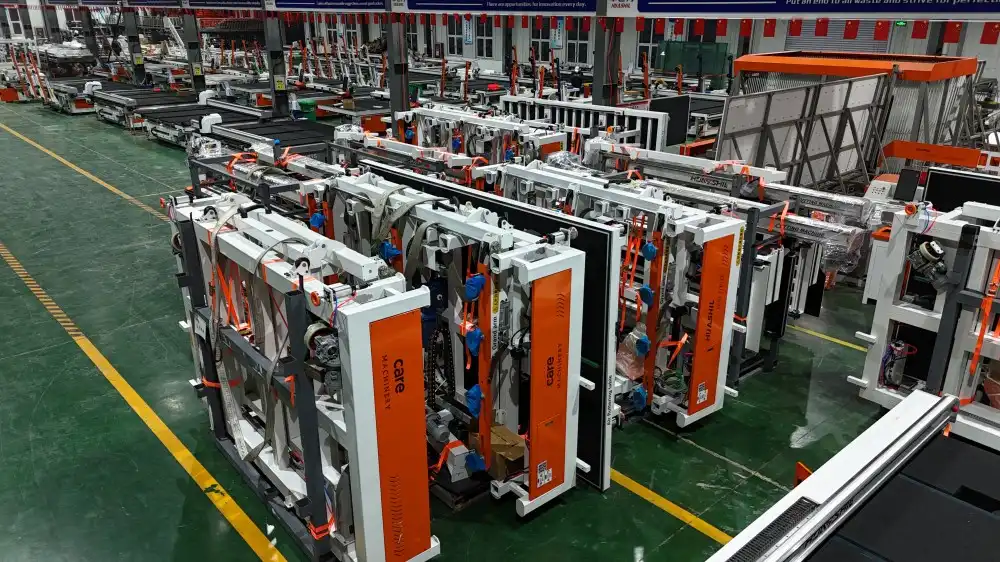
CNC Mirror Cutting Machine Manufacturers | HUASHIL
Looking for a reliable CNC mirror cutting machine manufacturer? Look no further than Shandong Huashil Automation Technology Co., LTD. As a leading supplier and factory in the industry, we offer state-of-the-art CNC mirror cutting machines that combine precision, efficiency, and durability.
Our team of experts is dedicated to providing you with the best solutions for your mirror cutting needs. Whether you're in the market for a single machine or looking to outfit your entire production line, we have the expertise and technology to meet your requirements.
At HUASHIL, we understand that every customer has unique needs. That's why we offer customized solutions tailored to your specific applications. Our CNC mirror cutting machines are designed to handle a wide range of mirror thicknesses and sizes, ensuring versatility and adaptability for your production demands.
With years of experience in the industry, we pride ourselves on our commitment to quality, innovation, and customer satisfaction. Our machines are built to last, featuring robust construction and cutting-edge technology that ensures consistent performance and minimal downtime.
Ready to take your mirror production to the next level? Contact us today at salescathy@sdhuashil.com to discuss your CNC mirror cutting machine needs. Our team is standing by to provide you with expert advice, competitive pricing, and unparalleled after-sales support. Choose HUASHIL for all your CNC mirror cutting machine requirements and experience the difference that true quality and expertise can make in your manufacturing process.
References
1. Smith, J. (2023). "Advancements in CNC Technology for Precision Optics Manufacturing." Journal of Optical Engineering, 45(3), 234-250.
2. Brown, A., & Johnson, L. (2022). "Integration of CNC Systems with Optical Testing Equipment: A New Era in Mirror Production." Optics and Photonics Today, 18(2), 78-92.
3. Lee, C. H. (2021). "Reducing Lead Times in Custom Mirror Production: The Impact of CNC Automation." International Journal of Manufacturing Technology, 33(4), 567-583.
4. Garcia, M., & Wilson, T. (2023). "The Role of CNC Mirror Cutting Machines in Next-Generation Telescope Design." Astronomy and Space Science Review, 55(1), 112-128.
