




Knowing what a glass loader can and can't do is very important for business success when you buy automatic glass handling equipment. Modern glass loader systems change the way manufacturing is usually done by getting rid of the risks of manual handling, cutting down on labor costs, and making throughput consistency a lot better. Architectural glass production, curtain wall construction, and furniture manufacturing are all industries that depend on these tools to do their jobs safely and accurately. When you decide to switch from human processes to automated filling systems, it has a direct effect on how well your business runs, the quality of your products, and the safety of your workers. This detailed guide looks at the technical specs, performance standards, and buying factors that plant managers, technical buyers, and procurement professionals who are looking at glass handling robotics care about the most.
Understanding the Core Challenges in Glass Loading Operations
Traditional ways of handling glass continue to cause production facilities to waste time and money and pose safety risks that can be avoided. Workers who move things by hand are at risk of repeated strain injuries and breakages, and the process slows down production, which makes it hard to expand. Human handling isn't always consistent, which makes placing less accurate, which can cause problems with quality during cutting and shaping.
Safety Risks in Manual Glass Handling
When moving, lifting, and placing glass pieces that weigh hundreds of pounds, there is a big chance of getting hurt. Over five years, workers' compensation claims for accidents caused by handling glass cost companies a lot more than the money they spent on robots. In addition to the direct costs of injuries, accidents that stop output cause delays that affect the whole plan for making things.
Production Bottlenecks and Quality Issues
Positioning things by hand isn't consistent enough for high-speed automatic cutting lines. Large-format panels are hard for operators to use, especially when the largest measurements are more than 3600mm. Because of this size limitation, manufacturers have to turn down large-scale architectural projects that would make them money or settle for lower throughput rates that hurt their ability to compete.
The Business Case for Automation
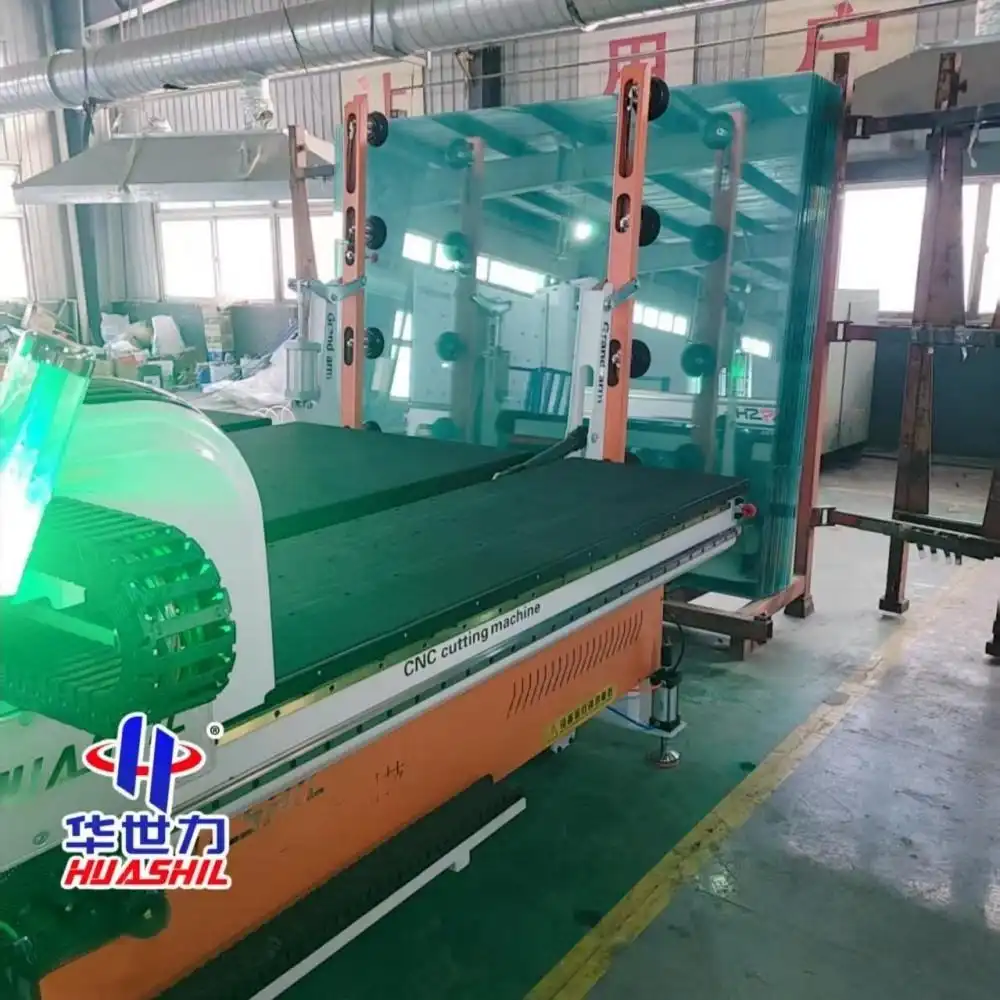
Companies that use automatic glass loader systems say their throughput goes up by 40% to 70% compared to when they did things by hand. These gains come from faster cycle times, lower breakage rates, and the ability to work longer shifts without quality going down due to tiredness. A window factory in Ohio saw a 62% drop in broken glass within three months of adding automated loading equipment. This saved more than $180,000 a year in material costs.
Top 7 Must-Have Features in an Automated Glass Loader Machine
When choosing the right automated loading equipment, you need to look at its skills in terms of how they directly affect your work setting and operational needs. These seven traits are the most important things to consider when choosing between basic options and high-performance systems.
Precision Handling and Positioning Accuracy
Modern glass loader machines use vacuum suction arrays and servo-controlled placing to make sure that the pieces are placed accurately to within ±0.5mm. This level of accuracy makes sure that the cutting tables and edging machines are always lined up, so you don't have to spend time adjusting them by hand. The HSL-SPT3624 model shows this ability with its air float system, which keeps the panel stable during transport and stops damage to the surface. When working with polished glass or finished goods, where surface flaws cause the whole panel to be rejected, precise handling is even more important.
Versatile Size and Thickness Capacity
To be flexible in manufacturing, equipment needs to be able to handle different panel specs without having to change over, which takes time. Modern automatic loaders can handle glass widths ranging from 3 mm to 25 mm, and panel sizes up to 3660 mm x 2440 mm, which is more than enough for most building and furniture uses. Because of this, makers can take on custom orders and other unique projects without having to worry about capacity. Facilities that work with both regular window glass and large curtain wall panels can benefit greatly from having tools that can do these different jobs.
Intelligent Control Systems and Integration
Smart control logic makes it possible to seamlessly connect to current production management systems, and user-friendly interfaces make it easier for operators to learn how to use the equipment. Advanced models have a 360-degree walking function on the remote control that lets workers place equipment perfectly without having to push buttons or do a lot of complicated programming. This feature is very useful in factories that don't have a lot of floor space or whose production plans change all the time. Integration with ERP systems lets you keep an eye on production in real time, so you can make choices about schedule, maintenance, and capacity use based on data.
Safety Compliance and Operator Protection
CE and ISO9001-certified equipment has several layers of safety, such as emergency stop systems, exterior guarding, and fail-safe vacuum tracking. These features keep workers safe while also meeting insurance standards, rules, and regulations. The breaking table feature built into complete systems like the HSL-SPT3624 adds a unique way to separate glasses safely, further lowering the risks of handling glass by hand during processing.
Enhanced Speed and Cycle Time Performance
In automatic glass processing lines, production capacity is directly related to how fast the lines can load. High-performance systems can load and unload all of their panels in less than 90 seconds, which lets the cutting line go faster than 40 panels per hour. This ability for throughput meets the volume needs of curtain wall builders and large-scale window makers, where delays in production cost the projects money.
Predictive Maintenance and Reliability
For capital investment to be worthwhile, industrial automation technology must consistently work. Diagnostic tracking systems let repair teams know about problems that are starting to happen before they happen. Compared to reactive repair tactics, this proactive method cuts down on unplanned downtime by 60%. Manufacturers should give priority to providers who offer a wide range of spare parts and clearly stated shipping times, since delays in a single part can stop production lines completely.
Energy Efficiency and Sustainable Design
Modern glass loader systems use 30% less energy than older models because the hydraulic circuits and variable-frequency drive motors are better designed. This efficiency cuts down on running costs and helps companies with their efforts to be more environmentally friendly. When compared to standard roller conveyors, air flotation systems use less compressed air, which makes modern automation options even better for the environment.
Comparing Automated Glass Loader Machines: How to Make the Right Choice?
There are a lot of different kinds of glass-making tools on the market, from simple semi-automatic systems to fully integrated production line solutions. To make smart choices, you need to know how technical specs translate to real-world performance in your unique industrial setting.
Evaluating Reliability and Build Quality
How long a piece of equipment lasts rests on the quality of its parts and how well it is built. Heavy-duty steel frames that have been precisely machined keep the alignment stable over many years of use. Maintenance regularity and total cost of ownership are directly related to the vacuum pump's capacity, the quality of its valves, and the grades of its electrical parts. When buying something, people should ask for proof of the mean time between failures (MTBF) scores and look at any independent dependability data that is available.
Understanding Total Cost of Ownership
The purchase price is only one part of analyzing a tool investment. The real operational costs over the life of an item are based on its installation costs, the time and money needed to teach operators, the cost of regular upkeep, and the amount of energy it uses. A cheaper system that needs a lot of upkeep and parts that need to be replaced often may end up costing a lot more over ten years than high-end equipment that costs more up front but is more reliable.
After-Sales Support and Technical Assistance
When production equipment breaks down, money is lost right away, so quick expert help is very important. When manufacturers, like automatic glass loading machine manufacturers, offer direct service instead of depending on area wholesalers, they can usually respond faster and fix problems with more knowledge. Superior providers are different from cheaper ones because they offer English-language paperwork, remote diagnostics, and assured arrival of spare parts within 48 hours.
Huashil has years of experience making and developing glass loader equipment, which gives them the technical background for strong customer service after the sale. Our engineering team keeps detailed records for all systems, which lets sites get quick technical help when they need help fixing or make their operations run more smoothly.
How to Evaluate and Optimize Your Glass Loading Performance?
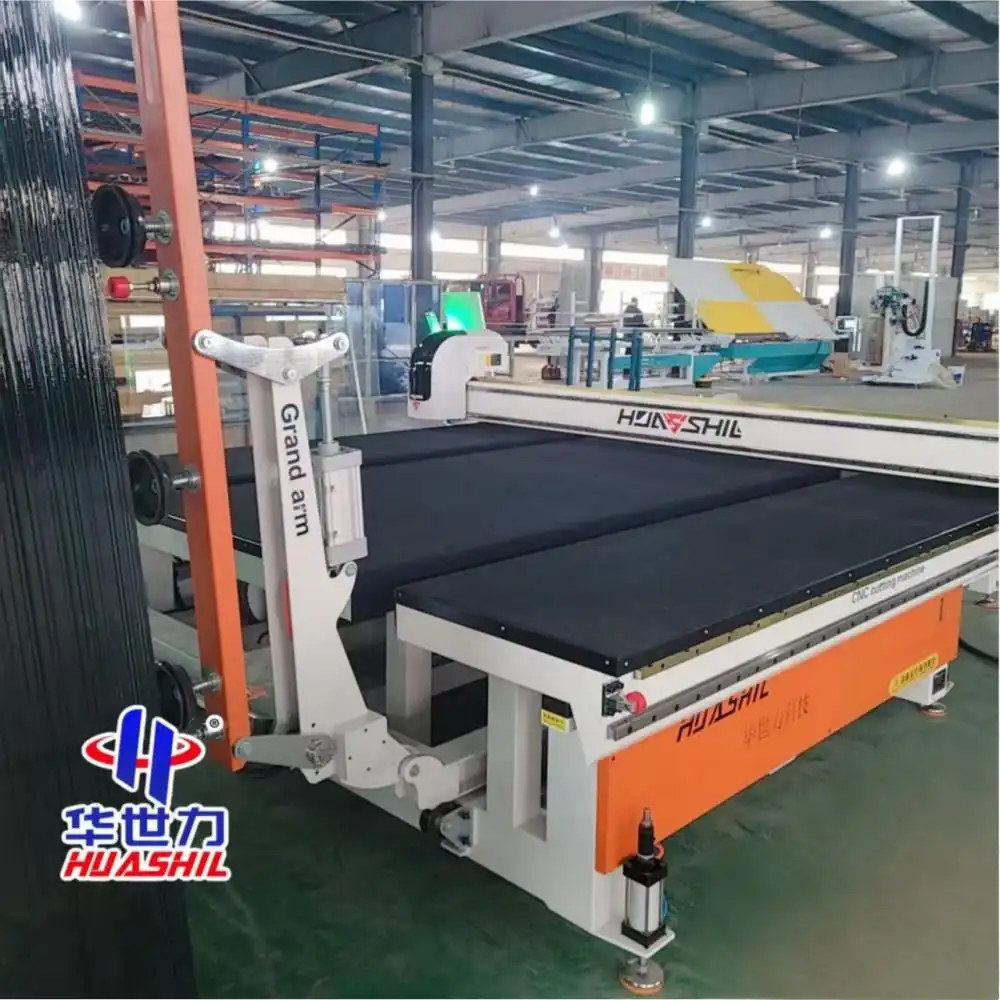
Putting in place automatic loading equipment is not the end of the process improvement; it is just the beginning. Continuous performance tracking and methods for systematic growth get the most out of investments in technology.
Establishing Baseline Metrics
Figuring out how to measure improvement starts with figuring out how to measure present success. Panels handled per shift, breakage rate percentage, loading cycle time, and labor hours per unit output are some of the most important measures. These standard data make it possible to objectively evaluate the effects of automation and find any lingering production problems.
Integration with Production Management Systems
By connecting automatic glass loader systems to ERP and MES platforms, you can see the state of production in real time. This combination lets you make changes to the schedule on the fly, plan for preventative maintenance, and look at quality trends. Facilities that reach this level of unity report 25% higher on-time supply rates because they are better able to coordinate production.
Operator Training and Continuous Improvement
The powers of equipment are only useful if the people who use them know how to use them most efficiently. Structured training programs that cover basic fixing, regular operation, and preventive maintenance give production teams the tools they need to get the most out of their systems. Regular review meetings that look for operating problems and ways to make things better lead to ongoing performance gains that go beyond the original implementation results.
Procurement Guide: Navigating Pricing, Trials, and Vendor Relations
Strategic methods for buying things take into account both short-term equipment needs and long-term ties with suppliers as well as total costs. Buyers can get better deals if they understand how prices work, their review choices, and how to negotiate.
Understanding Pricing Structures
The price of an automated glass loader depends a lot on its size, level of automation, and level of customization needed. Simple semi-automatic systems cost around $25,000, and fully automated systems with built-in cutting tables and complex settings cost between $60,000 and $120,000. Full production line integration projects that use several linked systems need unique quotes that take into account the needs of the facility and the level of difficulty of the installation.
Leveraging Demonstration and Trial Opportunities
Evaluation of tools by hand lowers the risk of buying it by proving promises of performance before committing to a purchase. Reputable makers let qualified buyers see how their products are made in the plant, record videos of the equipment in use in work settings, and sometimes even do trial installations on-site. These tests give expert teams a chance to see how well the new system works with current processes and how much work it can do in a real-life setting.
Vendor Credibility Assessment
Choosing a supplier has long-term effects on how well technology works and how well help is provided. Before making a final purchase choice, buyers should look into the product's background of production, its certifications, and customer references. When you visit a factory, you can learn about the manufacturing skills, quality control methods, and technical depth. Companies like Huashil that have been around for a while and have foreign certifications show that they are stable enough to provide professional help for the lifecycle of equipment.
Negotiation Strategies for Capital Equipment
When buying a lot of things, you should negotiate prices above the list price. Long-term supply deals, volume promises, and orders of more than one lot often let you get better prices. Flexible payment terms, such as deposit systems and letter of credit agreements, can help with managing cash flow while buying tools. When arranged as part of a deal instead of as separate purchases, extended warranty coverage and training services are very valuable.
Conclusion
Buying automated glass loader equipment is a smart move that will completely change how much glass manufacturing businesses can produce. The features talked about in this guide—precision handling, flexible capacity, smart controls, safety compliance, performance speed, predictive maintenance, and energy efficiency—as a whole determine the value of equipment and its long-term effects on operations. To do a good job of buying, you need to weigh technical requirements against the total cost of ownership and build relationships with suppliers that can support equipment throughout its working lifecycle. When businesses buy good automation equipment, they report changes in safety, efficiency, and their ability to compete that pay for the initial investment within 18 to 30 months. This is because they save money on labor costs, break down less often, and can make more.
FAQ
Q1: What factors should receive priority during glass loader selection?
The largest panel size that can be made and the range of thicknesses should match your present and future output needs. To avoid jams, the speed of your cutting line must match the speed of your loading cycle. Safety certification, especially CE compliance for tools meant for sale, keeps your business safe from lawsuits. Long-term operational costs are based on the quality of the supplier's after-sales service, which includes the supply of spare parts. The total cost of ownership over five to seven years is a better way to figure out how much something is worth than just looking at the buying price.
Q2: How does automation impact production safety and efficiency?
Automated loading eliminates manual lifting of heavy glass panels, preventing repetitive strain injuries and reducing workers' compensation claims. Consistent positioning accuracy improves cutting quality and reduces material waste from alignment errors. Faster cycle times increase throughput capacity without proportional labor cost increases. Facilities typically document 40% to 70% productivity improvements alongside 50% to 80% reductions in handling-related breakage after implementing quality automated systems.
Q3: Can automated loaders handle custom or oversized glass panels effectively?
Modern systems can handle different panel sizes by using vacuum arrays that can be adjusted and placement factors that can be programmed. The HSL-SPT3624 can handle sizes up to 3660mm x 2440mm, which is big enough for most building and curtain wall uses. For specific needs, custom settings make these features even more useful. The most important thing to think about is making sure that the tools you're buying fit your size distribution. Systems that are designed for smaller panels might not be strong enough to handle big formats consistently.
Partner with HUASHIL for Advanced Glass Loading Solutions
Huashil Automation Technology offers tried-and-true glass loader options that are backed by years of technical know-how and top-notch manufacturing. Our HSL-SPT3624 automatic loading system can handle glass panels up to 3660mm x 2440mm and has air flotation technology, a breaking table, and remote control operation from any angle. Our CE and ISO9001 licenses show that we are dedicated to safety and quality standards. When production managers are looking for trusted glass loader providers, we can help them with our full technical support, clear pricing, and flexible automation solutions made just for making architectural glass, curtain walls, and furniture. Email our team at salescathy@sdhuashil.com to talk about your production needs, set up a demonstration, or get full technical specs for testing equipment.
References
1. Glass Manufacturing Industry Council. "Automation Impact on Glass Processing Safety and Productivity." Industrial Safety Quarterly, 2022.
2. American Architectural Manufacturers Association. "Equipment Selection Guidelines for Glass Fabrication Facilities." Technical Standards Publication, 2021.
3. International Association of Glass Processing Equipment Manufacturers. "Comparative Analysis of Automated Loading Systems." Industry Technical Report, 2023.
4. National Safety Council. "Workplace Injury Prevention in Glass Manufacturing Operations." Occupational Health Research Journal, 2022.
5. Manufacturing Technology Institute. "Total Cost of Ownership Models for Capital Equipment Procurement." Industrial Engineering Review, 2023.
6. Society of Manufacturing Engineers. "Integration Strategies for Automated Glass Processing Lines." Production Systems Quarterly, 2022.
