




Advanced machines and smart software work together in automated glass processing systems to do tasks like cutting, cleaning, drilling, tempering, and washing with little to no human supervision. In the architectural, automotive, furniture, automated glass processing systems, and sintered stone fabrication industries, these combined solutions improve throughput, lower the need for manual labour, and ensure repeatable accuracy. Sensor technology, CNC controls, and real-time tracking are used in modern production lines to keep quality high while lowering costs. Plant managers and technical buyers can find equipment that fits their budgets and capacity goals by understanding how automation changes standard workflows.
Understanding Automated Glass Processing Systems
With automated tools, manufacturers can handle and shape glass in completely new ways. Modern systems coordinate many stages through a central control interface, so measurements and jobs don't have to be done by hand or over and over again. By getting rid of human mistakes at key points, this integration cuts down on cycle times and raises yield rates.
Core Functions and Workflow Integration
Modern glass processing lines have loading stations, cutting stations, edge treatment units, and inspection systems that all work together to make the process go smoothly. Material is moved from one stage to the next by automated conveyors, while sensors check the measurements and find problems in real time. Software platforms like Optima make output reports, make sure that machines work together, and make the best use of materials. Integrated systems keep dimensional errors within ±0.2 mm and reduce handle damage in architectural glass plants that make curtain wall panels. Large-format glass sheets can move safely from raw materials to finished products without having to be repositioned by hand, thanks to this level of control.
Tangible Advantages for B2B Clients
Key performance factors have gotten better for manufacturers who use automated solutions. Due to precise tool control and improved stacking algorithms, production speeds are 30–50% faster than when done by hand, and scrap rates are down by up to 40%. When workers control equipment from a distance instead of directly handling heavy glass sheets, safety incidents go down by a large amount. When machines run at their fastest speeds without stopping to do other things, they use less energy per unit. Because of these benefits, payback times are shorter. Depending on production numbers and labour cost structures, they are usually between 18 and 36 months.
Key Applications of Automation in Glass Processing
Automation serves distinct functions across multiple processing stages, each contributing to overall efficiency, automated glass processing systems, and product quality. Examining specific applications reveals how targeted investments address operational bottlenecks and quality challenges.
Automated Cutting and Loading Systems
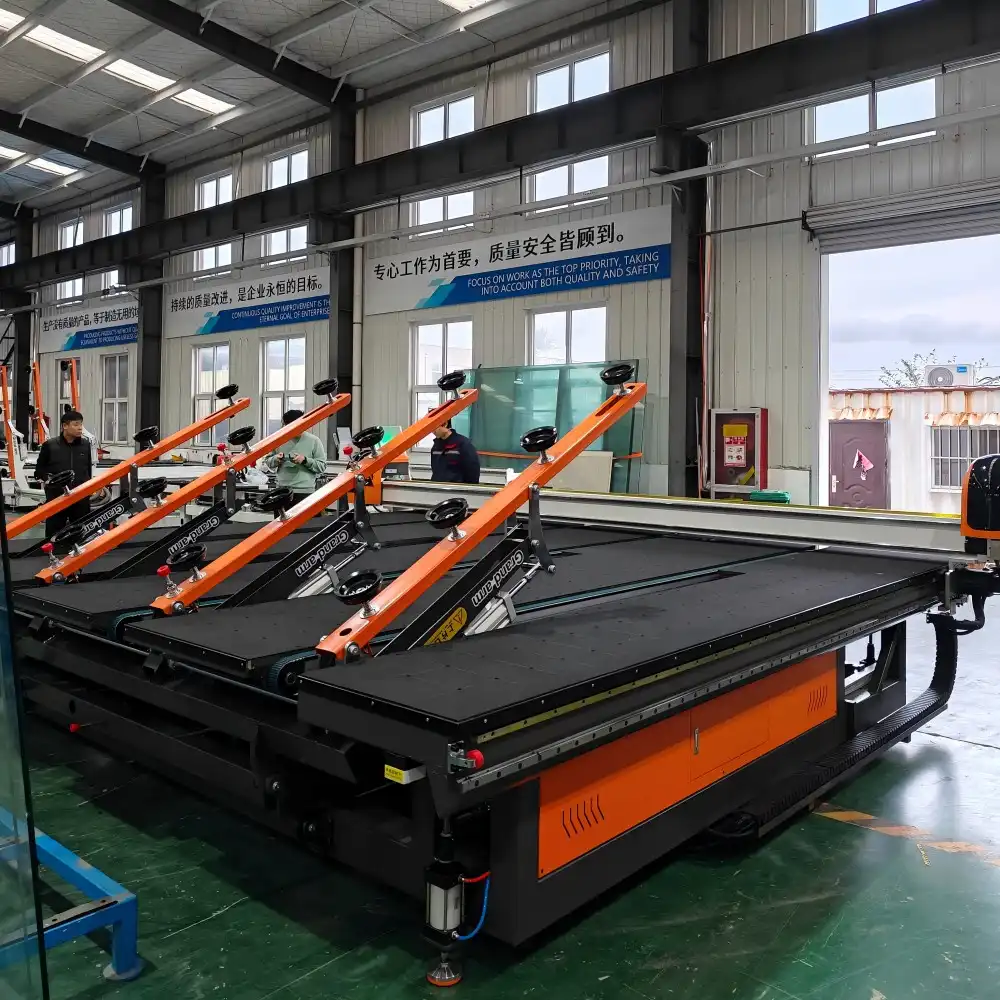
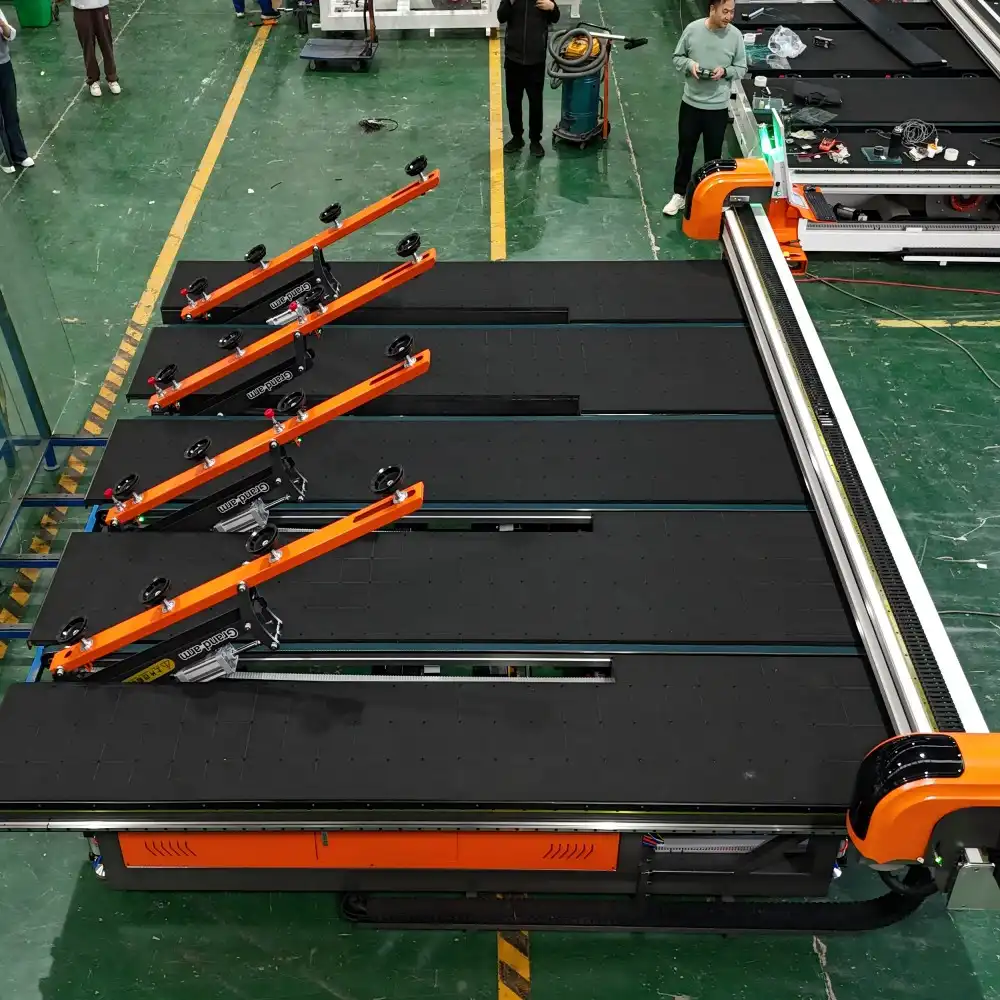
Cutting tools with CNC controls and optimisation software get the most out of raw glass sheets. This is shown by the HSL-YTJ3829 type, which can work with glass up to 3660x2800 mm in size and 2 mm thick. Automatic filling gets rid of the need to lift things by hand, and air flotation systems protect surfaces while they're being moved. Smoothly moving materials between stages is made possible by synchronous belts, and workers can move equipment around without having to go into production areas thanks to 360-degree remote controls. Automatic edge-finding sensors find the edges of sheets and change the cutting paths in real time, so even if the forms aren't perfectly round, the nesting will be correct. Breaking tables that are built into the plan separate the cut pieces cleanly, which lowers the chance of tiny cracks that weaken the structure. These features are especially helpful for curtain wall makers who make panels in custom sizes for high-rise building projects.
Edge Polishing and Finishing Machinery
Edge quality has a direct effect on how things look and how well they fit together in a wide range of situations, from glass furniture to shower walls. Automated polishing tools keep bevel angles and surface finishes the same from one production run to the next, which is not possible with manual grinding. With multiple spindles, you can cut straight lines, curves, and mitered corners without having to change tools. This cuts down on the time it takes to set up between jobs. These units have water recycling systems that handle heat and particulate matter. This makes the abrasive tools last longer and meets environmental discharge standards. Manufacturers of tempered glass dividers for interior design depend on this consistency to make sure that panels fit perfectly inside aluminium frames with no gaps or other problems.
Comparing Automated vs Manual Glass Processing
Traditional manual processing persists in some facilities due to lower initial capital outlay, yet operational inefficiencies accumulate over time. Understanding the performance gap between manual and automated approaches clarifies the business case for investment.
Efficiency and Quality Metrics
Cutting by hand depends on the skill of the person doing it and the accuracy of the template, which introduces variation that raises the rate of rejects. Cutting tolerances of about ±0.5 mm are possible for workers with a lot of experience. This is good enough for some tasks but not for precise architectural work. Because they use servos to control positioning and closed-loop input, automated systems can usually keep tolerances of ±0.1 mm. Similar differences can be seen when comparing production throughput: a trained operator handles 40–50 sheets by hand per shift, while an automated line handles 150–200 sheets with the same level of quality in the same amount of time. Edge polishing has similar differences. Automated systems keep bevel widths constant within 0.05 mm, while human operators can make changes of 0.3 mm or more.
Environmental and Cost Considerations
Using complex nesting algorithms to arrange cuts so that there is as little automated glass processing system waste as possible, automated equipment makes the best use of materials. Cutting glass trash by 15–20% lowers the costs of raw materials and disposal fees, which directly helps the business make money. Better energy efficiency comes from machines that work better without being left idle for long periods of time between jobs. In high-wage areas like the US, automation cuts the number of workers needed from 8 to 10 operators per shift to 2 to 3 supervisors who can manage multiple machines. This saves a lot of money on labour costs. These economic factors push architectural glass plants that are under pressure to keep their profit margins high while also meeting tight delivery deadlines to adopt new technologies.
Selecting and Procuring Automated Glass Processing Systems
Choosing appropriate equipment requires aligning machine capabilities with production requirements and financial realities. A structured procurement approach minimizes risk and ensures long-term operational success.
Assessing Business Needs and Production Volumes
Before choosing tools, plant managers should look at the current throughput, the mix of products, and the company's growth plans. Facilities that make windows of standard sizes have specialised cutting lines that are best for doing a lot of the same thing over and over again. Custom fabricators who work with architects and designers need systems that are flexible enough to switch between job specs often. Required machine powers depend on the thickness and size ranges of the glass. For example, the HSL-YTJ3829 can handle 19 mm glass, which is good for both making architectural laminates and heavy furniture. Sintered stone fabricators need the same kinds of capacities, but they put more value on dust control systems that are made for porcelain and composite materials.
Procurement Options and Supplier Evaluation
Buying capital equipment gives you full ownership and the chance to make it your own, but it requires a big down payment. Leasing spreads costs out over time and includes upkeep, which makes it a good way for operations to test the benefits of automation before committing fully. Buying used equipment is cheaper at first, but it needs to be carefully checked for worn parts and software compatibility with new control systems. When evaluating a supplier, you should pay special attention to their after-sales assistance, availability of spare parts, and technical training programs. CE and ISO 9001 certifications show that a company meets safety standards and quality management guidelines, which are very important for businesses that sell to regulated building markets.
Maintenance and Optimization for Long-Term Performance
Sustained productivity requires disciplined maintenance practices and proactive performance monitoring. Establishing structured routines prevents unexpected failures and extends equipment service life.
Preventive Maintenance Protocols
Regular inspections that focus on wear parts stop major failures that stop production. Cutting wheels, automated glass processing systems, and grinding belts need to be replaced at regular intervals set by the manufacturer, usually every 500 to 1,000 hours of use, based on how hard the material is. Monitoring lubrication systems is important to make sure they have the right amount of oil and filtering in order to protect precision bearings and linear guides. To keep the pressure under control, pneumatic parts like valves and cylinders need to be cleaned and inspected for leaks on a regular basis. Recording upkeep tasks and keeping track of how long parts last lets you plan ahead for replacements that reduce unplanned downtime.
Software Updates and Calibration Procedures
Manufacturers' updates for control software often include security patches, speed improvements, and the addition of new features. By installing these updates, you can keep your software compatible with new file types used in the industry and make nesting work better as algorithms get better. Calibration processes check the accuracy of position and the alignment of the tools, making up for the thermal expansion and mechanical wear that happen during production. Cutting and drilling tolerances that stay within the limits are checked every month with approved reference standards. Technical managers should keep calibration logs and set up recalibrations right after any collisions or part replacements that change the shape of the machine.
Conclusion
Automation transforms glass processing from labor-intensive craftsmanship into precision manufacturing capable of meeting modern construction and design demands. Integrated systems combining cutting, polishing, drilling, and handling operations deliver consistent quality while reducing costs and enhancing workplace safety. Production lines equipped with advanced controls and optimization software adapt readily to changing product specifications, supporting both high-volume standardization and custom fabrication workflows. Careful equipment selection based on production needs, thorough supplier evaluation emphasizing after-sales support, and disciplined maintenance practices ensure successful automation implementation. The combination of immediate efficiency gains and long-term competitive positioning makes automated glass processing systems a strategic investment for forward-thinking manufacturers.
FAQ
1. What is the typical ROI timeframe for automated glass processing systems?
Return on investment periods typically range from 18 to 36 months, depending on production volume, labor costs, and equipment utilization rates. High-volume architectural glass plants operating multiple shifts recover costs faster through labor savings and increased throughput. Smaller operations focused on custom work may experience longer payback periods but still benefit from quality improvements and reduced waste.
2. Can automated systems handle small-batch or custom production orders?
Modern equipment with flexible programming capabilities accommodates custom orders efficiently. CNC controls and optimization software adapt quickly to new specifications without extensive retooling. Quick-change tooling systems minimize setup time between different product runs, making automation viable even for operations with diverse product mixes and frequent changeovers.
3. How do I ensure software and hardware compatibility when upgrading equipment?
Engage suppliers early in the procurement process to discuss integration requirements with existing systems. Request detailed technical specifications covering communication protocols, file format compatibility, and control system interfaces. Pilot testing with sample files before full deployment identifies compatibility issues while solutions remain straightforward to implement.
Upgrade Your Production Capabilities with HUASHIL
HUASHIL delivers proven automated glass processing systems tailored to architectural fabrication, furniture manufacturing, automated glass processing systems and curtain wall production. Our HSL-YTJ3829 cutting line combines automatic loading, intelligent pressure control, and air flotation protection with Optima optimization software to maximize material yield and throughput. CE and ISO 9001 certifications verify our commitment to safety and quality standards critical for demanding B2B applications.
Beyond supplying advanced machinery, we provide comprehensive technical support, including installation supervision, operator training, and responsive spare parts logistics. Whether you need a single automated cutting system or a complete turnkey production line, our engineering team designs solutions matching your capacity requirements and budget parameters. Contact our specialists at salescathy@sdhuashil.com to discuss your processing challenges and explore how partnering with a reliable automated glass processing systems supplier accelerates your operational goals.
References
1. Glass Processing Industry Association. (2023). Automation Trends in Architectural Glass Manufacturing. Industry Report Series, Vol. 12.
2. Johnson, M. & Williams, R. (2022). Precision Manufacturing Technologies for Flat Glass Applications. Journal of Industrial Engineering and Automation, 18(3), 145-167.
3. Chen, L. (2023). Energy Efficiency and Waste Reduction in Automated Glass Processing Plants. Sustainable Manufacturing Quarterly, 9(2), 78-94.
4. Thompson, K. (2022). CNC Control Systems for Glass Cutting and Finishing Operations. Advanced Manufacturing Technology Review, 15(4), 210-229.
5. International Glass Technology Council. (2023). Best Practices for Equipment Procurement and Supplier Selection in Glass Processing. Technical Guidelines Publication.
6. Rodriguez, A. & Patel, S. (2023). Maintenance Strategies for Automated Production Systems in Glass Manufacturing. Industrial Maintenance and Reliability Journal, 11(1), 34-52.
