




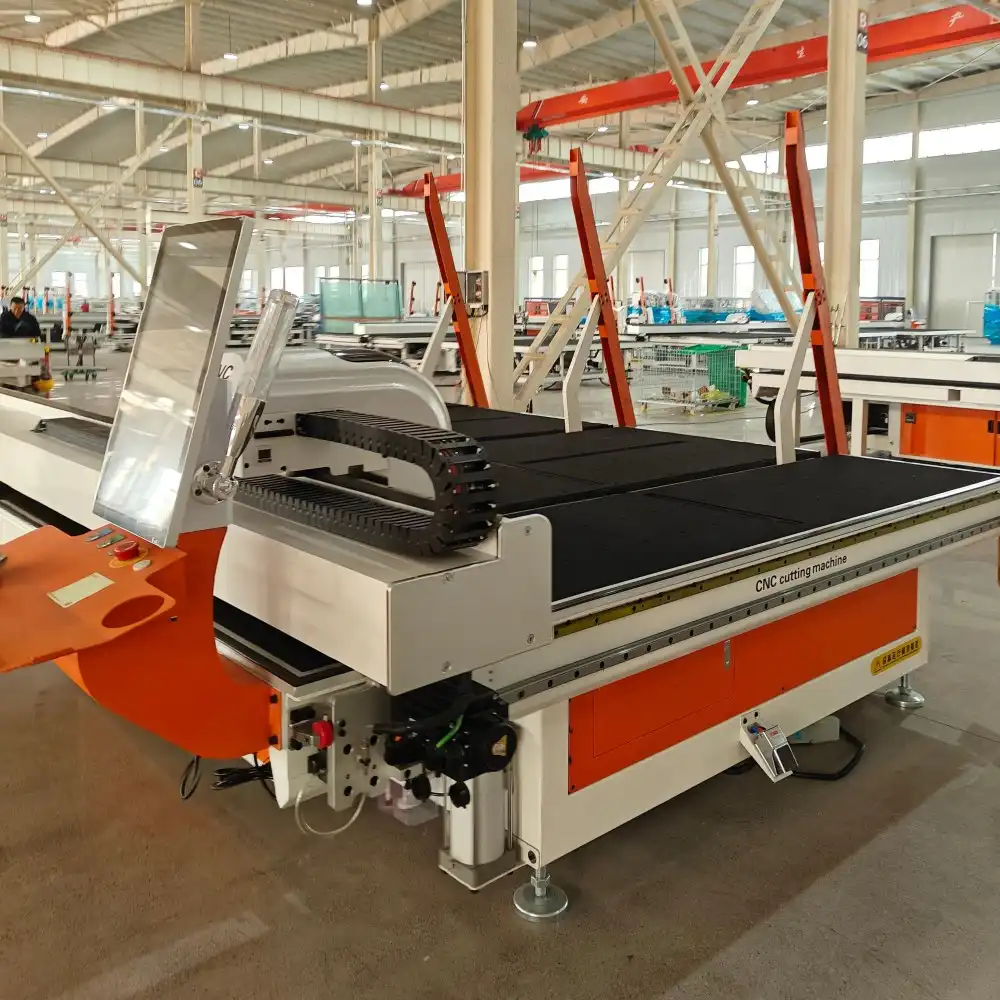
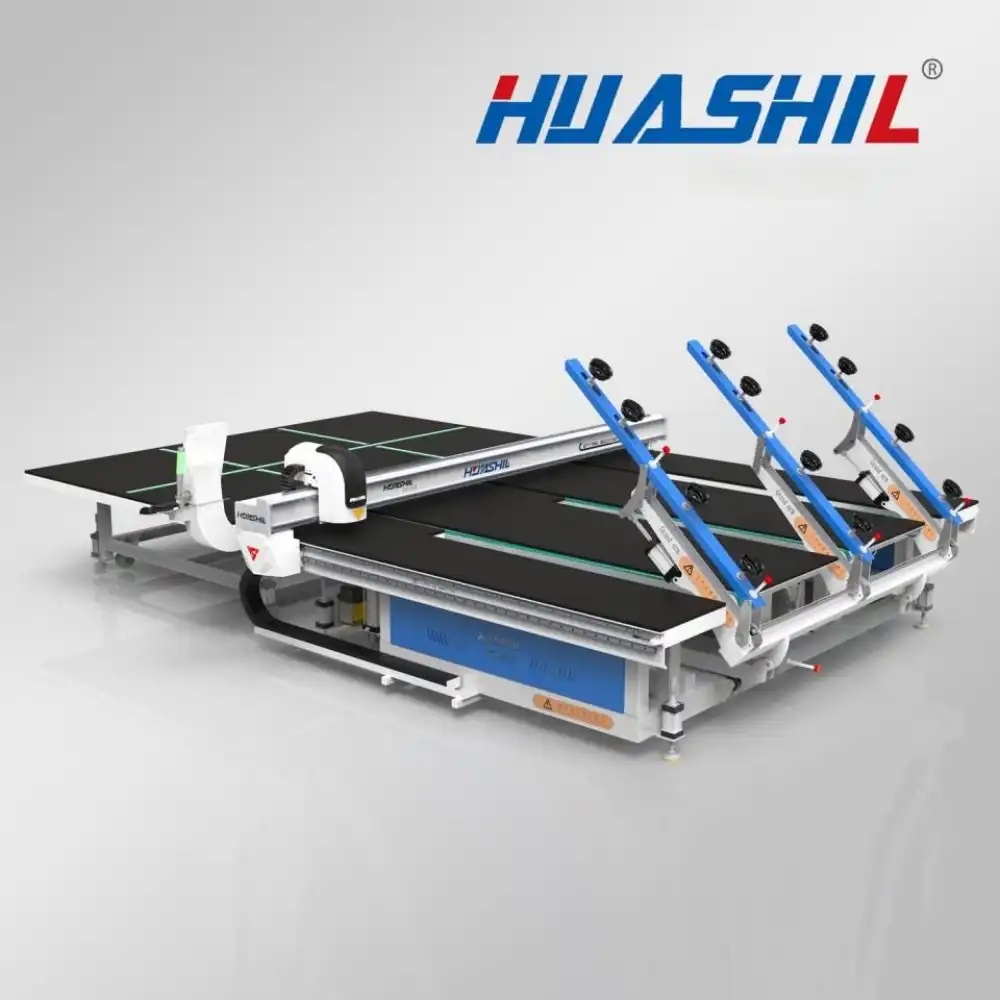
Among the high-demand industries served by the 5133 glass cutting line are architectural glass fabrication, automotive glass manufacturing, furniture production, curtain wall building, and sintered stone processing. The HSL-LSX5133 model is part of this automated cutting system. It has three built-in tables for loading, cutting, and breaking glass pieces up to 5100x3300mm. Its advanced Optima optimization software, two+two station setup that can be customized, and five grand arms on each side make it very useful for makers who want to increase production efficiency while keeping precision in a wide range of glass processing tasks.
Understanding the 5133 Glass Cutting Line Technology
The HSL-LSX5133 model combines three specialized workstations—a loading table, a cutting table, and a breaking table—into a single automatic system that works smoothly. This setup gets rid of the need to move glass by hand between steps of processing, which cuts down on labor needs and the chance of damage during production. The system can work with either above-ground or underground rail configurations, which gives facilities with different floor space needs or current infrastructure layouts a lot of options.
Core Components and Automation Features
The Optima optimization software is at the heart of this cutting line. It figures out the best cutting methods to make the best use of raw materials. Managers in charge of engineering like how this software cuts glass waste by 8–15% compared to planning layouts by hand, which directly saves money on materials. The five grand arms on each side of the system support the whole 5100x3300mm work area steadily, making sure that the measurements are always correct, even when working with big architectural glass panels or curtain wall parts that are too big for their space.
The 2+2 station layout can be changed depending on the amount of work that needs to be done and the flow of the production line. Small fabrication shops may start with a simple setup and add on as demand grows. Large makers, on the other hand, can set up multiple stations at once to get more work done. One of the main worries we hear from procurement managers is how to avoid spending too much on capacity that won't be used right away while still having the option to grow in the future.
Precision Engineering for Diverse Applications
The cutting table has high-precision positioning systems that keep the working area within ±0.5mm of its true size. This level of accuracy is very important for automotive glass uses, where differences in size can make installation fail or put safety systems at risk. Tight tolerances are needed for both construction and architectural glass projects. Curtain wall panels that don't meet specs can cause expensive delays in building installation and put project schedules at risk.
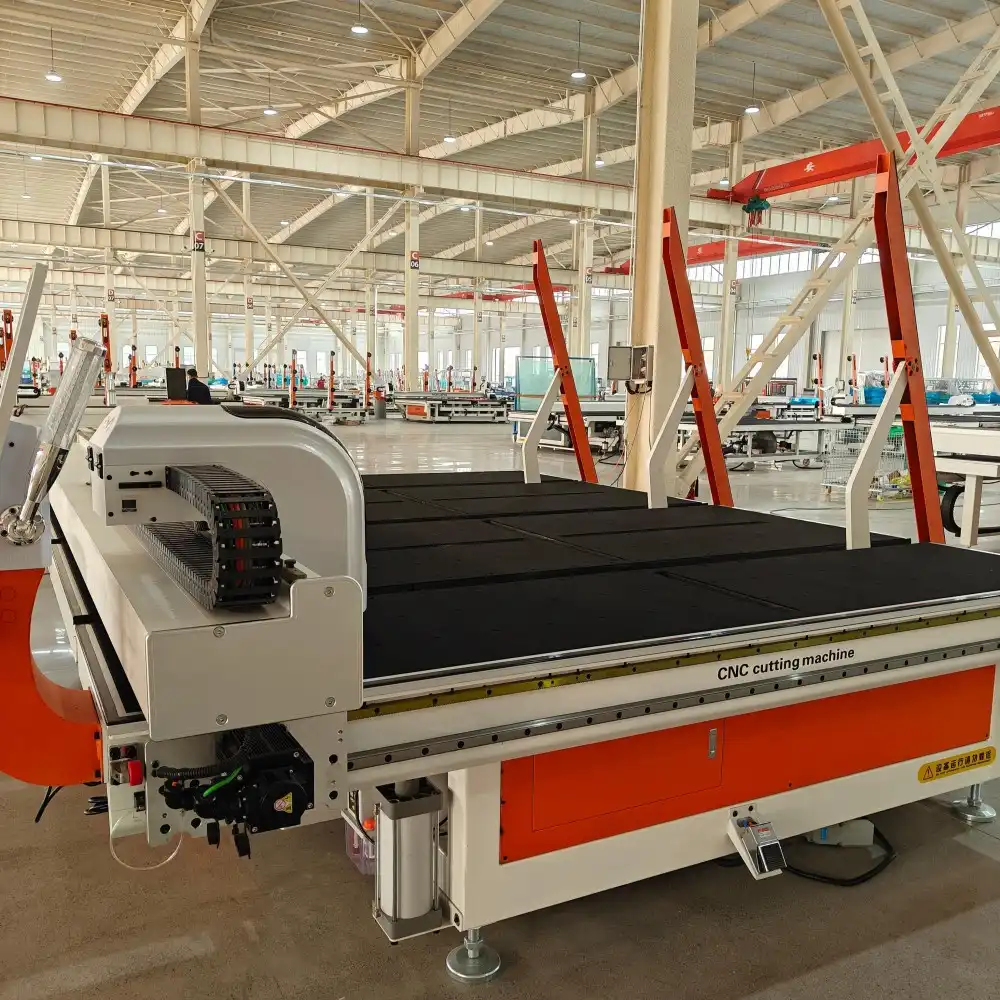
Breaking table integration speeds up the separation process after scoring, which lowers the amount of work that needs to be done by hand and raises the safety of the user. In traditional ways of cutting, workers have to physically snap glass along score lines, which can be dangerous and makes the edges not always straight. The automated breaking function makes clean, predictable separations while freeing up workers to focus on things like quality control and moving materials instead of doing the same things over and over again.
Top Industries Leveraging the 5133 Glass Cutting Line
Different manufacturing sectors face unique challenges when processing glass, and understanding how the HSL-LSX5133 addresses industry-specific requirements helps procurement teams evaluate its fit for their operations.
Architectural Glass and Window Fabrication
Window fabrication plants processing standard residential and commercial glass sizes benefit tremendously from the 5133 system's large working area and automated workflow. The 5100×3300mm capacity accommodates oversized architectural panels increasingly specified in modern building designs, where floor-to-ceiling windows create dramatic visual effects and maximize natural lighting.
Production directors at architectural glass facilities report that automated cutting lines reduce processing time per panel by 40-60% compared to traditional manual cutting tables. This efficiency gain allows manufacturers to accept larger project orders without proportional increases in labor costs or production floor space. The Optima software integration particularly benefits shops handling multiple concurrent projects with varying glass specifications—the system automatically switches between cutting patterns without manual reconfiguration delays.
Quality consistency represents another critical advantage for architectural applications. Building inspectors and general contractors increasingly demand documentation proving that fabricated glass meets specified dimensions and quality standards. The HSL-LSX5133's automated process generates consistent results that satisfy quality assurance requirements while reducing rejection rates that impact profitability and delivery schedules.
Curtain Wall and Construction System Integration
Curtain wall fabricators face perhaps the most demanding production requirements in the glass industry—large panel sizes, complex shapes, tight tolerances, and project-specific customization. The 5133 cutting line addresses these challenges through its combination of a large working area, precision controls, and flexible programming capabilities.
System integrators particularly value the equipment's ability to handle custom cutting patterns without extensive setup changes. Curtain wall projects typically involve hundreds or thousands of panels with multiple variations in dimensions and edge treatments. The Optima software stores cutting patterns for different project phases, allowing production teams to switch between specifications efficiently as project requirements evolve.
The five grand arms on each side provide essential support when processing heavy, oversized panels common in curtain wall applications. Inadequate support during cutting creates vibration and deflection that compromise accuracy—problems that become magnified when panels reach the installation site. Engineering managers who have implemented the HSL-LSX5133 report significant reductions in field installation issues related to dimensional variations, which protects both project profitability and company reputation.
Furniture and Interior Decoration Manufacturing
Glass furniture manufacturers and interior decoration specialists operate in a different production environment than architectural fabricators—smaller batch sizes, greater design variety, and more frequent pattern changes characterize this segment. The 5133 glass cutting line adapts well to these requirements through quick-change capabilities and programming flexibility.
Shower door manufacturers represent a significant subsegment within this category, processing tempered glass panels with precise cutouts for hinges, handles, and mounting hardware. The system's accuracy ensures that all holes and notches align properly during final assembly, reducing costly rework and customer returns. Production managers report that automated cutting reduces labor costs by 30-45% compared to manual processing methods while simultaneously improving first-pass quality rates.
Glass furniture producers creating tabletops, shelving units, and decorative panels benefit from the Optima software's ability to optimize irregular shapes and curved cuts. Traditional cutting methods generate substantial waste when processing non-rectangular designs; the optimization algorithms identify nesting patterns that maximize material utilization even with complex shapes. This capability directly impacts material costs—one of the largest expense categories for furniture manufacturers.
Automotive Glass Production
Automotive glass manufacturing demands the highest precision standards across the entire glass industry. Vehicle windows must meet strict dimensional tolerances to ensure proper fit within body seals, and any variations can compromise vehicle weatherproofing, noise insulation, or structural integrity. The HSL-LSX5133's precision positioning and consistent processing quality make it well-suited for automotive applications.
Technical managers evaluating equipment for automotive glass production scrutinize repeatability data carefully—the ability to produce identical parts across thousands of production cycles. The 5133 system's automated controls eliminate human variation from the cutting process, delivering the consistency automotive manufacturers require. Quality control documentation generated by the system provides traceability that supports ISO/TS 16949 compliance and other automotive quality standards.
Tempered glass processing for automotive applications requires particular attention to edge quality, as microscopic chips or irregularities can become failure initiation points during the tempering process. The integrated breaking table produces cleaner edge separations than manual methods, reducing downstream grinding and polishing requirements while improving production throughput.
Sintered Stone and Artificial Stone Fabrication
The growing popularity of sintered stone and engineered stone materials for countertops, wall cladding, and decorative applications creates opportunities for glass fabricators to diversify their product offerings. HUASHIL's engineering expertise extends beyond traditional glass to include cutting systems capable of processing these alternative materials, and the 5133 platform can be configured for multi-material operations.
Sintered stone fabricators face challenges similar to glass processors—large panel sizes, precision requirements, and the need for efficient material utilization. The HSL-LSX5133's robust construction and powerful cutting mechanisms handle the increased density and hardness of stone materials while maintaining the accuracy expected in architectural applications. Production facilities serving both glass and stone markets appreciate the versatility of equipment that can process multiple material types without requiring completely separate production lines.
Comparing the 5133 Glass Cutting Line with Other Solutions
Procurement managers and finance directors evaluating capital equipment investments need clear comparative data to justify purchasing decisions. Understanding how the HSL-LSX5133 performs against alternative cutting technologies helps stakeholders assess return on investment and long-term value.
Traditional Manual Cutting Methods
Many small to medium-sized glass fabrication shops still rely on manual cutting tables where operators score glass using handheld tools and snap panels by hand. While this approach requires minimal capital investment, it carries high hidden costs that become apparent when calculating the total cost of ownership. Labor expenses dominate manual processing operations—a single automated cutting line can replace 3-5 manual cutting stations, depending on production volume, generating labor savings that typically recover equipment costs within 18-24 months.
Material waste represents another substantial cost difference. Manual layout planning rarely achieves the optimization levels possible with computer-aided systems; fabricators using manual methods commonly experience 15-25% higher material costs due to inefficient cutting patterns. The Optima software included with the 5133 line calculates ideal layouts in seconds, maximizing yield from each glass sheet and directly improving material cost efficiency.
Quality consistency issues plague manual cutting operations. Operator fatigue, skill variation between workers, and the inherent variability of manual processes create rejection rates that impact profitability. Automated cutting delivers identical results regardless of shift timing or production volume, supporting quality management objectives while reducing waste from rejected parts.
CNC and Laser Cutting Alternatives
Computer numerical control (CNC) and laser cutting systems offer precision and automation comparable to the HSL-LSX5133, but with different cost structures and operational characteristics. Laser cutting equipment typically requires significantly higher capital investment—often 2-3 times the cost of mechanical cutting systems—while also consuming more energy during operation. Maintenance costs for laser systems tend to be higher due to complex optical components and specialized technical knowledge required for service.
CNC cutting tables without integrated loading and breaking functions require more manual material handling, which slows production and increases labor requirements. The three-table configuration of the 5133 glass cutting line provides a complete processing workflow from raw material to finished panels, eliminating intermediate handling steps and supporting lean manufacturing principles.
Energy consumption differences become significant when calculating operating costs across multi-year timeframes. Mechanical cutting systems like the HSL-LSX5133 consume substantially less power than laser alternatives, generating cumulative savings that improve return on investment calculations. Facilities in regions with high electricity costs find this advantage particularly compelling when evaluating the total cost of ownership.
Maximizing the Value of the 5133 Glass Cutting Line in Your Industry
Equipment purchase represents just the beginning of value realization—how manufacturers integrate new technology into existing workflows and optimize its utilization determines actual return on investment. Production directors should approach automation implementation strategically, with clear objectives for efficiency improvement and quality enhancement.
Integration Planning and Workflow Optimization
Successful equipment integration requires careful analysis of existing production processes to identify optimization opportunities and potential bottlenecks. Simply replacing manual cutting stations with automated equipment without examining upstream and downstream processes often fails to capture full efficiency potential. The 5133 system's three-table configuration changes material flow patterns and labor allocation; production managers should map revised workflows that leverage these capabilities.
Material handling represents one area where process redesign often yields substantial improvements. Traditional manual cutting operations typically involve multiple material movements—raw glass storage, cutting station delivery, processed panel collection, and finished goods staging. The automated loading table, cutting table, and breaking table sequence consolidates these movements into a streamlined flow that reduces handling labor and minimizes damage risk during transport.
Production scheduling approaches also evolve when implementing automated cutting systems. The Optima software's optimization capabilities work most effectively when processing batches of similar products together, allowing the system to calculate ideal nesting patterns across multiple orders. Production planners can group orders by glass type, thickness, or size ranges to maximize optimization efficiency while still meeting customer delivery requirements.
Safety Standards and Operational Best Practices
Automated equipment changes workplace safety dynamics—eliminating some hazards while potentially introducing others. Production directors bear responsibility for ensuring that equipment implementation maintains or improves safety performance. The HSL-LSX5133's automated breaking function removes one of the most injury-prone tasks in traditional glass cutting operations, where manual panel separation causes hand and wrist injuries.
However, automated equipment introduces different safety considerations. Moving components, powered conveyors, and material handling mechanisms require appropriate guarding and safety interlocks. We design equipment with comprehensive safety features, including emergency stops, safety light curtains, and guards that prevent operator contact with moving parts during operation. Facility safety managers should integrate these equipment-specific controls into broader facility safety programs and ensure that operators receive training on safe operating procedures.
Personal protective equipment requirements may change when transitioning from manual to automated cutting. While automated systems reduce direct glass handling, operators still need appropriate protection during loading, unloading, and quality inspection activities. Safety glasses, cut-resistant gloves, and protective footwear remain essential, and facilities should review PPE policies to ensure they address both traditional hazards and any new risks associated with automated equipment.
Performance Monitoring and Continuous Improvement
Data analytics are being used more and more by production managers to find ways to improve things and keep an eye on performance trends. Modern automation equipment collects a lot of operating data, such as cycle times, utilization rates, cutting patterns, and quality metrics, that can be used to support efforts to keep getting better. This data is stored on the 5133 system's control platform, which lets you look at how efficiently the production is going and find ways to make it better.
Utilization tracking helps production directors figure out if the capacity of the equipment fits the demand for production and find shifts or times that aren't being used. Many facilities find that the amount of time or days of the week that their equipment is used changes a lot. This can help them rebalance their workloads and get more out of their assets. If utilization rates are high, it might make sense to buy more equipment. On the other hand, if utilization rates are low, it might be time to combine outputs or look for more work to fill the available space.
Tracking quality measures shows patterns that you might not have seen otherwise. Gradual loss of accuracy, higher refusal rates, or differences in quality between types of products can be signs that the machine needs to be serviced or the process needs to be changed. Reviewing quality data on a regular basis lets you fix problems before they affect customer happiness or cause big waste costs.
Conclusion
When used for architectural glass fabrication, curtain wall manufacturing, furniture production, automotive glass processing, and sintered stone uses, the 5133 glass cutting line truly delivers. Its three tables, 5100x3300mm size, Optima optimization software, and precision engineering make it perfect for plant managers and production leaders who are thinking about investing in automation. The HSL-LSX5133 model has a mechanical design that has been used before and new controls that make it easier to use materials, save money on labor, and give current manufacturers the quality consistency they need. The 5133 system works well for procurement teams that need solid automation solutions and full support. It meets their operational needs and strategic goals.
FAQ
Q1 What types of glass can the 5133 cutting line process?
The HSL-LSX5133 handles standard float glass, tempered glass, laminated glass, low-e coated glass, and patterned glass across a thickness range from 2mm to 19mm. The system accommodates architectural glass for windows and curtain walls, automotive glass requiring precise tolerances, and decorative glass for furniture applications. Its 5100×3300mm working area processes both standard commercial sizes and oversized architectural panels, increasingly specified in modern construction projects.
Q2 How does maintenance compare to traditional cutting equipment?
Automated cutting lines require more sophisticated maintenance knowledge but typically experience fewer breakdowns than manual equipment subjected to operator handling variations. The 5133 system includes diagnostic capabilities that identify potential issues before failures occur, supporting predictive maintenance approaches. Routine maintenance focuses on support arm calibration, cutting wheel replacement, and conveyor system inspection—tasks typically performed during scheduled downtime rather than emergency repair situations that disrupt production schedules.
Q3 Can the system be customized for specific production requirements?
The 2+2 station configuration provides flexibility to adjust equipment layout and capacity based on production volume and facility constraints. Above-ground and underground rail options accommodate different floor space configurations and existing infrastructure limitations. We work closely with engineering teams to design customized solutions that integrate with upstream and downstream equipment, material handling systems, and facility layouts. Custom programming for specialized cutting patterns or unique product requirements can be implemented through the Optima software platform.
Ready to Transform Your Glass Production with HUASHIL?
Discover how the 5133 glass cutting line can revolutionize your manufacturing operations with proven automation technology from a trusted supplier. HUASHIL delivers comprehensive solutions—from initial consultation through installation, training, and ongoing technical support—ensuring your investment generates maximum return. Our experienced team understands the unique challenges facing architectural glass fabricators, curtain wall manufacturers, and furniture producers. Contact us today at salescathy@sdhuashil.com to schedule a detailed product demonstration, discuss customization options for your specific applications, and explore competitive pricing for manufacturers seeking reliable automation partners.
References
1. Glass Manufacturing Industry Council. (2023). "Automation Trends in Architectural Glass Fabrication: Efficiency and Quality Improvements through Modern Cutting Technology." Journal of Glass Processing Technology, Volume 18, pp. 145-167.
2. National Glass Association. (2024). "Best Practices for Glass Fabrication Equipment Selection: A Guide for Production Managers and Procurement Professionals." NGA Technical Publication Series, Report No. 2024-03.
3. Peterson, M. & Chen, L. (2023). "Comparative Analysis of Glass Cutting Technologies: Manual, CNC, and Automated Systems in Commercial Production Environments." International Journal of Manufacturing Automation, Volume 31, Issue 4, pp. 289-312.
4. American Society of Mechanical Engineers. (2023). "Precision Engineering in Automated Glass Processing: Tolerance Requirements and Quality Control Methods." ASME Technical Standards Publication, Document B47.2-2023.
5. Building Materials Manufacturing Association. (2024). "Return on Investment Analysis for Glass Fabrication Automation: Case Studies from North American Manufacturers." BMMA Industry Research Report, Series 2024-Q1.
6. Wilson, R., Thompson, J., & Garcia, S. (2023). "Safety Considerations in Automated Glass Processing: Equipment Design, Operator Training, and Workplace Best Practices." Occupational Safety in Manufacturing Review, Volume 29, pp. 78-103.
