




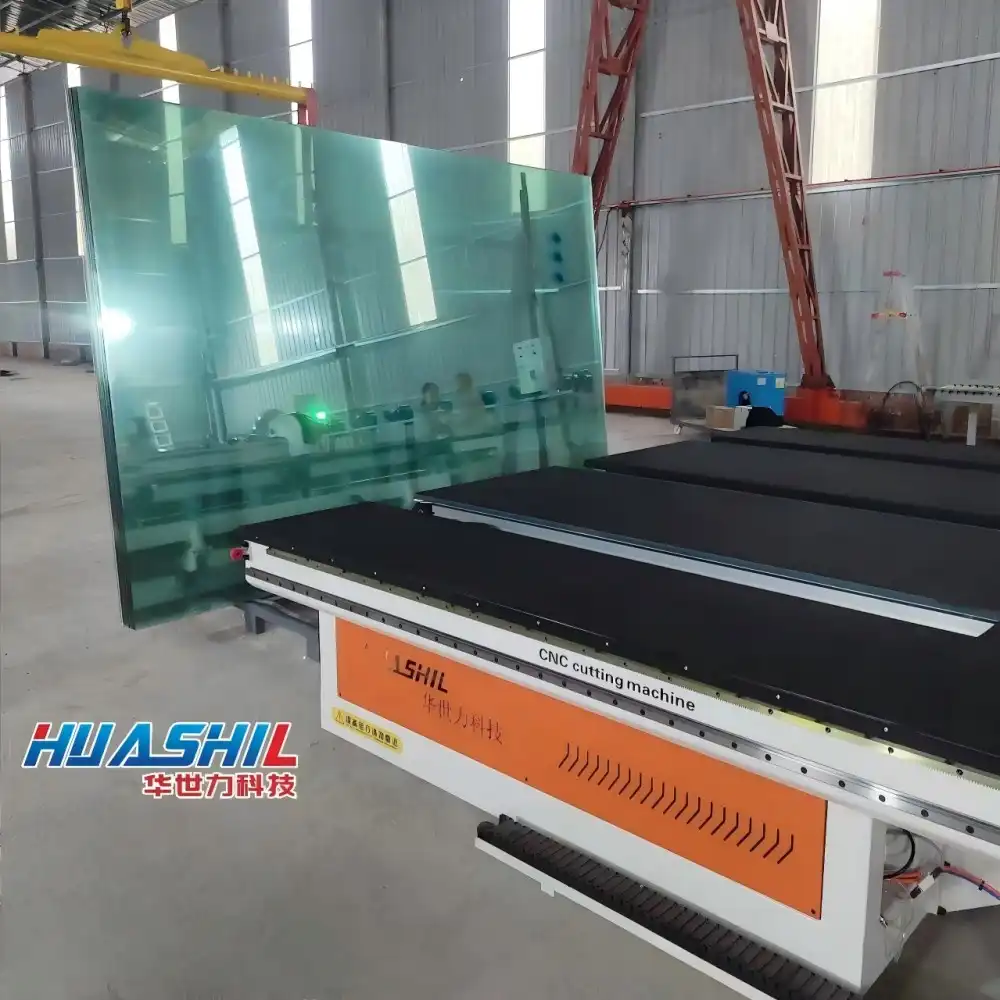
When fabricators ask which machines deliver the most reliable results for edge grinding, the answer consistently points to high-performance glass processing equipment that combines deep automation with broad format flexibility. The HSL-YTJ3829 from Shandong Huashil Automation Technology Co., Ltd is a strong example of this standard — accommodating glass sheets up to 3,660 × 2,800 mm across a 2–19 mm thickness range, with automatic loading, automatic pressure control, automatic edge finding, and an air flotation conveying system built in as standard features. Certified to CE and ISO 9001, and driven by Optima optimization software, it represents what modern edge grinding machinery should deliver: consistent precision, intelligent process control, and the throughput that competitive glass fabrication demands.
What Defines Truly High-Performance Edge Grinding Equipment?
Automation Depth Separates Leaders from the Rest
The clearest line between average and high-performance glass processing equipment is the depth of its automation. When a machine can load glass, find the edge, regulate grinding pressure, and convey the finished sheet without manual intervention at each stage, cycle times shrink, and output quality stabilizes. The HSL-YTJ3829 delivers exactly this: automatic loading removes the bottleneck of manual sheet placement, while automatic edge-finding sensors locate the true glass boundary before grinding begins — eliminating the alignment errors that generate scrap on less capable machines. Automatic pressure control adjusts grinding force in real time based on thickness and feed speed, protecting both the glass edge and the grinding wheel. For production floors running two or three shifts, this level of integrated automation means quality does not degrade as operators rotate, and throughput stays consistent from the first piece of the day to the last. Fabricators who have moved from semi-automatic to fully automated lines consistently report reductions in rework rates and measurable gains in usable output per shift, which is the financial case for investing in genuinely capable high-performance glass processing equipment rather than settling for mid-range alternatives.
Format Range and Conveying System Quality
A machine's ability to handle the full spectrum of production formats without compromise is a direct measure of its engineering quality. The HSL-YTJ3829 processes glass from 2 mm thin decorative panels through to 19 mm structural glazing, across sheet sizes up to 3,660 × 2,800 mm — a range that covers the vast majority of commercial and residential fabrication work without requiring a second machine for outlier formats. Equally important is how the machine moves glass through the process. Synchronous belt conveying maintains a steady, jerk-free feed rate that prevents micro-vibrations from affecting edge finish quality, and the air flotation system lifts each sheet on a cushion of pressurized air during positioning, eliminating the surface contact that causes scratches and coating damage on conventional roller conveyors. For fabricators handling coated glass, mirrors, or low-e products, this protection is not optional — it is essential. The integrated breaking table extends the machine's utility further by enabling inline score-and-break operations, reducing the number of handling steps between the raw sheet and the finished part. Together, these conveying and format capabilities are what elevate a machine to the level of high-performance glass processing equipment worthy of long-term capital investment.
Software Integration and Remote Operability
Hardware alone does not make a production system high-performance — the software layer is equally decisive. Optima optimization software, integrated into the HSL-YTJ3829, converts incoming cut lists into yield-maximized nesting plans before a single cut is made. In practical terms, even a 2–3% improvement in sheet utilization translates to significant material savings at production scale, and over a year of operation, the financial return on this feature alone can be substantial. On the operational side, 360-degree remote control walking capability allows one operator to monitor and adjust the entire machine from any position on the production floor — critical on large-format machines where the loading end and grinding head cannot be observed simultaneously from a fixed station. Remote fault diagnostics reduce service response times and support faster resolution of issues without always requiring an on-site technician. These connected, software-driven features are increasingly standard expectations for high-performance glass processing equipment in modern fabrication facilities, and their absence in a machine shortlisted for purchase should be treated as a significant gap.
Key Specifications That Actually Matter When Buying
Processing Capacity and Dimensional Accuracy
Technical specifications on a product sheet are only meaningful when they reflect real-world production capability rather than best-case laboratory conditions. When evaluating high-performance glass processing equipment, buyers should verify maximum sheet size and thickness range against their actual order mix — not just today's requirements but anticipated product evolution over the next five to seven years. The HSL-YTJ3829's 3,660 × 2,800 mm maximum and 2–19 mm thickness range provide substantial headroom for growth. Beyond size, dimensional accuracy — the actual deviation between programmed and delivered edge position — should be requested as a documented specification with measurement data, not accepted as a vague marketing claim. Edge finish consistency across different glass types, including coated and ultra-clear substrates, is another parameter worth testing before purchase, since grinding parameters optimized for standard float glass may require adjustment for specialty products. Fabricators who invest time in validating these details before signing a purchase order avoid the costly discovery that a machine's stated capability does not translate reliably to their specific production conditions.
Certification and Compliance Value
CE marking and ISO 9001 certification carry real practical value beyond their symbolic significance. CE compliance confirms that the HSL-YTJ3829 meets European Union requirements for machinery safety, electrical systems, and emissions — a prerequisite for import and operation in EU markets and increasingly expected by procurement teams in non-EU markets as a proxy for quality assurance. ISO 9001 certification applies to the manufacturer's quality management system, providing documented evidence that Shandong Huashil Automation Technology Co., Ltd operates controlled, auditable production processes. For fabricators supplying certified construction projects or automotive OEM programs, equipment with these credentials provides the traceability documentation that project quality requirements demand. When comparing high-performance glass processing equipment from multiple suppliers, treating certified machines as equivalent to uncertified alternatives on price alone is a false economy — the downstream risk of non-compliant equipment in a regulated supply chain can far exceed the price differential.
Total Cost of Ownership Beyond the Purchase Price
The sticker price of high-performance glass processing equipment represents only a fraction of what a machine will actually cost over a ten- to fifteen-year service life. Energy consumption, consumable spend on grinding wheels and belts, maintenance intervals, and unplanned downtime all accumulate into a total cost of ownership figure that frequently inverts the apparent value hierarchy between cheaper and more capable machines. Automatic pressure control on the HSL-YTJ3829 extends grinding wheel life by preventing overload conditions, reducing both consumable cost and the downtime associated with wheel changes. The synchronous belt drive system is inherently more energy-efficient than chain-driven alternatives because it eliminates the mechanical losses from chain stretch and lubrication drag. Optima's nesting optimization directly reduces raw material consumption per unit of output. When all of these ongoing cost factors are modeled over a realistic service life, high-performance glass processing equipment with advanced automation frequently delivers a lower total cost of ownership than simpler, lower-priced machines — a calculation that every serious capital expenditure decision should include.
Where High-Performance Edge Grinding Delivers the Greatest Impact
Architectural and Commercial Glazing
The architectural glazing sector places some of the most demanding requirements on edge grinding equipment, combining large sheet formats, tight dimensional tolerances, and the safety-critical nature of structural glass applications. Curtain wall panels, point-fixed facade elements, and high-performance insulating glass units all require edge profiles that meet both geometric and finish specifications, since edge quality directly influences seal integrity and structural behavior under load. The HSL-YTJ3829's large format capacity and automated edge-finding system address the core challenges of this market: processing oversized panels accurately without the alignment errors that are common in manual or semi-automatic workflows. For fabricators supplying certified construction projects, the machine's CE and ISO 9001 credentials provide the documented quality traceability that project specifications require. As architectural design pushes toward ever-larger glazing configurations, high-performance glass processing equipment capable of handling extreme formats without precision trade-offs will remain a key competitive asset for fabricators in this segment.
Furniture, Interior, and Decorative Glass
The decorative and furniture glass market demands a different kind of performance from edge grinding equipment: flexibility across a high product variety and small batch sizes, combined with surface and edge finish quality that meets premium aesthetic standards. A single production shift in this segment may involve dozens of different part sizes and profiles, making the nesting intelligence of Optima optimization software particularly valuable — it converts complex mixed-format cut lists into efficient production sequences that minimize waste and changeover time. The air flotation system protects coated and processed surfaces during handling, which is critical when working with mirror glass or specialty decorative coatings vulnerable to contact damage. Fabricators serving the interior design market who invest in high-performance glass processing equipment gain the ability to handle product complexity efficiently while consistently delivering the edge finish quality that premium clients expect. As demand for customized glass products in residential and commercial interiors continues to grow, this combination of flexibility and quality becomes an increasingly significant competitive differentiator.
Automotive and Transportation Glass Processing
Automotive glass fabrication operates under some of the tightest quality regimes in the industry, with optical performance, edge geometry, and dimensional consistency all subject to specifications driven by both safety standards and assembly line requirements. Variations in edge profile that would be acceptable in decorative glass applications can cause fitment failures or stress concentrations in automotive glazing that compromise safety performance. The automatic pressure control feature of the HSL-YTJ3829 is directly relevant here: it maintains consistent grinding force across sheet-to-sheet thickness variations, ensuring that edge profile specifications are met reliably across high-volume production runs rather than just on ideal samples. Synchronous belt conveying prevents the micro-shocks that can initiate edge chips in tempered or laminated automotive glass. Tier-one automotive glass suppliers who specify high-performance glass processing equipment with this level of process control are managing both quality risk and the throughput demands of OEM supply agreements — two requirements that less capable equipment cannot satisfy simultaneously.

Conclusion
Choosing the right edge grinding machinery is a decision with long-term consequences for production quality, operational efficiency, and business competitiveness. The evidence reviewed in this article points consistently toward high-performance glass processing equipment that integrates advanced automation, broad format capability, and intelligent software as the most capable and cost-effective choice for serious fabricators. Shandong Huashil Automation Technology Co., Ltd brings decades of manufacturing expertise and a global export track record to this market, delivering machines like the HSL-YTJ3829 that combine technical depth with the stable quality and reliable service that customers worldwide have come to depend on.
FAQ
1. What glass thickness range can the HSL-YTJ3829 process?
The HSL-YTJ3829 handles glass from 2 mm to 19 mm in cutting thickness, covering the full range of standard float glass used in architectural, furniture, and decorative applications. This broad capability means a single machine can serve multiple product categories without reconfiguration, making it a practical choice for fabricators with diverse order books. It is one of the defining advantages of high-performance glass processing equipment designed for flexible, multi-market production environments.
2. How does Optima optimization software improve production efficiency?
Optima converts raw cut lists into yield-maximized nesting plans, arranging parts on each glass sheet to minimize waste and reduce changeover frequency. Even modest improvements in sheet utilization — typically 2–5% — generate significant material savings at production scale. For fabricators managing high product variety and tight margins, this software capability is a direct financial contributor and a key reason to prioritize high-performance glass processing equipment with integrated optimization over simpler, manually programmed alternatives.
3. Why does the air flotation system matter for glass quality?
The air flotation system suspends glass on a pressurized air cushion during transport and positioning, eliminating the surface contact that causes scratches and coating damage on conventional roller or belt conveyors. This is especially important when processing coated glass, mirrors, or low-e products where surface integrity is a primary quality requirement. It is a standard feature of the HSL-YTJ3829 and a key reason the machine is well-suited to premium glass fabrication applications.
4. What certifications does the HSL-YTJ3829 carry?
The HSL-YTJ3829 is certified to both CE and ISO 9001 standards. CE marking confirms compliance with EU machinery safety and electrical directives, while ISO 9001 attests to the manufacturer's quality management system. These certifications matter practically: they satisfy import requirements in regulated markets, support traceability documentation for certified construction and automotive supply chains, and provide buyers with independent assurance of equipment quality beyond the manufacturer's own claims.
Partner With a Trusted Supplier for Your Next Equipment Investment | HUASHIL
If you are ready to take your glass fabrication operation to the next level, there has never been a better time to connect with a proven high-performance glass processing equipment supplier. At Shandong Huashil Automation Technology Co., Ltd, we do not just sell machines — we bring years of R&D expertise, global export experience, and genuine after-sales commitment to every partnership. Whether you are building a new production line from the ground up or upgrading your existing edge grinding capacity, our engineering team is ready to help you identify the right configuration for your specific needs, volume targets, and budget. Your competitors are already investing in smarter, faster, more precise equipment — do not let capability gaps define your market position. Reach out today and let us show you what the right high-performance glass processing equipment can do for your business. Contact us: salescathy@sdhuashil.com.
References
1. Blandford, S., & Greaves, M. (2021). Glass Processing Technologies: Cutting, Grinding, and Finishing Systems for Modern Fabrication. Building Materials International Press.
2. European Committee for Standardization. (2020). EN 12150-1: Glass in Building — Thermally Toughened Soda Lime Silicate Safety Glass — Part 1: Definition and Description. CEN.
3. Glass Association of North America. (2022). Glazing Manual: Edge Treatment and Quality Standards for Architectural Glass Applications. GANA Technical Publications.
4. Karlsson, S., & Wondraczek, L. (2021). Strengthening of oxide glass surfaces: Current understanding and emerging approaches. Frontiers in Materials, 8, 1–18.
5. Pilkington, A. (Ed.). (2020). Flat Glass Technology: Advances in Float Process, Coating, and Downstream Fabrication. Society of Glass Technology.
6. International Organization for Standardization. (2019). ISO 9001:2015 — Quality Management Systems: Requirements (5th ed.). ISO Central Secretariat.
