




Manufacturers no longer have to cut, edge, grind, and finish glass by hand; instead, they use automated glass processing. By combining advanced machines with smart control systems, businesses can get more done with less work and more accuracy than ever before. Today's tools can consistently produce high-quality glass for complicated building projects, car parts, and decorative purposes, which is not possible with manual methods. Knowing about these systems helps expert buyers and production managers find solutions that fix problems with capacity, cut down on waste, and set up their businesses for growth in competitive markets.
Introduction to Automated Glass Processing Equipment
In the past, trained workers had to measure, score, and break glass sheets by hand, which was limited by the limitations of human ability and the tools available. These processes are changed by automated glass production, which uses programmed machines to do the same tasks over and over again with micron-level accuracy.
How Automation Streamlines Glass Manufacturing
Automation manages the whole process, from taking in raw sheets to sending out finished products. It does this by combining mechanical accuracy with digital control. Loading systems put the glass in the right place, cutting tables use the best designs, and breaking stations neatly separate the pieces. Control software like Optima figures out the best cutting plans to cut down on material waste. Compared to planning by hand, this can cut scrap rates by as much as 15-20%. Adding integrated lines that get rid of the need for human handling between steps of processing has helped architectural glass plants boost their daily output by 40%.
Addressing Modern Production Challenges
Lack of workers and rising wages put pressure on businesses to automate jobs that are done over and over again. Automated equipment also fixes problems with quality regularity that come up with human processes. Dimensional accuracy goes down when people who work on them get tired or lose focus. When automated systems make thousands of cuts in a shift, they keep the same level of accuracy. Curtain wall fabricators gain the most from this uniformity because their projects need exact tolerances to be installed correctly. The technology also makes workers safer by keeping them from having to directly handle big glass sheets and cutting dangers.

Key Technologies and Methods in Automated Glass Processing
Cutting and finishing methods used in modern glass processing tools are different for each type of material and production need.
Advanced Cutting Systems
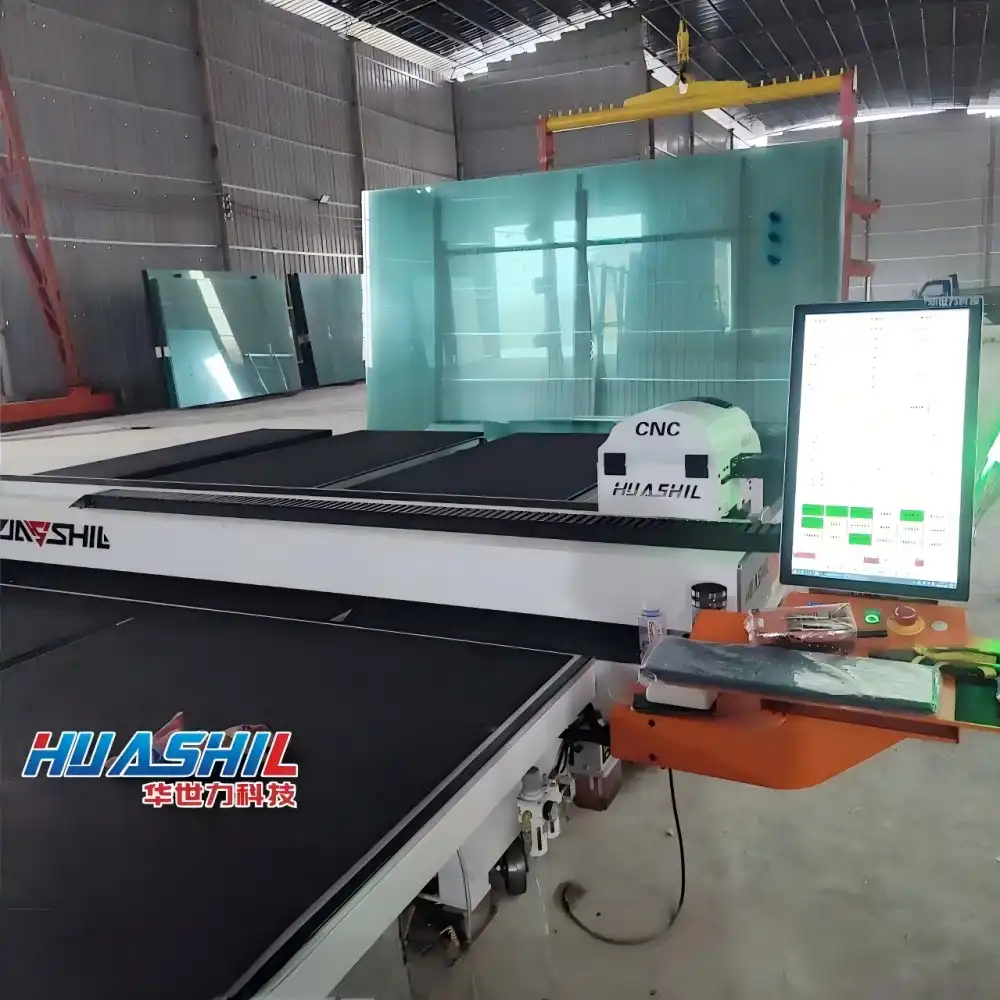
High-pressure water streams mixed with rough particles are used in waterjet cutting to cut through glass up to 150 mm thick without putting it under heat stress. This method works well for fused glass and designs with a lot of curves. Automated glass processing CNC cutting systems move carbide or diamond wheels along lines that have been pre-programmed. This makes the edges of normal architectural glass smooth. The HSL-LSX4228 type has a precise cutting table that can handle sheets up to 4200x2800mm, making it suitable for big building projects. The system has above-ground or underground train configurations with 2+2 stations that can be changed depending on the needs of the production flow. This lets workers add new sheets while the cutting table works on the current ones.
Grinding and Polishing Machinery
Automatic glass grinding tools use a series of progressively rougher steps to smooth out the cut edges of glass. Initial grinding gets rid of sharp edges and ensures measurements are accurate to within ±0.2mm. Polishing steps make sides that are smooth and clear, so they can be used for frameless installs. Through programmed wheel placement, these machines can handle different edge shapes, such as flat, beveled, or shaped ones. This technology is very important for making sure that automotive glass fits perfectly. Manufacturers of smart mirrors use grinding tools to make complicated forms with holes for sensors and screens inside them. On each side of modern grinding systems, there are four grab arms that hold the glass firmly in place while it is being processed. This keeps the glass from moving, which could damage the edge quality.
Safety Protocols and Compliance
Modern automated equipment has many safety interlocks that stop the machine from working if protective guards open or if sensors notice that a user is close to moving parts. The emergency stop buttons can be reached from any position. The OSHA and ANSI standards for North American markets are met by equipment made for those areas. Automated systems also lower the number of injuries in the workplace by getting rid of the need to handle and break glass by hand, which has previously caused a lot of cuts and strains in glass manufacturing facilities.
Comparing Automated vs Manual Glass Processing
Understanding differences in performance helps buying teams explain investments in capital and make ROI projections that are more realistic.
Limitations of Manual Methods
Cutting glass by hand requires skill to make clean cuts and break pieces correctly. Even skilled workers make mistakes from time to time, especially when they are tired. Throughput is also limited by manual processes. For example, a trained operator might work on 80–100 standard panels during a shift, while automatic lines can work on 300–400 pieces in the same amount of time. These problems are made worse by the fact that mistakes happen a lot. For example, 3-5% of human tasks need to be redone, but less than 1% of automatic tasks do the same. When they get more than a few dozen orders a week, furniture companies that make glass tabletops find that hand ways aren't enough.
Performance Advantages of Automation
Automation makes improvements that can be seen in key output measures. Cycle time is cut by 60 to 70% on average for normal cutting tasks. Quality consistency gets a lot better because automatic systems keep dimensional limits the same, no matter how long the shift is or who works there. Optimization software that figures out the best cutting patterns improves the amount of material that is used, which is very helpful when working with expensive low-iron or custom-coated glass. Long-term cost research shows that automatic equipment lowers production costs by 30–40% over five years, even though it costs more at first. This is because it saves time and money by cutting down on waste and labor.
Selecting Between Semi-Automated and Fully Integrated Systems
The right amount of technology depends on the size of the production. Small companies that make shower doors might spend $50,000 to $80,000 on semi-automated cutting tables that still need to be loaded and broken by hand. This would help them get around their main problem. Large curtain wall makers can use fully integrated lines that cost $300,000 to $500,000 and have automatic stations for loading, cutting, breaking, and edging. These lines can handle full orders without any help from a person. A medium-sized artistic glass factory we worked with started by automating its cutting equipment. After 18 months, when the factory's production level warranted it, it added automatic loading. This step-by-step method kept track of cash flow and gradually increased the operator's skill level.
How to Choose the Right Automated Glass Processing Equipment
When selecting strategic tools, you have to weigh technical specs against working needs and budget limits.
Essential Evaluation Metrics
Product quality and customer happiness are both affected by precision margin in a direct way. For curtain walls, architectural glass needs to be accurate to within 0.5 mm, but for furniture, it can be accurate to within 1 mm. To make sure that throughput speed and production goals are met, you need to figure out how many pieces need to be made each shift and make sure that the equipment specs can handle those numbers with some room for efficiency. Operating costs are affected by how much energy is used. Compare kilowatt ratings and ask makers for info on how much power they normally use in a day. When product mixes change, processing flexibility is important. For example, equipment that can handle thickness ranges from 3 mm to 19 mm can handle different types of orders without the need for multiple tools.
Total Cost of Ownership Considerations
The price you pay for automated glass processing is only 60–70% of how much it really costs over its useful life. The costs of installation include preparing the base, upgrading the electricity service, and installing compressed air systems. The cost of training is very important. Plan for one week of training for operators and ongoing technical help during the ramp-up phase. When planning for maintenance, it's important to think about costs like cutting wheels, which need to be replaced every 15,000 to 20,000 square meters of cutting. There are big differences in the length of warranties offered by different companies. For the same price, a three-year warranty that covers parts, labor, and trip costs is a better deal than a one-year warranty that only covers parts. Downtime is greatly affected by the supply of spare parts. Make sure that makers keep inventory in North America or can ship essential parts within 72 hours.
Customization and Integration Capabilities
For full production line projects, you need equipment that works well with other systems or can be expanded in the future. The HSL-LSX4228 model can be set up in a variety of ways, as the station layouts and rail mounting choices can be changed to fit different building layouts. Adding capability modules, like automatic quality checking stations or packaging systems, to a modular design means that core equipment doesn't have to be replaced. OEM manufacturers need providers who can change the control software, make the handling systems work with non-standard glass types, or create custom processing devices. We've made special loading tables for fabricators who work with extra-thick laminated glass and changed the way breaking devices work for facilities that deal with tempered glass waste.
Future Trends and Efficiency Improvements in Glass Processing Automation
New technologies can help makers do their jobs better if they use them in a smart way.
AI and Predictive Maintenance
Computer programs that use artificial intelligence look at sensor data from motors, bearings, and cutting heads to figure out when parts will break down before they cause unplanned downtime. Systems keep an eye on changes in temperature, sound patterns, and power use to spot problems before they get worse. One curtain wall maker who used predictive maintenance cut the number of unplanned equipment breakdowns by 75% and increased the life of cutting wheels by 18% by figuring out the best time to replace them. Machine learning also automatically adjusts the cutting settings, changing the feed rates and pressure based on the type of glass, its thickness, and the surroundings, to get the best edge quality with the least amount of processing time.
IoT and Industry 4.0 Integration
Equipment that is linked to the internet lets you watch creation in real time from anywhere. Smartphone screens let plant managers see current production data, quality measures, and the state of each machine. An IoT connection makes online troubleshooting easier. Technical support teams can find problems and change settings without having to go to the site, which cuts down on downtime from hours to minutes. Automatic flow of production data into business resource planning tools improves the accuracy of inventory and allows for flexible scheduling. Modern factories connect machines that work with glass to systems that handle orders. This way, the machines set themselves up instantly for each job based on instructions taken straight from customer orders, so mistakes that happen during manual setup are avoided.
Sustainability Initiatives
More environmentally friendly ways of making things are needed because of rules about the environment and customer tastes. When compared to fixed-speed systems, newer automatic automated glass processing equipment uses 25–30% less energy because it has variable-frequency drives that match motor speed exactly to load needs. Waterjet cutters with recycling methods cut water use by 90%, which is good for places that don't have a lot of water. Optimization software that cuts down on material waste directly lowers the damage that glass production does to the earth while also making the business more profitable. Glass makers who want to get green building certifications find that showing that their production methods are efficient and produce little waste helps them get business with builders and developers who care about the environment.
Conclusion
Automated glass production equipment changes everything for producers who are having trouble finding workers, meeting quality standards, and keeping up with the competition. Modern systems use both new and tried-and-true mechanical engineering to get accuracy, speed, and stability that are impossible with human methods. To choose the right equipment, you need to carefully compare technical specs to production needs while also taking into account total ownership costs and the need to be able to expand in the future. Strategic investments in technology put glass fabricators in a good position to take advantage of growing possibilities in the architectural, automotive, and specialty glass markets. These investments also make operations more stable by reducing the need for workers and improving quality control.
FAQ
Q1: What investment level is required for automated glass processing equipment?
Entry-level automated cutting tables suitable for small fabricators start around $40,000-60,000, providing basic CNC cutting capabilities for standard architectural glass. Mid-range systems with automated loading and advanced optimization software typically cost $120,000-180,000. Fully integrated production lines incorporating cutting, edging, washing, and packaging stations for large-scale operations range from $350,000 to $600,000, depending on throughput capacity and customization requirements. Calculate return on investment by quantifying labor savings, waste reduction, and throughput increases against equipment costs and financing expenses over five years.
Q2: How does automation improve workplace safety compared to manual processing?
Automated equipment eliminates direct operator contact with glass during cutting and breaking operations, which historically cause the majority of lacerations in glass fabrication facilities. Safety interlocks prevent machine operation when guards are open or when sensors detect personnel in hazardous zones. Mechanical handling systems eliminate manual lifting of heavy glass sheets, reducing back injuries and repetitive strain problems. OSHA data indicates that facilities implementing comprehensive automation experience 60-70% fewer recordable injuries compared to equivalent manual operations.
Q3: Can automated equipment integrate with existing production systems?
Most contemporary automated glass processing equipment supports integration with existing facility infrastructure through standard control protocols and flexible mechanical interfaces. Equipment manufacturers provide technical assessments to evaluate compatibility with current systems and recommend integration approaches. Modular equipment designs allow phased implementation—adding automated cutting while retaining existing edging equipment, then upgrading additional stations as budget permits.
Partner with HUASHIL for Advanced Automated Glass Processing Solutions
Shandong Huashil Automation Technology delivers reliable automated glass processing equipment backed by extensive manufacturing experience and global technical support. As an established automation equipment supplier, we engineer solutions specifically for architectural glass fabricators, curtain wall manufacturers, and specialty glass producers throughout North America. Our HSL-LSX4228 cutting system combines precision mechanics with Optima optimization software to maximize material utilization while delivering consistent quality across high-volume production runs. We provide comprehensive support from initial consultation through installation, operator training, and ongoing technical service. Contact our team at salescathy@sdhuashil.com to discuss your specific production requirements and receive detailed specifications tailored to your operational goals.
References
1. Anderson, M. (2021). Industrial Automation in Glass Manufacturing: Technologies and Applications. Technical Press International.
2. Chen, L., & Roberts, K. (2022). "Precision Cutting Systems for Architectural Glass Production." Journal of Manufacturing Technology, 45(3), 178-194.
3. Global Glass Industry Association. (2023). Best Practices in Automated Glass Processing. Industry Standards Publication.
4. Martinez, R. (2020). Total Cost of Ownership Analysis for Glass Processing Equipment. Manufacturing Economics Research Institute.
5. Thompson, J., & Wu, H. (2023). "Industry 4.0 Integration in Glass Fabrication Facilities." Advanced Manufacturing Quarterly, 38(2), 112-129.
6. Williams, D. (2022). Safety Standards and Protocols for Automated Glass Processing Equipment. Occupational Safety Publishing.
