




When planning your factory's glass processing capabilities, understanding the spatial requirements of a 2721 glass cutting line becomes a strategic decision that impacts efficiency, safety, and long-term profitability. The HSL-LSX2721 model demands thoughtful layout integration with proper clearances around its three-table configuration—loading, cutting, and breaking stations—along with considerations for above or below-ground rail systems and configurable work stations. Optimizing floor space around this equipment, which handles glass up to 2700×2100mm, can dramatically improve material flow while reducing operational bottlenecks and workplace hazards.
Understanding the 2721 Glass Cutting Line and Its Layout Needs
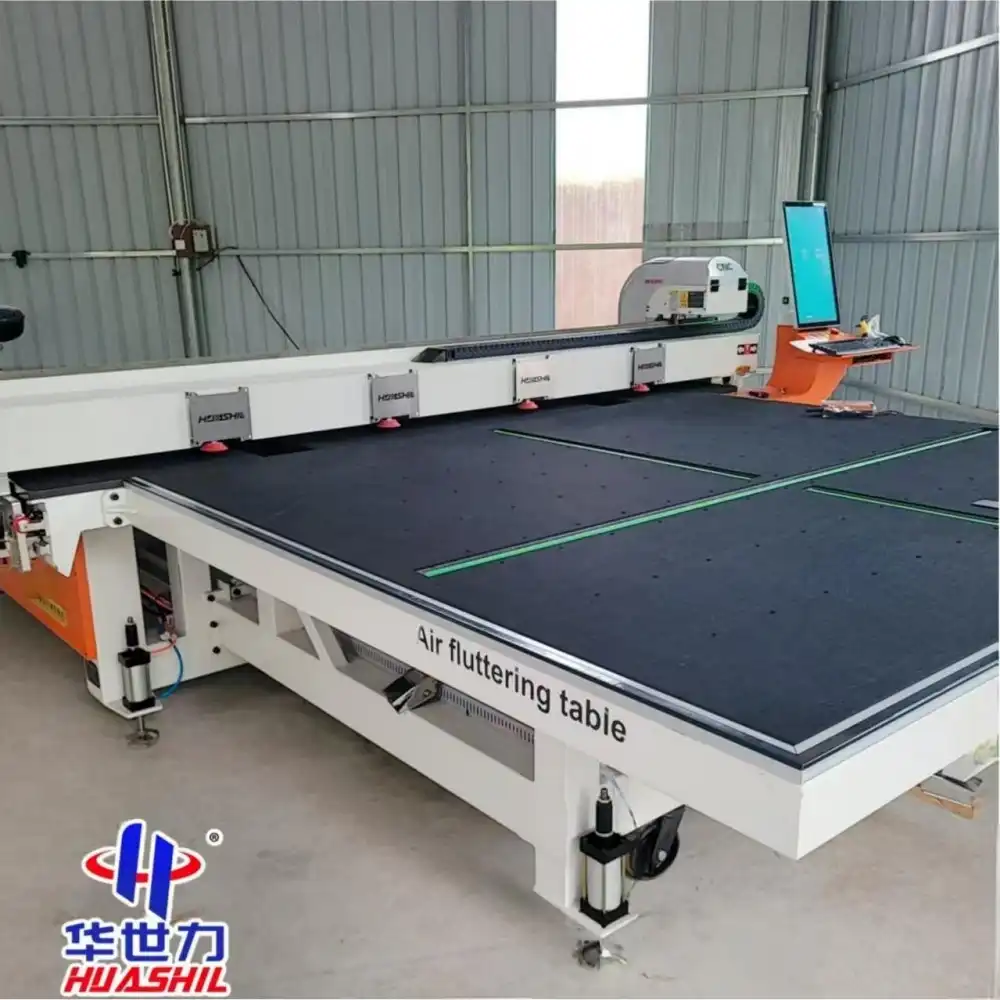
The HSL-LSX2721 represents a comprehensive approach to automated glass processing, combining precision cutting technology with intelligent workflow design. At its core, this system integrates three specialized tables that work sequentially to transform raw glass sheets into precisely cut components ready for further fabrication or immediate installation.
Core Components and Their Spatial Footprint
The loading table serves as the entry point where operators or automated systems position raw glass sheets for processing. This station requires adequate clearance on all sides to accommodate material handling equipment such as vacuum lifters or overhead cranes. The cutting table houses the precision cutting mechanism guided by Optima optimization software, which calculates the most efficient cutting patterns to minimize waste and maximize yield. The breaking table completes the process by separating cut pieces along scored lines with controlled pressure.
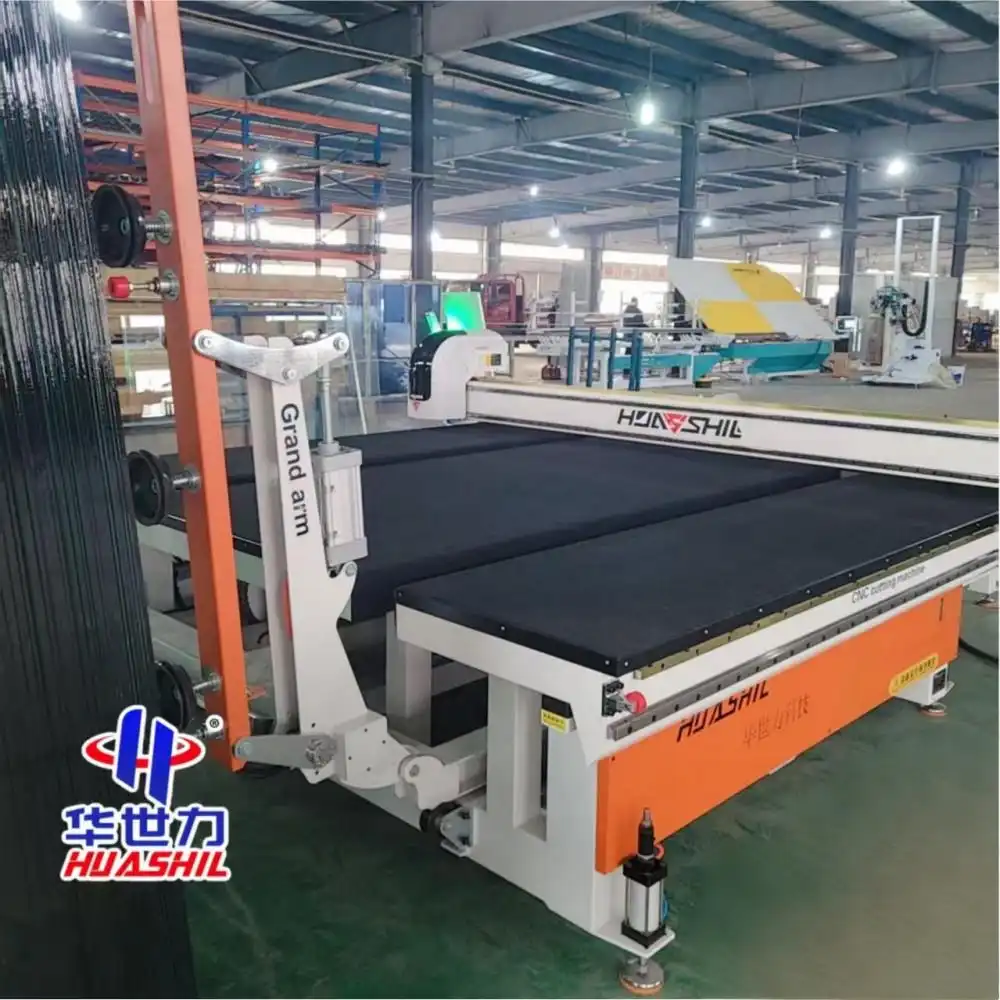
Each side of the system features three grand arms that facilitate glass manipulation throughout the production cycle. These mechanical components need unobstructed movement zones to prevent collisions and ensure smooth material transfer between stations. The configurable 2+2 station arrangement offers flexibility in production routing, allowing simultaneous processing of different orders or glass types when workflow demands increase.
Rail System Considerations
Manufacturers can choose between above-ground and underground rail configurations based on existing facility constraints and future expansion plans. Above-ground rails simplify installation and maintenance access but require floor space allocation for support structures. Underground rail systems preserve valuable floor area and create cleaner traffic patterns, but demand more complex installation procedures, including foundation work and drainage considerations. The choice significantly influences your facility's overall layout strategy and long-term operational flexibility.
The Optima software integration deserves special attention during layout planning. This optimization system connects to your production management network, requiring appropriate data cabling infrastructure and potentially dedicated workstations for operators to review cutting patterns before execution. Placing these control stations within visual range of the cutting line improves communication and reduces response times when pattern adjustments become necessary.
Essential Layout and Space Planning Principles for 2721 Glass Cutting Line
Effective spatial planning begins by addressing the most common challenges we observe across glass fabrication facilities: underutilized production areas, bottlenecks in material flow, and inadequate safety zones that increase accident risks. Through our work with architectural glass manufacturers and curtain wall fabricators across North America, we've identified proven principles that transform equipment installation from a simple placement exercise into a strategic advantage.
Material Flow Optimization
The foundation of intelligent layout design centers on material movement patterns throughout your facility. Glass sheets arriving at your loading dock should follow a logical path through storage, processing, and finishing areas without unnecessary backtracking or congestion. Positioning the HSL-LSX2721 near your raw material storage reduces handling time and breakage risk during transport to the loading table.
We recommend maintaining a minimum clearance of 4 feet around the entire 2721 glass cutting line perimeter for operator movement and emergency access. This buffer zone accommodates material carts, allows technicians to reach maintenance points, and provides escape routes during equipment malfunctions. Plants processing high volumes or operating multiple shifts benefit from expanding this clearance to 5-6 feet, which facilitates simultaneous activities such as maintenance on one section while production continues on another.
Ergonomic Station Design
The configurable station arrangement on the HSL-LSX2721 allows adaptation to your specific production patterns. A facility focusing on standard architectural glass sizes might configure both stations for similar operations, doubling throughput for common orders. Manufacturers handling diverse custom work could assign one station for large architectural pieces and another for smaller furniture glass components, reducing setup time between jobs.
Operator interface placement warrants careful attention during layout planning. Control panels should be positioned to provide clear sightlines across all three tables without requiring operators to walk around equipment repeatedly. We've observed productivity improvements of 12-18% in facilities that invest time optimizing control station placement during initial installation rather than adapting to poor layouts afterward.
Integration with Adjacent Equipment
Few glass cutting lines operate in isolation. Your facility likely includes edge processing machinery, washing systems, tempering furnaces, or laminating equipment that receive output from the cutting line. Mapping the complete production workflow before finalizing the HSL-LSX2721 placement prevents costly rearrangements later when bottlenecks emerge between process steps.
A curtain wall fabricator in Texas redesigned their production floor by positioning the cutting line with direct conveyor access to their edge grinding station, eliminating a manual transfer step that had previously consumed 15 minutes per batch and increased breakage rates. The reconfiguration required only modest adjustments to their initial layout plan but delivered measurable efficiency gains within weeks of equipment commissioning.
Comparing the Layout Requirements of the 2721 Glass Cutting Line with Alternatives
Understanding how the HSL-LSX2721 compares to alternative cutting systems helps procurement teams make informed decisions that balance capital investment against operational benefits and spatial constraints.
Footprint Analysis Against Competing Systems
The three-table configuration of the HSL-LSX2721 occupies a rectangular footprint that proves more space-efficient than separate cutting and breaking stations purchased as standalone units. Manual cutting tables combined with separate breaking equipment typically consume 25-30% more floor area when accounting for necessary operator circulation space between disconnected workstations.
Compact cutting-only systems marketed for smaller operations appear attractive from a square footage perspective, but create hidden inefficiencies. Without integrated breaking capability, operators manually transfer scored glass to separate breaking tables, increasing handling time and breakage risk. The labor cost difference typically exceeds any real estate savings within 18-24 months of operation.
Configuration Flexibility Comparison
The configurable 2+2 station design provides operational versatility that fixed-configuration competitors cannot match. A furniture glass manufacturer might run both stations in parallel during peak seasons, then reconfigure one station for specialized work during slower periods. This adaptability protects capital investment across changing market conditions.
Alternative systems with fixed single-station designs force manufacturers to purchase additional complete lines to expand capacity, multiplying space requirements and capital expenditure. The modular approach of the HSL-LSX2721 allows incremental capacity increases by optimizing station usage patterns before committing to additional equipment purchases.
Cost-Benefit Analysis from a Space Perspective
Real estate costs in manufacturing regions vary dramatically, making space efficiency a variable-impact factor in total cost of ownership calculations. Facilities in metropolitan areas with industrial land costs exceeding $15 per square foot annually gain substantial long-term value from compact, efficient layouts. The HSL-LSX2721's integrated design reduces the footprint needed to achieve target production volumes compared to multi-piece systems requiring similar output.
Beyond direct real estate costs, consider the heating, cooling, and lighting expenses for production areas. Every 100 square feet of unnecessary floor space typically adds $450-650 annually in utilities, depending on regional energy costs and building efficiency. Over a typical 10-year equipment lifecycle, these operational costs compound into significant figures that forward-thinking procurement teams incorporate into purchasing decisions.
Maintenance, Safety, and Troubleshooting from a Layout Perspective
Sustainable operation of automated glass processing equipment depends heavily on maintenance accessibility designed into the initial layout rather than accommodated as an afterthought.
Maintenance Access Planning
The HSL-LSX2721 contains precision components requiring periodic inspection, adjustment, and replacement. Planning adequate clearance zones during layout design prevents situations where technicians cannot reach critical components without dismantling adjacent equipment or disrupting ongoing production.
We recommend designating maintenance zones along both sides of the 2721 glass cutting line with a minimum 3-foot clearances. These zones should remain free of storage, trash receptacles, or other obstacles that gradually accumulate in "unused" spaces. Facilities that enforce strict maintenance zone policies report 30-40% reductions in equipment downtime because technicians complete routine servicing more quickly when proper access exists.
The three grand arms on each side require periodic lubrication and wear component inspection. Layout designs that position these mechanisms away from walls or adjacent equipment simplify routine maintenance tasks that might otherwise require equipment shutdown and repositioning. A simple planning decision during installation can save hundreds of hours of production disruption over the equipment's operational life.
Safety Zone Integration
Glass processing presents inherent safety challenges that thoughtful layout planning helps mitigate. Flying glass fragments during breaking operations, moving mechanical components, and material handling activities all create potential hazard zones requiring appropriate safeguards and spatial buffers.
Installing physical barriers or painted floor markings that define restricted zones around the HSL-LSX2721 during operation protects workers in adjacent areas from glass fragments and moving equipment. These safety perimeters should extend at least 6 feet from the breaking table where glass separation occurs. Emergency stop buttons positioned at regular intervals around the equipment perimeter allow rapid response from any position when hazards emerge.
Adequate spacing between the cutting line and pedestrian traffic routes prevents accidents caused by workers carrying materials or navigating forklifts through congested areas. We've documented multiple incidents at client facilities where inadequate circulation space contributed to collisions between material handling equipment and personnel—situations entirely preventable through proper layout planning.
Layout-Related Troubleshooting
Many operational challenges traced to equipment malfunction actually stem from suboptimal layout decisions that create subtle workflow disruptions. Glass pieces that crack during transfer between stations might indicate excessive distance between tables rather than equipment defects. Operators struggling to maintain production targets might be compensating for poorly positioned control interfaces that force excessive walking between stations.
Vibration from adjacent equipment can interfere with cutting precision on the HSL-LSX2721. Positioning the cutting line away from heavy presses, tempering furnaces with cooling fans, or high-traffic forklift routes protects cut quality. Installing vibration isolation pads beneath equipment legs provides additional protection, but cannot fully compensate for extreme vibration sources located immediately adjacent to precision cutting equipment.
Procurement and Installation Considerations for the 2721 Glass Cutting Line
Successfully integrating the HSL-LSX2721 into your production environment requires coordinated preparation across multiple facility systems and operational areas.
Site Readiness Requirements
Before equipment arrival, facilities must prepare adequate foundation support capable of handling the cutting line's operational loads plus glass material weight. The three-table configuration distributes weight across a larger footprint than single-station equipment, but concentration points at support legs still require proper floor preparation. Concrete floors should provide a minimum 4-inch thickness with appropriate reinforcement to prevent cracking under sustained operational loads.
Electrical infrastructure deserves careful attention during site preparation. The HSL-LSX2721 requires dedicated circuits with appropriate amperage capacity for cutting motors, control systems, and auxiliary components. Positioning electrical distribution panels within 50 feet of the equipment installation site reduces wiring costs and voltage drop concerns. Coordinating with licensed electricians familiar with industrial machinery installations prevents complications during commissioning.
Compressed air supply feeds the pneumatic components controlling glass manipulation and breaking functions. Planning adequate air line sizing and pressure regulation during site preparation prevents performance issues that emerge when undersized air systems cannot maintain consistent pressure during peak demand cycles. We recommend dedicated air lines for the cutting equipment rather than tapping into existing systems serving multiple tools, which can create pressure fluctuations affecting cut quality.
Delivery and Installation Expectations
HUASHIL coordinates delivery logistics to minimize facility disruption during equipment installation. The modular design of the HSL-LSX2721 allows transportation in sections that fit standard shipping containers and navigate typical industrial doorways. Facilities should ensure clear access routes from the receiving dock to the installation area, with a minimum 10-foot ceiling height to accommodate equipment positioning with overhead cranes or forklifts.
Installation typically requires 3-5 days, depending on site readiness and configuration complexity. Our technical team handles mechanical assembly, electrical connections, and software configuration before conducting comprehensive testing. This commissioning process includes operator training on production workflows, routine maintenance procedures, and troubleshooting common operational situations.
The timeline from order placement to production-ready installation generally spans 8-12 weeks, accounting for manufacturing lead time, international shipping, customs clearance, and on-site installation. Rush options exist for urgent capacity expansions, though expedited timelines require premium freight arrangements that impact project budgets.
Space Considerations in Purchase Versus Lease Decisions
Companies evaluating lease versus purchase options for the HSL-LSX2721 should factor spatial flexibility into financial modeling. Purchased equipment provides freedom to reconfigure facility layouts as production needs evolve, moving or upgrading the 2721 glass cutting line without lessor approvals. Leased equipment may restrict relocation or modification activities that could otherwise optimize production flow.
Facilities anticipating near-term expansion or relocation might prefer leasing arrangements that avoid long-term capital commitment to specific plant configurations. Conversely, established operations with stable facility footprints typically benefit from equipment ownership that supports incremental layout improvements and custom integration with adjacent production equipment over extended operational lifespans.
Conclusion
Strategic layout planning transforms the HSL-LSX2721 from equipment occupying floor space into a productivity catalyst that enhances your entire production workflow. The investment in thoughtful spatial design during initial installation prevents costly reconfigurations later while improving safety, maintenance accessibility, and operational efficiency from day one. Understanding clearance requirements, material flow patterns, and integration opportunities with adjacent equipment allows procurement teams and production managers to make informed decisions, balancing capital investment against long-term operational benefits. We've observed repeatedly that facilities treating layout planning as a strategic exercise rather than an afterthought achieve faster production ramp-up, lower operating costs, and stronger competitive positioning in their respective markets.
FAQ
Q1 How much factory space does the HSL-LSX2721 cutting line actually require?
Factory space requirements. The HSL-LSX2721 cutting line’s core footprint is roughly 25×12 feet for its three-table configuration and rail system. Including operator clearances, maintenance access, and material staging, a minimum of 35×20 feet is recommended. High-volume or multi-shift operations benefit from 40×25 feet, accommodating maintenance and reducing congestion. Larger sheets (up to 2700×2100mm) require extra staging space.
Q2 Can the layout be customized for facilities with unusual floor plans?
Layout customization. The modular design allows flexible layouts for irregular floor plans. Above- or underground rail options, 2+2 station configurations, and custom adjustments for mezzanines, overhead cranes, or dock proximity help fit existing building constraints. Sharing detailed facility drawings enables engineering teams to optimize space without sacrificing efficiency.
Q3 What layout practices help maintain workflow efficiency while meeting safety standards?
Workflow efficiency and safety. Efficient layouts separate zones for loading, storage, and operation. Maintaining 4–6 foot clearances, marked pedestrian paths, and adequate lighting ensures OSHA compliance, smooth material flow, and operator safety. Consulting safety specialists is recommended for jurisdiction-specific requirements.
Partner with HUASHIL for Your Glass Processing Expansion
The specialized knowledge required to optimize automated glass cutting line installations represents exactly the expertise HUASHIL has developed through decades of serving architectural glass manufacturers, curtain wall fabricators, and furniture glass producers worldwide. Our engineering team doesn't simply ship equipment—we collaborate with your production managers and facility planners to design layouts that maximize efficiency within your specific spatial constraints and operational requirements.
Contact our technical specialists at salescathy@sdhuashil.com to discuss your facility's unique layout challenges and receive customized recommendations for integrating the HSL-LSX2721 into your production environment. We provide detailed CAD drawings showing equipment positioning, clearance zones, and utility connections before you commit to purchase orders. Manufacturers searching for a reliable 2721 glass cutting line supplier will appreciate our comprehensive approach, combining quality equipment with installation support and ongoing technical assistance. Schedule a virtual factory tour to see our production capabilities and discuss how our automation solutions can elevate your competitive position in demanding glass fabrication markets.
References
1. Anderson, M., & Williams, R. (2021). Industrial Equipment Layout Strategies for Modern Manufacturing. Society of Manufacturing Engineers Press.
2. Chen, L. (2022). "Spatial Optimization in Automated Glass Processing Facilities." Journal of Manufacturing Systems and Layout Design, 18(3), 145-162.
3. Martinez, J., Thompson, K., & Roberts, S. (2020). Safety Planning for Industrial Glass Fabrication Operations. American Glass Manufacturing Association.
4. Peterson, D. (2023). "Cost-Benefit Analysis of Integrated vs. Modular Glass Cutting Systems." Industrial Equipment Review Quarterly, 45(2), 78-94.
5. Sullivan, P., & Zhang, H. (2021). Facility Planning for Architectural Glass Manufacturing. International Glass Processing Institute.
6. Wagner, T. (2022). "Maintenance Accessibility Design in Automated Production Lines." Plant Engineering and Maintenance Journal, 67(4), 112-128.
